
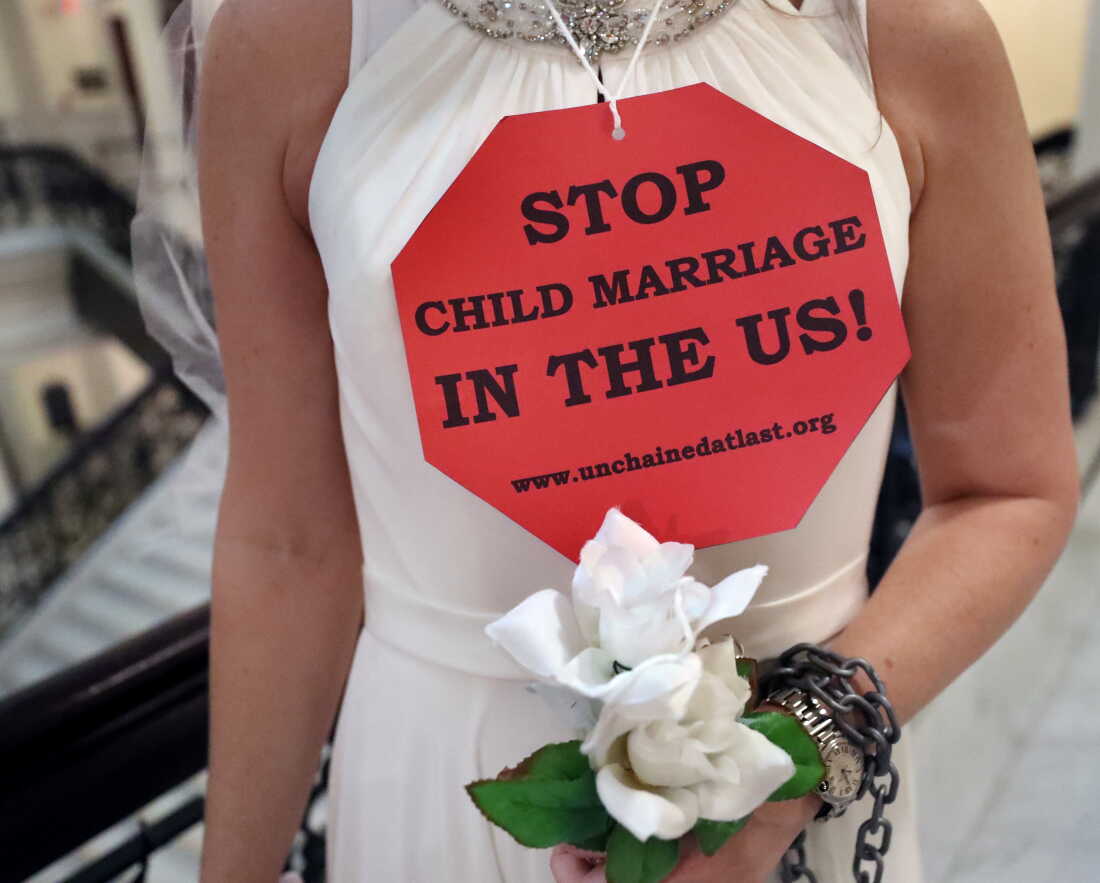
A notable protest in Massachusetts featured a demonstrator in a bridal gown, spotlighting the urgent call for legislative action against child marriage. This demonstration reflects broader efforts across the U.S. to establish bans on child marriage. On September 30, California made significant progress when Governor Gavin Newsom signed Bill AB 1267. This bill, sponsored by Unchained at Last and the California Commission on the Status of Women and Girls, was authored by Assemblymember Gail Pellerin. It establishes 18 as the minimum marriage age in California, eliminating exceptions previously allowed for parental consent and judicial approval. Notably, the law also removes similar exceptions for domestic partnerships. This legislative victory is the culmination of nearly a decade-long campaign led by survivors and advocacy groups to prevent minors from entering binding marital agreements.
California is now part of the 18 states in the U.S. where child marriage is banned without exceptions. The nation still faces challenges, as child marriage is permitted with varying restrictions in 32 states. A critical voice in this movement is surviving child marriage advocate Courtney Stodden, who alongside Governor Newsom during the signing, shared her experience of being married at 16 to an adult. Pellerin emphasizes that survivors’ testimonies significantly shaped the new legislation. Many minors in forced marriages experience obstacles such as restricted access to legal aid, difficulties in leaving abusive situations, and barriers to obtaining protective measures.
The heart of this effort has always been the survivors. They told us what it means to be a child in a marriage you did not freely choose.
Globally, the issue of child marriage persists as a violation of human rights according to the United Nations. Challenges for child brides include early pregnancies, social isolation, education interruption, restricted career opportunities, and exposure to domestic violence. Annually, the U.N. reports that 12 million girls globally become child brides. Furthermore, issues arise for child grooms who are forced prematurely into adult responsibilities. The global goal is to eliminate child marriage by 2030. Since 2021, countries such as Sierra Leone, England, the Philippines, and the Dominican Republic have enacted laws setting 18 as the minimum marriage age without exceptions.
In the U.S., the national debate regarding a federal child marriage ban continues. On July 16, legislators including Rep. Gwen Moore and Senators Durbin, Schatz, and Gillibrand introduced the Child Marriage Prevention Act. This bill seeks to establish a nationwide minimum age of 18 for marriage. Moore highlights the necessity to cease practices allowing young girls to marry adult men under predatory circumstances. While some states have made progress, further support is necessary, including gathering data to understand and address the prevalence of child marriage.
Between 2000 and 2021, over 314,000 minors were married in the U.S., some as young as 10. Data collected from state records indicate a majority involved underage girls married to adult men. Unchained At Last estimates that in roughly one out of five such marriages, the bride was under an age where sexual relations would typically be prosecutable as a crime.
Legal loopholes often protect adult spouses from prosecution for statutory rape. These loopholes pose challenges for minors seeking divorce or legal protection from abuse.
The Tahirih Justice Center has partnered to support legislative initiatives to prevent child marriage. Casey Carter Swegman from Tahirih notes that perceived consent from minors does not necessarily equate to free will, as they may be influenced by familial pressure. Swegman argues that pregnancies, potential indicators of abuse, should call for judicial attention rather than facilitate marriage.
Some advocates argue the bill’s provisions are insufficient, while others caution against potential unintended consequences. For instance, provisions for state grants to study child marriage, instead of outright banning it, have drawn criticism.
Internationally, restrictive laws are in place in countries like Sierra Leone, Colombia, and Bolivia. Despite these laws, enforcement remains a challenge due to entrenched cultural practices. In India, while child marriage under 18 is illegal, millions of such marriages occur annually due to social customs. Young Lives India, a research initiative, has documented cultural and economic motivations driving early marriages. The program’s findings reveal that these practices occur across various socioeconomic groups.
The persistent issue in India highlights the need for community engagement to change cultural perceptions alongside law enforcement. To effectively curtail child marriage globally, attitudes must shift away from viewing early marriage as protective.
This requires belief and behavior change, services, support, and thoughtful conversations on the community level.
The U.S. approach must also address deeply embedded gender roles and power dynamics that influence perceptions of female sexuality. A coordinated effort at the community level and comprehensive legislation can support the movement to eradicate child marriage.
This global campaign is amplified by figures like Bhuwan Ribhu who advocate internationally for stringent enforcement and accountability.
Kamala Thiagarajan, reporting from South India, continues to document these challenges in global contexts and contributes to raising awareness about the urgent need for action against child marriage.