
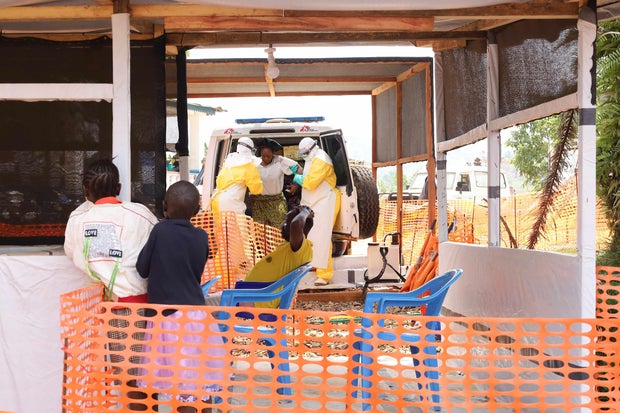
As of June 22, 2026, the Ebola outbreak in eastern Congo has reached significant proportions with 1,003 confirmed cases and 254 deaths. The outbreak’s focus is in the Ituri province and was declared on May 15. The Congo Ministry of Health reported that 100 individuals have recovered. However, 365 patients remain hospitalized or in isolation due to the rare Bundibugyo virus, which lacks available vaccines or treatments.
Medical workers continue to face challenges, especially in tracing contacts — a crucial component in controlling the outbreak. As of last week, officials were still attempting to trace over 35,000 people who had potential exposure to the virus. Contact tracing coverage stands at 55%, highlighting significant gaps in outbreak response efforts.
The Africa Centers for Disease Control and Prevention Director-General, Dr. Jean Kaseya, expressed doubt about pinpointing the index case, a step critical in controlling such outbreaks. “You must know the index case. We don’t have confidence on when this outbreak started,” he told The Associated Press.
Efforts are further complicated by regional violence, notably from the ISIS-backed Allied Democratic Force, which disrupts access to villages and displaces communities. The U.N. refugee agency notes that at least 2 million displaced individuals, including over 320,000 refugees, are in Ebola-threatened areas.
The Kigonze displacement camp in Bunia, housing over 20,000 people, is under scrutiny after reporting 10 unusual deaths last week, intensifying concerns about a potential outbreak. Although no Ebola cases have been confirmed in Kigonze, the increased mortality rate demands investigation.
The U.N. refugee agency voiced its alarm regarding the contagion’s accelerated spread and its potential impact on displaced communities. Charité Banza, an Ituri civil society leader, warned that any epidemic in such densely populated settings would be disastrous due to existing fragile conditions.