
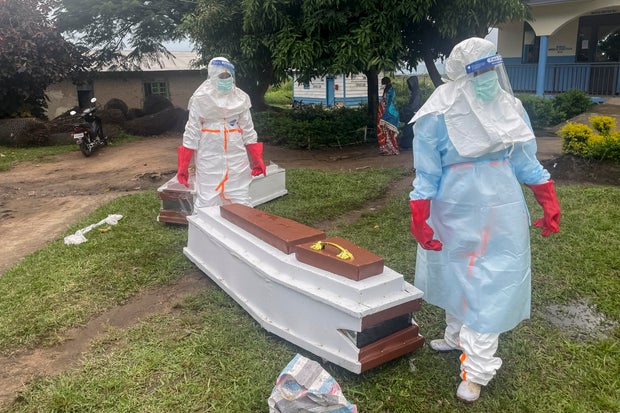
The head of the World Health Organization has announced that the Ebola outbreak in the Democratic Republic of Congo is spreading rapidly, posing a very high risk at the national level. Authorities in northeastern Congo have banned funeral wakes and gatherings of more than 50 people to control the spread.
WHO Director-General Tedros Adhanom Ghebreyesus stated that the alert level for the outbreak has been raised, although the risk remains lower outside the country. He emphasized that while regional spread is a concern, the global risk is currently low.
The WHO has confirmed 82 cases and seven deaths in Congo. However, there are approximately 750 suspected cases and 177 suspected deaths. In Uganda, two cases have been confirmed in individuals who visited Congo, resulting in one death.
Local authorities in northeastern Congo have imposed temporary bans on wakes and large gatherings and mandated strict health protocols for funerals. Journalists covering the outbreak are required to have permits, complicating their ability to report.
Efforts to manage the outbreak have faced resistance from local communities due to misinformation and clashes between medical policies and local customs. On Thursday, an Ebola treatment center in eastern Congo was attacked and set ablaze after locals were prevented from retrieving a body suspected to have died from the virus.
The arson attack highlights the challenges of managing the outbreak in a region with inadequate health facilities and ongoing armed conflicts. Ebola bodies remain highly contagious, posing a risk if burial customs are improperly performed. Authorities are responsible for managing burials, which has led to protests.
Witnesses reported that local youths set fire to a treatment center in Rwampara, frustrated by being unable to retrieve a friend’s body. The incident escalated despite police intervention.
Following the attack, local leaders stated that calm had been restored, with aid teams resuming their work. The situation underscores the difficulties faced by Congolese authorities and aid agencies working to contain the outbreak.
The WHO declared Ebola a public health emergency of international concern earlier this week. Investigations and case surveillance are intensifying, and more cases are expected as efforts increase. Early detection is crucial for saving lives, but resources have been strained by cuts in international aid.
Approximately 920,000 internally displaced people reside in Ituri Province, complicating crisis management. Recent attacks by ISIS-linked militants have exacerbated the situation.
There is no available vaccine or medicine for the outbreak’s Bundibugyo strain. A working vaccine may take six to nine months to become available, making immediate action and collaboration with communities essential.
Ebola spreads through contact with bodily fluids like vomit, blood, feces, or semen. Symptoms include fever, vomiting, diarrhea, muscle pain, and possible internal and external bleeding. Initial cases went undetected as health authorities tested for a different Ebola virus strain more common in Congo.
The U.S. has restricted travelers from Congo, Uganda, and South Sudan, redirecting them to specific airports for screening, while India and the African Union postponed a summit due to the evolving situation.
Additionally, Congo’s soccer team canceled World Cup preparation activities due to the outbreak.