
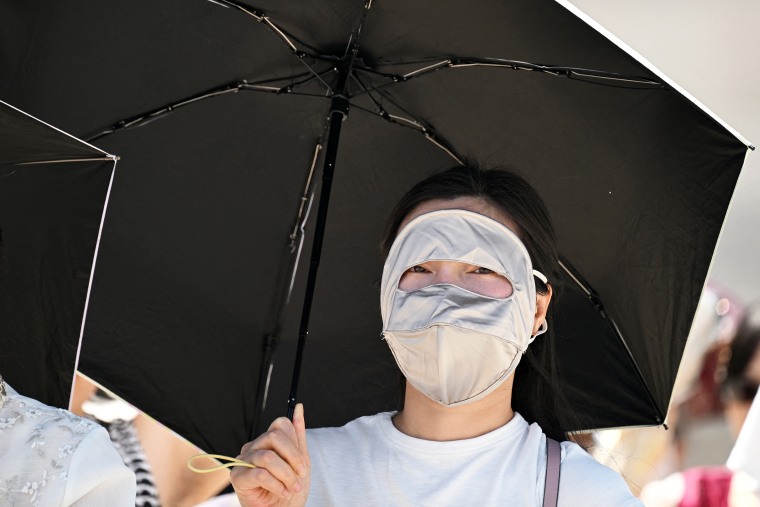
As of August 4, 2026, a severe heat wave is affecting large areas of East Asia. This has resulted in record high temperatures in South Korea and added complications to Japan’s earthquake recovery efforts. In South Korea, 19 heat-related deaths have occurred since mid-May. President Lee Jae Myung declared it a national disaster, stating the need for a fundamental overhaul of the national crisis system as extreme weather becomes more common.
On Sunday, Yangsan in southeastern South Korea reached 42.5 degrees Celsius (108 Fahrenheit), the highest in 122 years. While initially concentrating in the south, the high temperatures are now impacting northern regions, including the capital, Seoul. On Tuesday, the Korea Meteorological Administration issued a severe heat wave warning for all of Seoul, a first for the city, when perceived temperatures reached at least 38 degrees Celsius (100.4 F). Residents of the densely populated Seoul metropolitan area have been advised to stay indoors, stay hydrated, and check on vulnerable individuals.
North Korea is also experiencing high temperatures. The state newspaper Rodong Sinmun has urged citizens to avoid outdoor activities and farmers to protect crops.
Images of people cooling off under bridges in Seoul highlight the pervasive heat impacts.
Japan faces challenges with intense heat complicating disaster relief. The region has experienced temperatures over 100 degrees Fahrenheit following a 7.1-magnitude earthquake in Kumamoto prefecture on July 28. Over 40,000 households remain without access to water, with many individuals staying in emergency shelters or their cars due to fear of further quakes. A woman in her 70s died from apparent heat stroke after sheltering in her car, raising the death toll to 38.
Kumamoto’s Governor, Takashi Kimura, described her death as heartbreaking, urging displaced residents to keep car air conditioning running or relocate to air-conditioned evacuation centers. During a meeting with Prime Minister Sanae Takaichi, he requested greater government support for shelters lacking air-conditioning and clean water. In response, Takaichi assured the continuous supply of water and efforts to restore services, including equipment repairs at homes.
The extreme heat impacts extend beyond human populations. At the Tama Zoological Park near Tokyo, three lions died within a week due to suspected heat-related causes. Starting in mid-July, 10 out of 16 lions displayed signs of distress, such as decreased activity and appetite. Despite attempts to cool them, three females aged between 3 and 15 years passed away from dehydration and multiple organ failure. Four lions are recovering, while three remain ill.
The Japan Meteorological Agency has introduced a new term, kokushobi, or “cruelly hot day,” for days exceeding 40 degrees Celsius (104 F). This new terminology emerged from over 200,000 public votes, with the first kokushobi recorded last month over five consecutive days. The highest temperature recorded in Japan was 41.8 degrees Celsius (107.2 F) in Isesaki last August.