
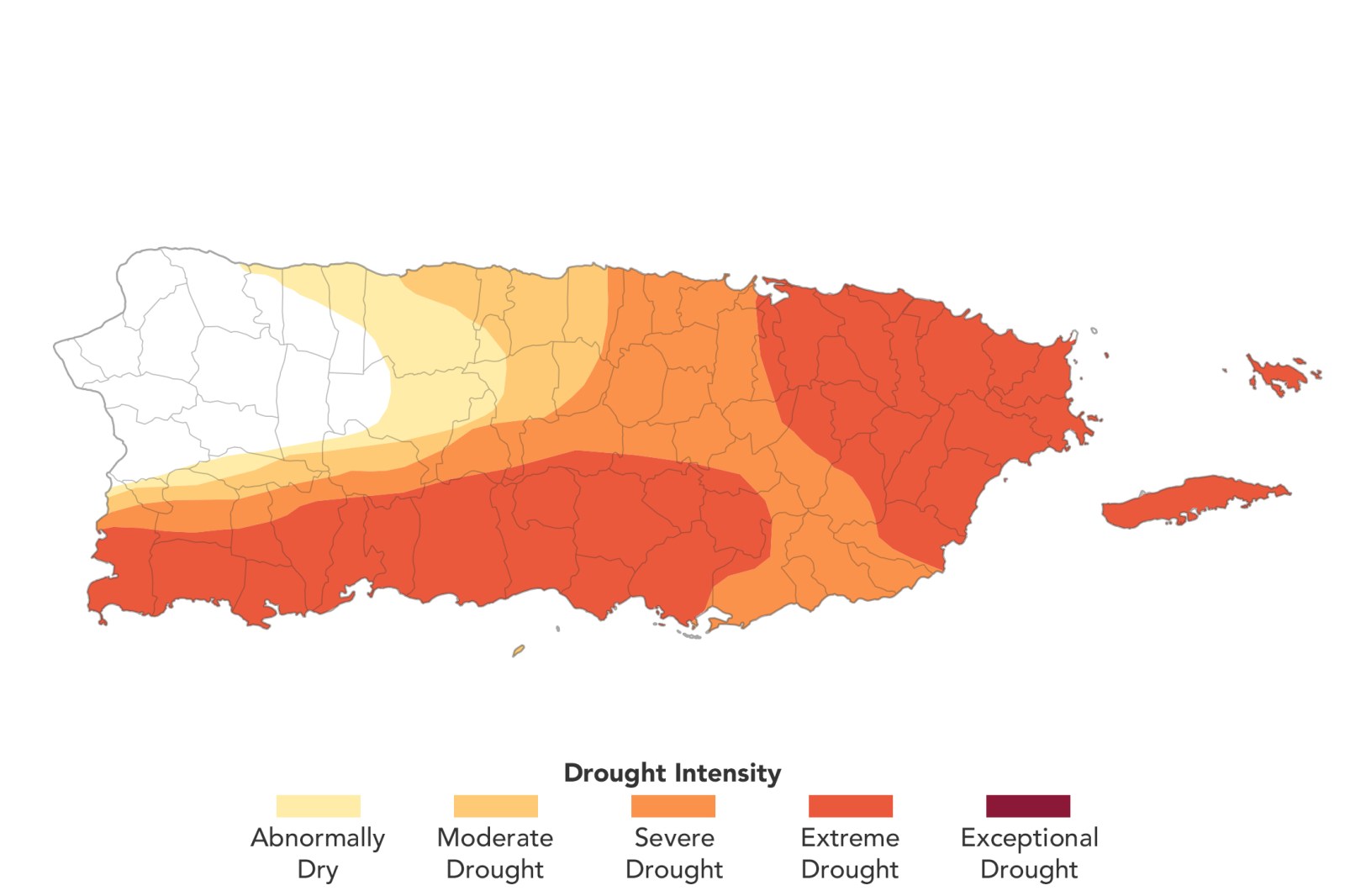
A recent NASA map has shed light on the severe drought affecting Puerto Rico. Hot and dry weather is causing significant water shortages and agricultural challenges, leading to emergency measures impacting thousands of residents.
Released by the NASA Earth Observatory on September 2, the map uses data from the United States Drought Monitor to depict the drought on August 25. The Drought Monitor is a collaboration between the National Drought Mitigation Center, the U.S. Department of Agriculture, NOAA, and NASA.
Rainfall deficits and high temperatures have created unusually dry conditions and spurred water shortages on much of the tropical archipelago,NASA reported.
According to the U.S. Drought Monitor, 75.2 percent of Puerto Rico is experiencing drought. 41 percent face extreme drought, while 21.3 percent are in severe drought. Over 3 million people live in drought-affected areas.
Brandon Wright, a senior meteorologist at ICEYE, highlighted the rapid development of the drought. “This is one of the worst droughts on the island since the US Drought Monitor began in 1999,” he stated. A White House official mentioned that they are closely watching the situation but have not received any assistance requests from FEMA.
Record Fast Drought Worsening
Meteorologist Wright noted the swift escalation, mentioning that only a third of Puerto Rico was “abnormally dry” three months ago. Now, about 40 percent faces extreme drought conditions.
A report by geoscientist Elena Maksimovich, CTO at Everloop, analyzed climate data and mentioned that the summer of 2026 was the second driest in Puerto Rico since 1950. The report referenced the driest summer in 1994 when wildfires were significant.
Influence of El Niño
Wright explained that El Niño has likely accelerated the drought. It suppresses thunderstorms across the Caribbean, reducing Atlantic tropical season activity. “El Niño’s onset as Puerto Rico was entering its wet season likely helped accelerate the drought,” he added.
Reduced thunderstorm activity often leads to fewer clouds, resulting in more heating and further drying. Temperature records for San Juan show May was among the 15 warmest on record, with June and July among the 10 and second warmest for their months, respectively.
Tropical Storm Dolly brought some rain recently, but Wright remarked the system “only put a small dent in the overall drought situation.”
Heightened Heatwave Risk
Maksimovich warned of intensifying climate threats. Her report highlighted extreme heatwave risks and increasing exposure to major droughts and wildfires.
The island faces both storm and heatwave risks, alongside drought, wildfires, and landslide threats. As of September 4, cities most at risk include Caguas, Arecibo, Bayamón, Carolina, and Fajardo.
Water rationing has been commonplace since the 1990s. The report emphasized the need for greater water storage capacity. It also warned that water restrictions could impact tourism development, agricultural investments, and coffee and cacao supply chains.
Have a weather or travel story? Contact [email protected]. For more, contact Newsweek editors, Sirena Bergman and Cristina Diciu.