
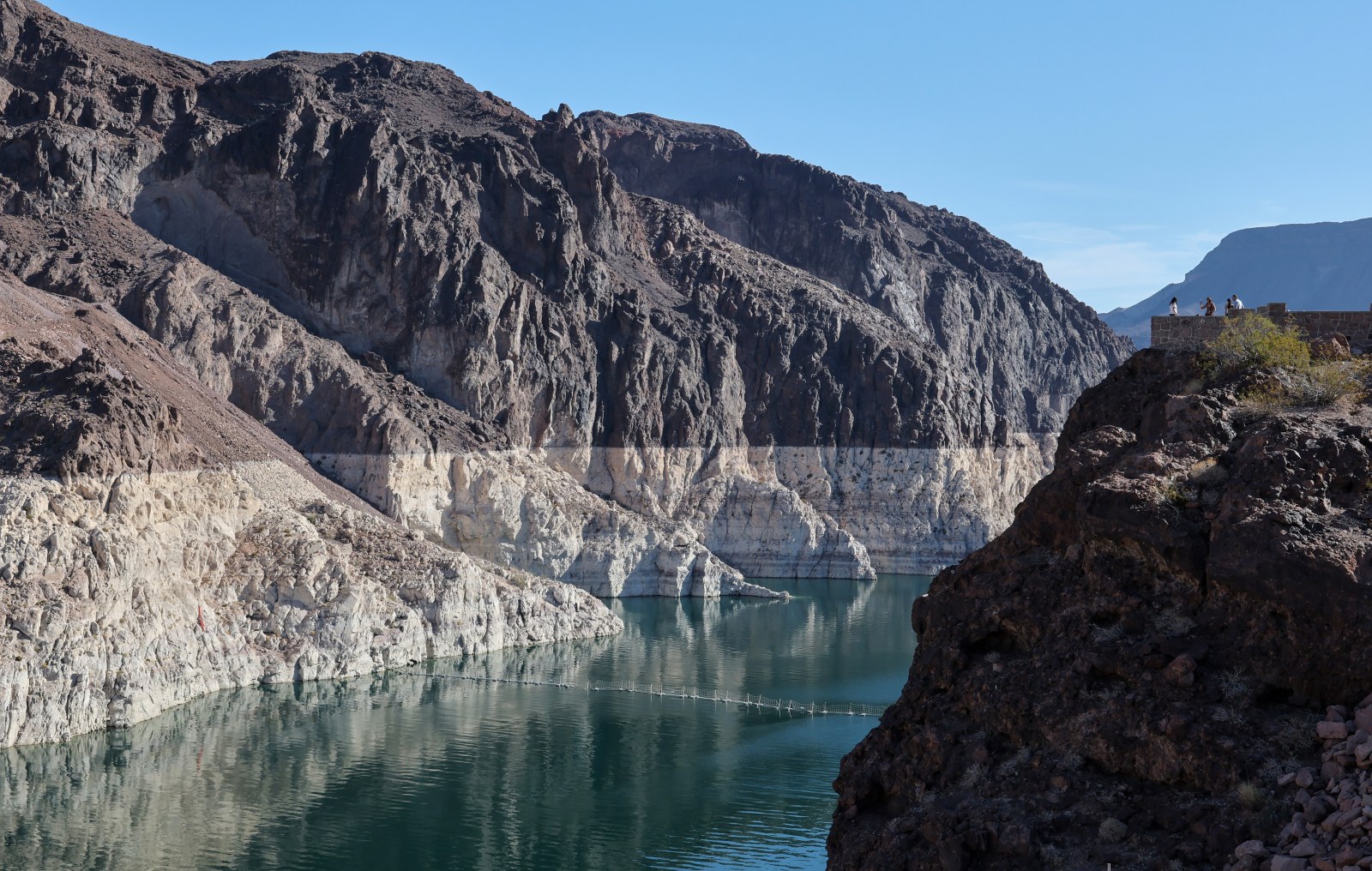
Lake Powell and Lake Mead, the United States’ largest reservoirs, have reached their lowest combined levels recorded. A recent report highlights the significance of this moment in the ongoing water supply crisis in the West.
Record Low Combined Storage
As of July 12, the combined live storage of Lake Powell and Lake Mead was 12,675,509 acre-feet. This breaks the previous low of 12,677,161 acre-feet noted on March 14, 2023. An acre-foot is the volume of water required to cover an acre of land to a depth of one foot.
On July 12, Lake Powell’s surface elevation was 3,524.32 feet above sea level, with 5,505,869 acre-feet of live storage. Lake Mead’s elevation was 1,042.77 feet, equating to 7,169,640 acre-feet. The reservoirs have not held such little water since May 23, 1957, when Lake Mead stored 12,668,000 acre-feet before the formation of Lake Powell.
Although often treated separately, these reservoirs function as a single storage system. Lake Powell and Lake Mead, residing in the Upper and Lower Colorado River Basins respectively, manage significant Upper Basin water uses and are vital to the Lower Basin.
Accelerated Storage Losses
Storage depletion has rapidly increased. Since March, the reservoirs lost about 16,000 acre-feet per day, except May, which saw a reduction to 11,000 per day due to snowmelt and supplemental releases.
Monthly depletion averaged 2,626 acre-feet per day in January, progressively increasing each month, especially evident from April’s average of 16,861 to early July’s 16,661. The report predicts ongoing record lows until winter snowpack runoff events.
The Significance of the Colorado River
The Colorado River is crucial for water supply in the southwestern U.S. and parts of Mexico. It supports hydropower, recreation, wildlife habitats, and agriculture, supplying 35 to 40 million people with water. With agriculture consuming about 70 percent, the river’s utility is immense.
Scientists warn that by 2028, extremely low levels could hinder regular operations and hydropower production, leading to what is termed a “system crash.” Such a scenario threatens infrastructure reliability, agricultural industries, and millions of people dependent on the river.
Future Management and Agreements
The current low comes as federal authorities prepare the forthcoming management phase of the Colorado River. A plan expected by 2027 may require Arizona, California, and Nevada to reduce river usage by about 20 percent. Further cuts could follow. Arizona’s governor opposes drastic reductions, deeming them “unacceptable.”
Several operating agreements are pending expiration, necessitating decisive actions on the river’s future management. As of Sunday, Lake Mead was 27 percent full, with Lake Powell at 22 percent, further underlining the urgency for management reforms.