
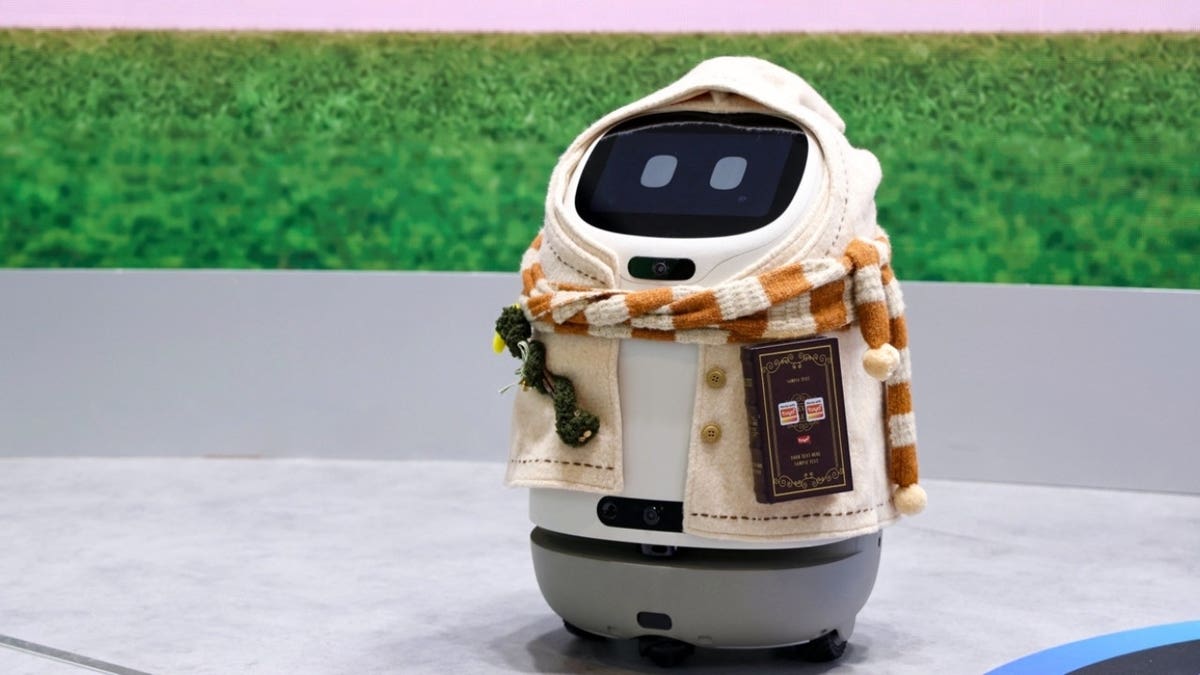
If you care for an aging parent or grandparent living independently, you might be concerned about their safety, especially if they fall without anyone knowing. Tuya Smart introduces Doova, an AI robot that could offer some reassurance.
Unveiling Doova at IFA 2026
Presented in Berlin, Doova is a wheeled AI home companion crafted for seniors living alone. It can navigate homes, respond to help calls, and activate live video links with family during possible emergencies.
Doova’s capability to move towards someone needing assistance differs from devices that wait for interaction from a table. It raises the question of its effectiveness in helping seniors maintain their independence.
Features and Functionality
Doova uses LDS LiDAR for navigation and a microphone system to locate voices. Its AI vision tracks a person’s posture. When someone needs help, they can call out, “Hey Tuya, help,” prompting Doova to assess the situation. If there’s no response within 60 seconds, it initiates an emergency workflow, alerting family members with a live video call.
Presently, Doova doesn’t automatically detect falls or contact emergency services, serving as an additional support layer rather than entirely replacing medical alert systems.
A Companion and More
Beyond emergencies, Doova converses naturally using a multimodal large language model. It engages seniors, assists with confusing documents, and identifies potential scam risks, although verifying suspicious findings independently remains wise.
Routine Assistance
Doova can remind users to take medication, manage daily schedules, and provide weather updates. It can learn personal preferences over time, aiming for personalized assistance. Future updates may include locating misplaced household items, addressing a common issue many face.
Home Monitoring and Privacy Concerns
Beyond caregiving, Doova acts as a mobile home-monitoring device, conducting 360-degree scans and sending safety reports to users’ phones. While this feature suits travel or time away, it prompts privacy concerns, given Doova’s access to audio, video, and personal preferences.
Evaluating where Doova processes data, what it stores, and who accesses it is crucial before inviting such technology into homes. Tuya hasn’t specified privacy controls for Doova, necessitating cautious consideration.
Smart Home Integration
Doova also functions as a central smart home controller. Seniors can use voice commands for elements like lighting or kitchen devices. Integrating these controls into simple interactions could simplify technology management in smart homes.
Current Unknowns
Price and availability remain unspecified. Practical tests in real home environments with rugs, cords, and stairs will reveal Doova’s field performance. Its emergency reliability in real-life situations also requires evaluation.
For those assisting aging loved ones, observing Doova’s technology can offer insights into future possibilities. These AI assistants may forge stronger family connections while enhancing independence for seniors.
Overall caution is advised. Examine emergency protocols, data collection practices, and the comfort level of potential users. Proven safety and reliable operation remain essential for integrating such technology into caregiving.