
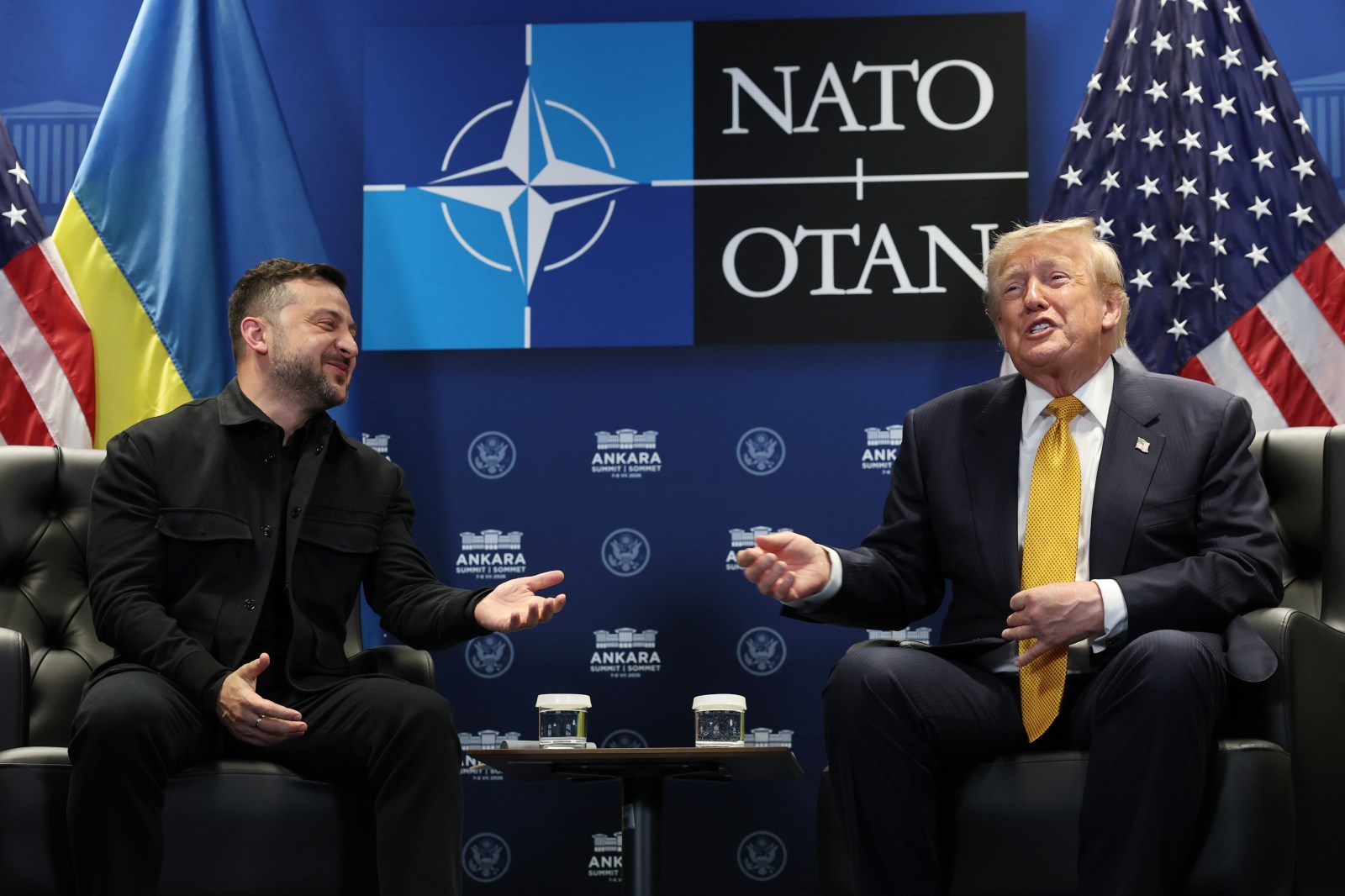
Representative Don Bacon, a Republican from Nebraska and a retired Air Force brigadier general, criticized President Donald Trump for his statements regarding the conflict in Ukraine. Bacon, known for his strong support of Ukraine, responded to Trump’s remarks after a meeting with Ukrainian President Volodymyr Zelensky.
Trump’s Comments and Bacon’s Response
When asked about his meeting with Zelensky, Trump expressed a desire for the Ukrainian leader to “end the war.” Trump stated his good relations with both President Putin and President Zelensky and suggested that the conflict’s human cost was not acceptable. The White House defended Trump’s humanitarian concern, emphasizing efforts to bring the war to an end through diplomacy.
Bacon, however, warned that such wording risks creating “moral ambiguity.” He argued that Russia is solely responsible for starting the war, stressing, “Blame Putin.” Bacon’s critique highlighted the danger of obscuring who is responsible for the invasion of Ukraine, which began with Russia’s full-scale invasion in February 2022.
Bacon’s Consistent Opposition
Bacon has consistently been a Republican voice challenging Trump’s rhetoric on Russia and Ukraine. Earlier criticisms included warnings against appeasing Putin and cautions against forcing Ukraine into territorial concessions. Bacon has also defended NATO and U.S. alliances, warning that weakening these ties emboldens authoritarian regimes.
He expressed concerns over national security stability, pointing to the departures of senior military leaders during Trump’s term. As a former military officer, Bacon advocated for strong alliances and opposition to Russian aggression.
Current Situation in Ukraine
The conflict continues with Russia and Ukraine engaged in large-scale attacks and diplomatic efforts stalled. Zelensky recently visited Washington, seeking military cooperation and paths to restart peace talks. Notably, Ukraine strikes at Russian targets, including in the Caspian Sea, have globalized the conflict dimensions.
Russia remains unyielding in its territorial claims despite economic pressures and sanctions. Tensions overlap with Middle East dynamics as accusations fly about Iran’s role in aiding Russia, and Kyiv’s growing connections to broader regional conflicts.
Trump-Zelensky Relations Evolving
The relationship between Trump and Zelensky, previously marked by public disagreements, has improved with recent meetings. Zelensky acknowledged a change in tone during talks with Trump, highlighting progress in diplomatic relations.
Shifts in Conservative Views
Laura Loomer, initially critical of U.S. support for Ukraine, shifted her stance after visiting war-affected areas. Loomer admitted to underestimating Ukraine’s suffering, acknowledging previous beliefs shaped by propaganda. This change, welcomed by Ukrainian officials, signals potential broadening support among some conservative figures.
Nonetheless, significant divisions persist among conservatives on military aid and sanctions. While some critics remain, figures like Bacon emphasize clarity: Russia initiated the conflict, Ukraine was invaded. This straightforward stance is crucial for understanding the war’s dynamics.
For Bacon, the crux of Trump’s message lies in clarity. By urging Zelensky to “end the war,” Trump risks misplacing responsibility—a concern Bacon continues to vocalize.