
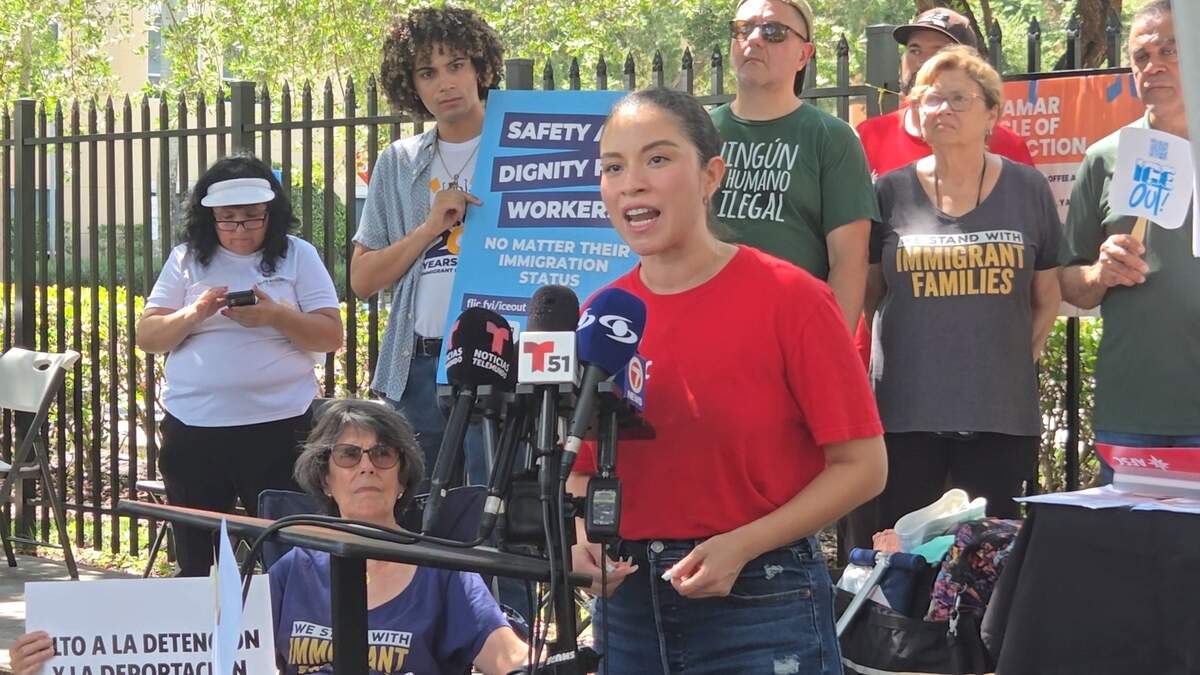
Yareliz Mendez Zamora, representing the American Friends Service Committee, reports an increase in activity at the Miramar Immigration and Customs Enforcement facility. She visits weekly to assist families with cases. On Wednesday, July 29, 2026, she was outside the facility, observing developments.
The Department of Homeland Security (DHS) is searching for a new immigration detention facility in the Miami area. A recent procurement request highlights the need for a contractor-operated, or ‘turnkey,’ facility with at least 700 detention beds. This facility should be located within 50 miles of the ICE Miami Field Office in Plantation. DHS requires similar facilities across the nation for individuals in ICE custody.
In addition to housing detainees, these facilities must offer medical and mental health care services, transportation, guard services, food service, and other detention-related services. The procurement document outlines that the contractor will provide comprehensive detention management services, including personnel, management, equipment, supplies, and services necessary for all aspects of the contract. Local 10 News first reported the request.
DHS is also looking for facilities with at least 1800 beds near Philadelphia and 1500 beds each in the Seattle and Denver areas. This move follows the closure of Alligator Alcatraz, a controversial Miami detention center. Additionally, the Trump administration appears to be preparing for increased ICE enforcement after the end of Haiti’s Temporary Protected Status (TPS) designation.
Recently, the U.S. Supreme Court allowed DHS to proceed with plans to terminate TPS for over 300,000 Haitians despite ongoing legal challenges. Concerns are rising among immigration advocates and Haitian communities in places like South Florida, New York, and Springfield, Ohio, about potential increases in ICE raids requiring more detention space.
Activists gathered outside the Miramar ICE facility to protest the growing number of arrests across South Florida and criticize the involvement of local governments in federal immigration enforcement. American Friends Service Committee members noted unusual activities at the facility.
Billy Botsch of the American Friends Service Committee observed a company known for temporary structures parked at the facility, interacting with field office officials. He described the situation as unusual.
Advocates from the Florida Immigrant Coalition also joined the protests. Botsch mentioned portable toilets placed in the rear parking lot, suggesting inadequate facilities inside the building. Changes in processing procedures at the facility raised further concerns.
The ICE field office did not respond to requests for comment. A DHS spokesperson mentioned that the agency does not discuss future operations but conducts enforcement nationwide daily. Mendez noted families being transferred from the Miramar facility to hotels before deportation. She highlighted the difficulty in maintaining contact with family members during this process.
Miami Herald reporter Morgan Mullings contributed to this report. Jacqueline Charles, who has reported on Haiti and the English-speaking Caribbean for over a decade for the Miami Herald, is a Pulitzer Prize finalist for her 2010 Haiti earthquake coverage. She received the 2018 Maria Moors Cabot Prize for her coverage of the Americas.