
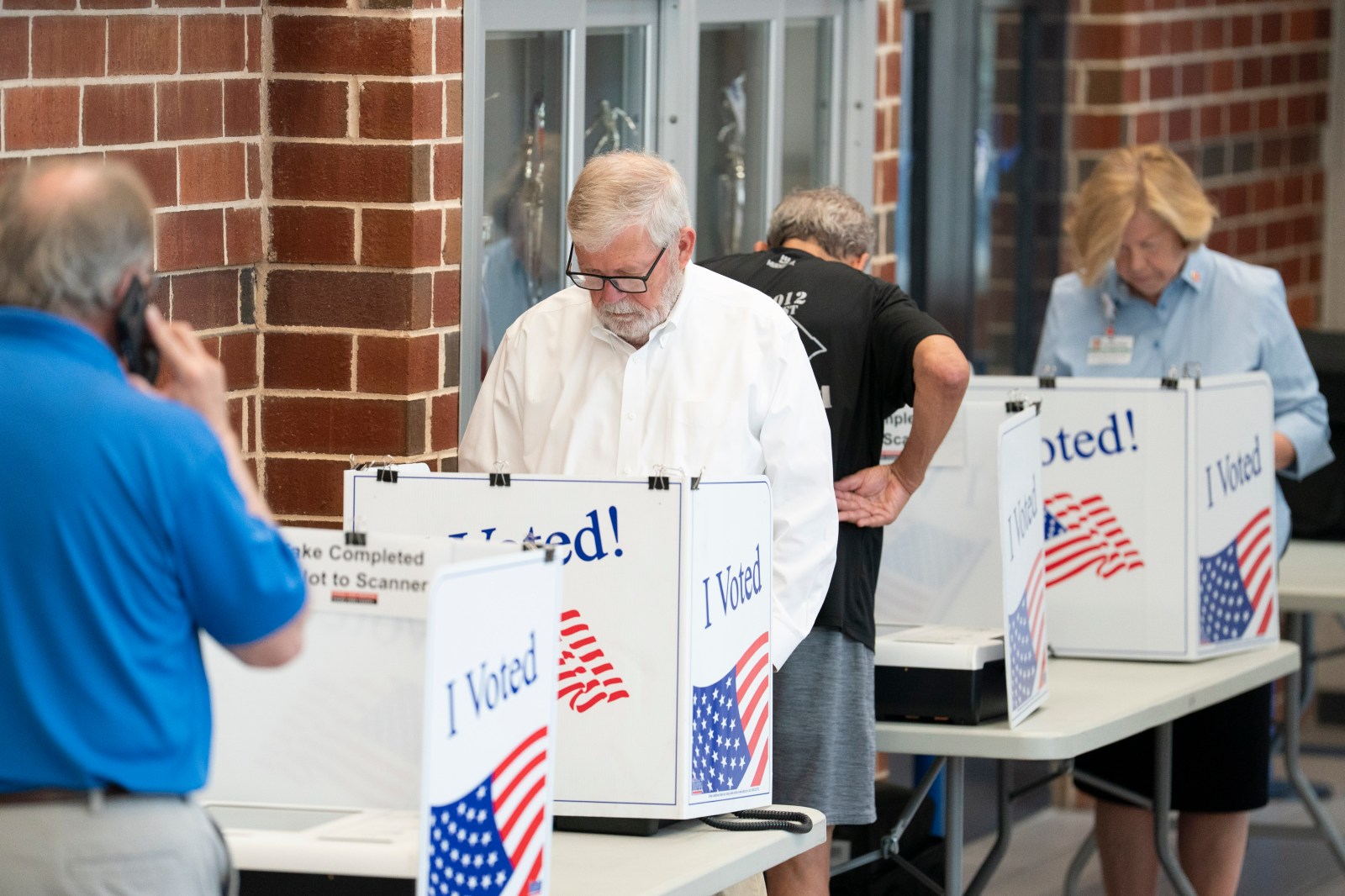
Republicans are encountering a new challenge as the 2026 midterm elections approach. Gallup data reveals Democrats hold a significant lead in party identification. In the second quarter of 2026, 49% of Americans identified as Democrats or leaned Democratic compared to 39% who identified as Republicans or leaned Republican. This 10-point lead matches the margin from the first quarter and marks the largest lead in Gallup’s quarterly tracking since 2015.
These figures display a marked shift from the end of 2024 when Republicans had a 47% to 43% advantage over Democrats. Since President Trump returned to office, Democrats have widened their lead amongst both registered members and independents.
Currently, 31% of Americans identify outright as Democrats, 25% as Republicans, and 44% as independents. The six-point gap in outright party identification is the largest Democratic lead in Gallup’s measure since 2015. During the 2026 first quarter, Democrats held a five-point advantage.
The political landscape heading into November
Midterm elections often test the political climate facing the party in power. Historically, the president’s party loses seats during midterms. Although Republicans hold a narrow majority in Congress, analysts like Cook Political Report suggest Democrats are favored to take control of the House.
President Trump plans to campaign for Republicans during the last month before the midterms, targeting 35 races nationwide. However, polling consistently shows Democrats holding the advantage heading into November.
Party identification, a measure of the political environment, indicates potential election outcomes. Although independents constitute a significant portion of the electorate, many lean left or right and often vote accordingly. However, party identification isn’t a guarantee of voter turnout or election results.
Political experts weigh in
Columbia University political science professor Robert Y. Shapiro stated that the Republicans need to address issues such as inflation and affordability to counter the Democrats’ edge. Grant Davis Reeher, from Syracuse University, attributed Democratic growth to Trump’s unpopularity and the emergence of socialist candidates generating excitement.
Despite a 10-point Democratic lead, uncertainties remain regarding voter distribution across regions, which will be crucial for the midterms and beyond.
Republican challenges and outlook
Republicans currently control both chambers of Congress, but Democrats enter the final campaign stretch with favorable indicators. Factors including turnout and individual races will determine whether Democrats can capitalize on the 10-point identification gap and the six-point advantage not counting independents.
White House response
The White House has downplayed concerns over presidential approval figures, with spokesperson Davis Ingle dismissing their significance compared to the 2024 presidential election. Ingle cites Trump’s achievements on job creation, inflation reduction, and housing affordability.
What else polls show
Democrats also lead in polling on the generic congressional ballot, which reflects national political sentiment. Trump’s low approval ratings and Democratic enthusiasm could be advantageous, although Republican-favored district maps may limit Democratic seat gains.
YouGov/Economist polling reveals 36% of U.S. adults favor Democrats and 31% favor Republicans in congressional votes, with other options and indecision making up the rest. Quantus Insights polling shows similar Democratic leads. Continued analysis and voter behavior remain vital as Election Day approaches.