
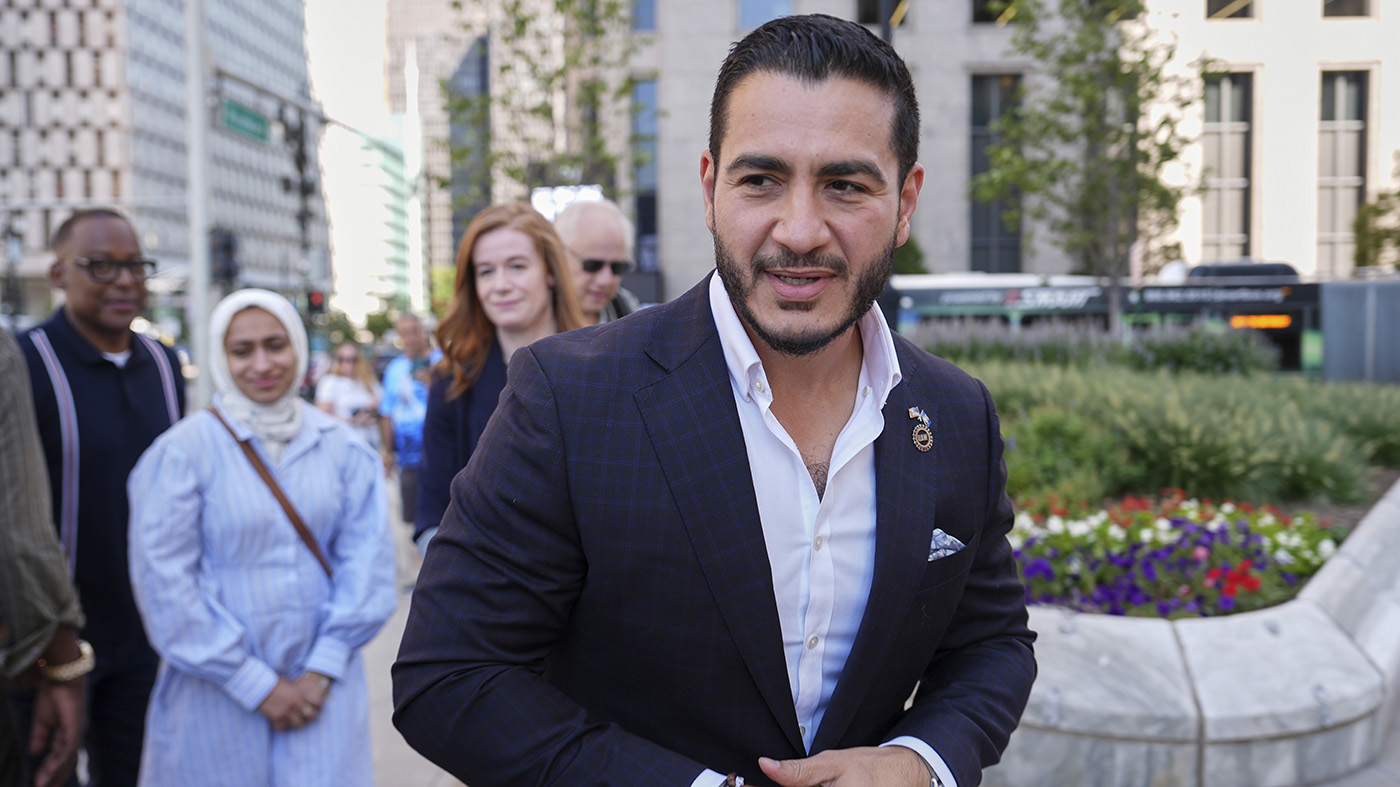
Abdul El-Sayed participated in a news conference at the Spirit of Detroit after clinching the Democratic nomination for the U.S. Senate in Michigan on August 5, 2026. This occurred during a time when President Trump’s approval rating had dropped to 34%, a figure that provided an opportunity for Democrats to regain control of Congress in the upcoming November elections.
Rather than capitalizing on this advantage, the Democratic establishment chose to allocate substantial funds to a national ad campaign targeting fellow Democrats. Jonathan Cowan, head of the centrist Democratic group Third Way, stated the group would spend $15 million to combat the rise of “democratic socialism.” Many establishment figures avoid defining democratic socialism explicitly. They often refer to individuals like Senate candidate Abdul El-Sayed and New York City Mayor Zohran Mamdani. In reality, El-Sayed is not a democratic socialist, although Mamdani is. The rise of democratic socialism reflects broader support for economic policies among Democratic voters, with a significant portion now identifying as democratic socialists.
Centrists’ opposition to this leftward movement is unpopular among many Democratic constituents. This strategy focuses more on attacking individuals than addressing core issues, which could weaken the Democrats’ chances of reclaiming Congress and, eventually, the White House. Data suggests that Democratic efforts to paint progressive politicians negatively have not succeeded. For example, El-Sayed won his primary despite significant financial disadvantages, and Mamdani prevailed over a powerful family legacy.
These examples illustrate a significant error by the Democratic establishment: framing elections as battles between progressives and centrists, rather than between outsiders and establishment figures. Progressives have succeeded by focusing on key topics like economic affordability and employment, diverging from their centrist opponents who became engulfed in conspiracies. Barker, from the Brookings Institution, argues that today’s progressives are viewed as pragmatic, not radical.
El-Sayed and other candidates emphasize economic issues and priorities that align with voter concerns. They resonate with voters by addressing practical matters, distancing themselves from the party’s elite, which often fails to connect with working-class voters. Progressives’ popularity stems from their willingness to address challenging policy issues, unlike centrists who are hindered by incrementalism and risk aversion. Struggling Americans seek immediate action reflecting their values and are growing impatient with centrist delays.