
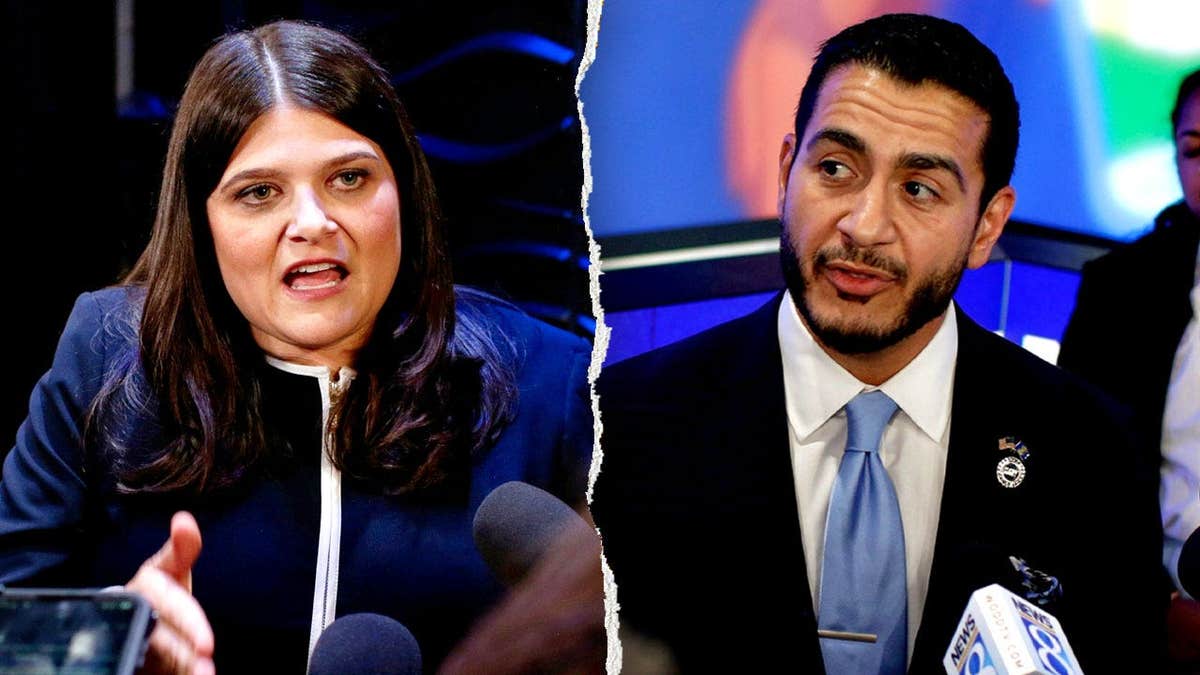
The recent Michigan Senate debate highlighted significant divisions between the Democratic Party’s far-left wing and its establishment members. This confrontation occurred just a week prior to the August 4 primary.
Both candidates aimed to clarify who could best represent Michigan and challenge Republican candidate Mike Rogers in November. Throughout the debate, the candidates emphasized their contrasting stances, drawing attention to specific issues and key differences.
El-Sayed’s Remarks and Their Impact
Abdul El-Sayed defended his controversial ‘ogre on a pike’ comment, explaining it was directed at Senator John Fetterman, not opponent Haley Stevens. Although he faced backlash, El-Sayed maintained his stance, criticizing Fetterman for abandoning his values. He clarified he had supported Stevens against other attacks within the party.
Stevens’ response was concise, acknowledging El-Sayed’s clarification. The debate continued to focus on issues of party allegiance and values.
Outside Spending and Influence
The role of pro-Israel and corporate spending became a focal point. El-Sayed criticized the AIPAC-related financial support aiding Stevens, arguing it could influence her future decisions. Stevens denied that the outside spending compromised her integrity, insisting her views on a two-state solution were clear and consistent.
El-Sayed tied financial spending to broader policy concerns, advocating the redirection of funds to local projects and emphasizing transparency and accountability.
Financial Transparency Concerns
Stevens raised questions about El-Sayed’s financial disclosures, accusing him of hiding details regarding his income and tax returns. She voiced concerns that these issues could be leveraged against him by Republicans.
El-Sayed countered by emphasizing the importance of transparency, citing his financial disclosures while questioning the financial contributions supporting Stevens.
Debating Political Processes and Agencies
El-Sayed criticized the Senate filibuster as undemocratic, proposing its elimination to enable new legislative priorities. He argued that removing the filibuster could facilitate labor reforms and economic measures.
Regarding immigration, both candidates offered differing approaches to addressing the role of the Immigration and Customs Enforcement (ICE). Stevens called for reallocating ICE resources to community-focused initiatives, while El-Sayed advocated for abolishing the agency, labeling it tyrannical.
These debates underscored ongoing tensions within the Democratic Party as candidates prepare for the upcoming primary and general election.