
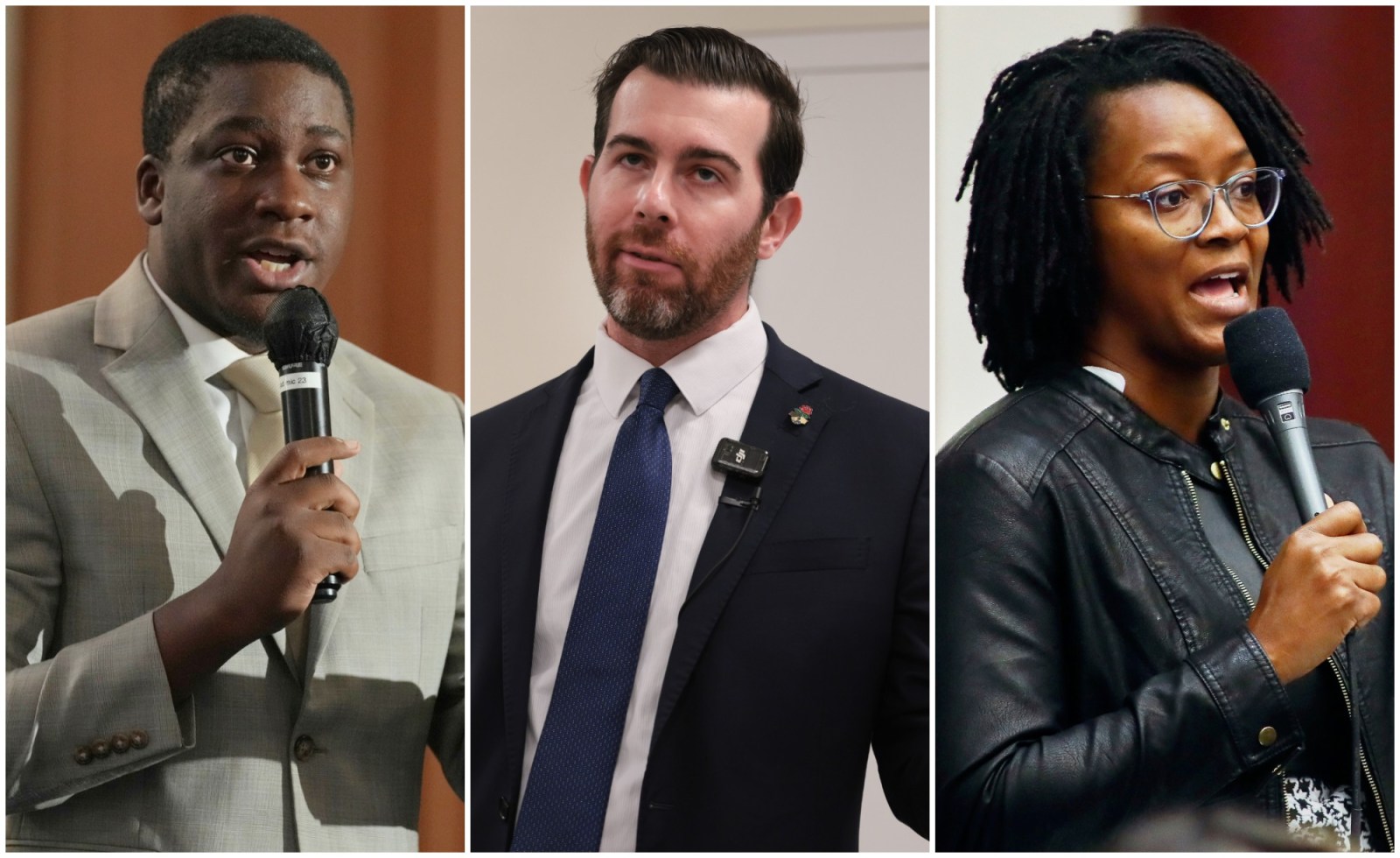
As the November midterms approach, a significant showdown looms in Florida. The state has become a battleground where Democratic insurgents challenge the established order. This week, three upstart candidates will face off against better-funded Democrats in the Florida primary on August 18. They argue that the concept of ‘electability’ is used by the Democratic Party to weed out candidates before the public makes its decision.
Oliver Larkin is vying against U.S. Representative Jared Moskowitz in the 25th Congressional District. Elijah Manley contends against U.S. Representative Debbie Wasserman Schultz in the reconfigured 20th District. Meanwhile, Florida state Representative Angie Nixon is taking part in the Democratic bid for the special U.S. Senate race, competing with retired U.S. Army Lieutenant Colonel Alexander Vindman.
Prominent Democratic Socialists of America (DSA) member Rashida Tlaib, a Michigan Representative, was set to join a rally in Fort Lauderdale to support these candidates. The rally, titled “Chomp the Oligarchy,” had backing from Miami DSA, Broward County DSA, Gen Z for Change, and the Florida Youth Justice Coalition. A venue change became necessary after opposition from local Democrats.
Florida Republican Representative Randy Fine criticized Tlaib’s visit, citing her support of candidates competing against Jewish Democrats. He emphasized a perceived strategic alignment against Jewish members in Congress.
The Candidates and Their Platforms
Larkin identifies as a democratic socialist, whereas Manley defines himself as a progressive and economic populist. Manley has not secured national DSA endorsements, instead gathering support from figures and organizations such as Representative Ro Khanna, the Progressive Change Campaign Committee, Florida Rising, and Dream Defenders. Conservative media have labeled both as socialists.
“The Democrats’ embrace of socialism and communism threatens American liberty,” expressed a White House spokesperson, adding, “President Trump will never let the nation follow that path.”
The Electability Debate
Larkin and Manley share the view that the party’s concept of ‘electability’ hinders genuine candidate evaluation. They argue this term has been misused to exclude progressive voices within the party.
Larkin stated, “The measure of a candidate’s electability tied to corporate PAC donations or their moderation in issues is obsolete post-2024, after losing again to Donald Trump.” He highlighted Kamala Harris’s failure in swing states as part of this broader issue.
Manley remarked, “Electability and viability act as barriers to progressives. You can’t rightly assess electability until an election takes place.” He notes the bias of these terms against women and candidates of color, specifically citing Angie Nixon.
Both candidates dismiss the idea of attracting moderate voters as essential. Manley criticized the pursuit of the so-called middle voter, expressing that voters prefer an authentic choice instead of watered-down alternatives.
Survey and Market Trends
Current prediction markets favor the incumbents. Moskowitz is given around 88-90 percent odds to secure his nomination. Wasserman Schultz sits at 91 percent in District 20. Vindman enjoys a 94 percent lead in the Senate primary over Nixon.
Polls reflect this favor towards established candidates. An EMC Research poll showed Wasserman Schultz with 52 percent among likely voters. A Listener Group poll initially placed Manley at a deficit but marked a lead increase following voter exposure to candidate profiles.
Larkin reported campaign progress with a notable door-to-door strategy, while acknowledging being heavily outspent by opponent super PACs.
Nixon’s Position and Campaign Dynamics
Nixon’s case offers a study in electability and financial disparities. She trails behind in fundraising compared to Vindman but gains more voter traction, as noted in recent polls.
Backed by figures like Rashida Tlaib and Ilhan Omar, and organizations such as the SEIU, Nixon emphasizes returning political power to the populace. Her campaign signifies a break from traditional politics.
Vindman, presenting himself as an outsider, stresses affordability in living costs and legislative reforms in his “Florida First Agenda.” Despite the stark fundraising gap, he maintains a grassroots donor base.
National Implications
The Florida primaries culminate what some describe as a successful DSA candidate streak nationally. However, losses, such as Francesca Hong’s defeat in Wisconsin, illustrate challenges against entrenched party expectations.
Despite setbacks, insurgents claim victories in various states, suggesting shifting tides in certain Democratic strongholds. Yet, Republican strategist Matt Klink warns that DSA influence poses broader electoral vulnerabilities for Democrats.
Party leaders express concern over progressive candidates’ broader appeal and criticisms of their stances on issues like crime.
As Democrats grapple with intraparty challenges, voters’ perceptions hinge on economic realities and the party’s ideological direction.
Manley underscores that internal party dynamics, particularly race-related disputes, need addressing. The primary results may act as harbingers for larger shifts come November.