
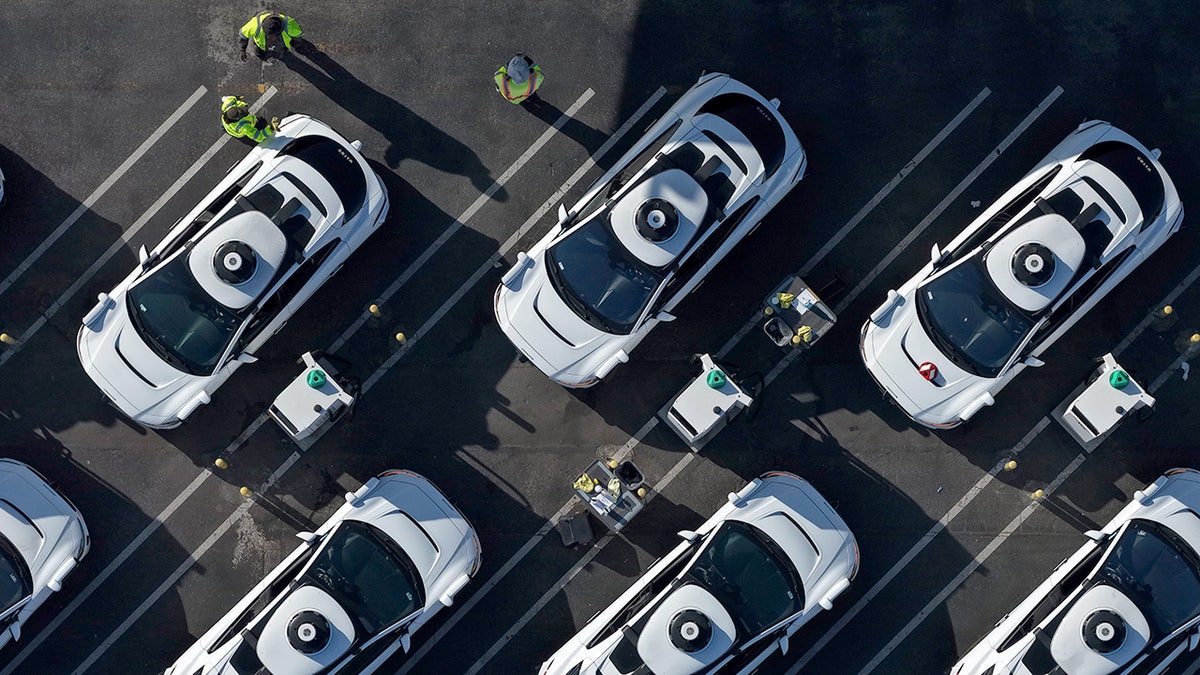
A new proposal to introduce driverless rideshare vehicles in the U.S. capital is stirring controversy among union workers, drivers, and religious leaders. They express concern over the potential job losses that might result from this technological advancement.
Recently, protesters gathered outside the John Wilson Building while D.C. council members discussed legislation that would permit companies like Waymo to operate autonomous vehicles commercially in Washington, D.C. The protesters demanded the rejection of the legislation, warning of the impact on rideshare employment.
“We came out here today strongly because we feel that these robotaxis will put people out of work,” a protester stated. “And people need jobs.”
Some individuals emphasized that robotaxis could harm the community by eliminating jobs crucial for supporting families.
“I’m against robotaxis because it takes away jobs and food from the community,” said Frederick from Virginia. “People need jobs to be able to support their families.”
As concerns rise, others propose proactive solutions. One protester suggested shortening the workweek and developing new employment opportunities in various sectors.
“We should take the offensive on job issues,” Michael from Washington, D.C., proposed. “Shortening the workweek without reducing pay could create more jobs in public transportation, hospitals, and other service industries.”
The legislation, known as the Autonomous Vehicle Deployment Authorization Amendment Act of 2026, was introduced by Councilmember Charles Allen. It aims to establish a program, managed by the District Department of Transportation, to host commercial autonomous vehicles.
Safety and Fares
Supporters of the initiative cite safety statistics provided by Waymo. According to their data, covering over 270 million miles, autonomous vehicles were involved in 82% fewer injury-causing accidents and 95% fewer severe injuries compared to human-driven cars within the same zones.
Despite claims of possible reduced fares without human drivers, comparisons show Waymo’s pricing varies and isn’t consistently cheaper than traditional options like Uber.
“They seem the same price to me,” Helen from Maryland observed. “Not much difference in other cities.”
Critics warn that though fares may initially decrease, rates might surge eventually.
“Trials might be cheap, but costs will rise,” Sabrina argued. “It’s just a tactic to hook us.”
Regulatory Framework and Next Steps
The proposed bill aims for a regulatory framework that would limit operators to 200 vehicles and seeks evidence of sufficient autonomous testing. Companies must run tests for at least 180 days and 250,000 miles in the District, and present plans to reduce service disparities.
A public hearing was held in July, yet no vote has occurred. Approval from the council is required before autonomous vehicles are introduced.
Union representatives insist worker involvement in the process should be imperative.
“A worker should be at the table,” advised Samuel Epps, Metropolitan Washington Council, AFL-CIO President. “We shouldn’t rush this.”
Some residents voice personal concerns about safety, preferring human drivers for their children’s commutes.
“I would prefer a human driver,” Eddie expressed, worried about autonomy in public transport.
The ongoing discussions and community responses reflect the complex challenges surrounding the integration of driverless technology in urban environments.