
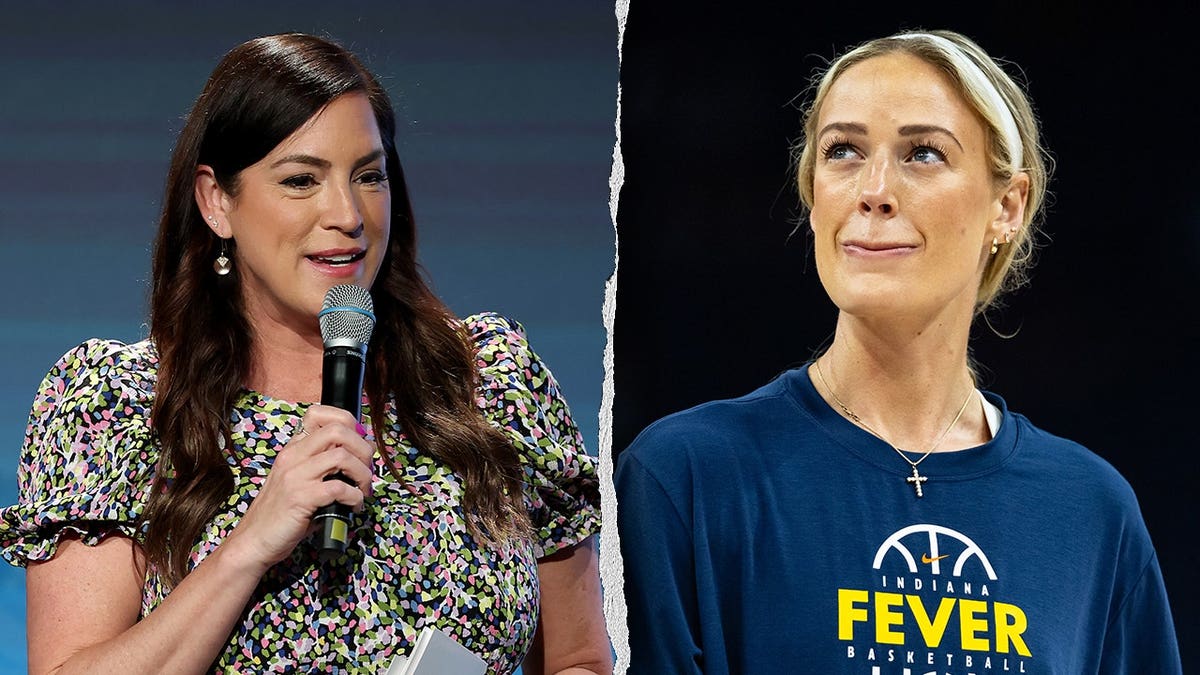
Sarah Spain frequently refers to the NBA as the “MNBA,” aiming to highlight that the WNBA is not a secondary league due to the “W” prefix. However, her approach towards women who politically disagree with her reveals a different side. Her recent “Good Game” podcast episode featured strong criticism of Indiana Fever guard Sophie Cunningham.
Spain’s Critique of Sophie Cunningham
Spain criticized Cunningham’s stance on biological males competing in women’s sports, questioning her character, motives, and upbringing. Cunningham, in an ESPN profile, expressed concern for young girls’ safety and fairness in sports:
“I think that I am here to extend love, but I also think that with love is truth, being honest, and I want to protect young girls in a locker room, or young girls in sport, who shouldn’t have to go against biological men,” Cunningham stated.
Spain interpreted this concern as selfishness, dismissing Cunningham’s fear of losing her WNBA spot. Despite Cunningham’s focus on young girls’ welfare, Spain viewed her statement as lacking empathy.
Handling of Cunningham’s Stalking Situation
Spain further diminished Cunningham’s credibility by minimizing her stalking experience as mere “complaining.” An Indianapolis man faces charges for stalking Cunningham, including delivering to her team’s venue and threatening a security executive. Cunningham reported increased home confinement and nightmares, highlighting the ordeal’s seriousness.
Double Standards in Women’s Advocacy
Spain’s lack of empathy for Cunningham contrasts with her argument later in the podcast. She suggested that WNBA Commissioner Cathy Engelbert should provide more emotional support to players. Spain believes women’s sports leaders should emphasize player emotions, unlike their male counterparts. This stance implies that female athletes need different treatment, which some, like ESPN’s Holly Rowe, deemed sexist.
Rowe vs. Spain
Rowe challenged Spain by arguing that men and women in professional sports face similar pressures. She cited Saquon Barkley’s home invasion as evidence against Spain’s claim of men’s invulnerability. Their discussion revealed disagreement on whether leadership roles need to differ based on gender.
Spain’s viewpoint relies on the notion that women experience threats distinctively, warranting specific attention in women’s sports. Yet, she dismisses Cunningham’s expression of concern for young girls, calling it selfish. This inconsistency highlights the complexity of managing women’s safety and inclusivity in sports.
Conclusion on Gender and Sports Authority
Spain’s positions on women’s safety and transgender participation in sports display contradictions. Her advocacy fluctuates based on alignment with her values, challenging her consistency as a champion for all women. This inconsistency undermines her stance on supporting female athletes universally.