
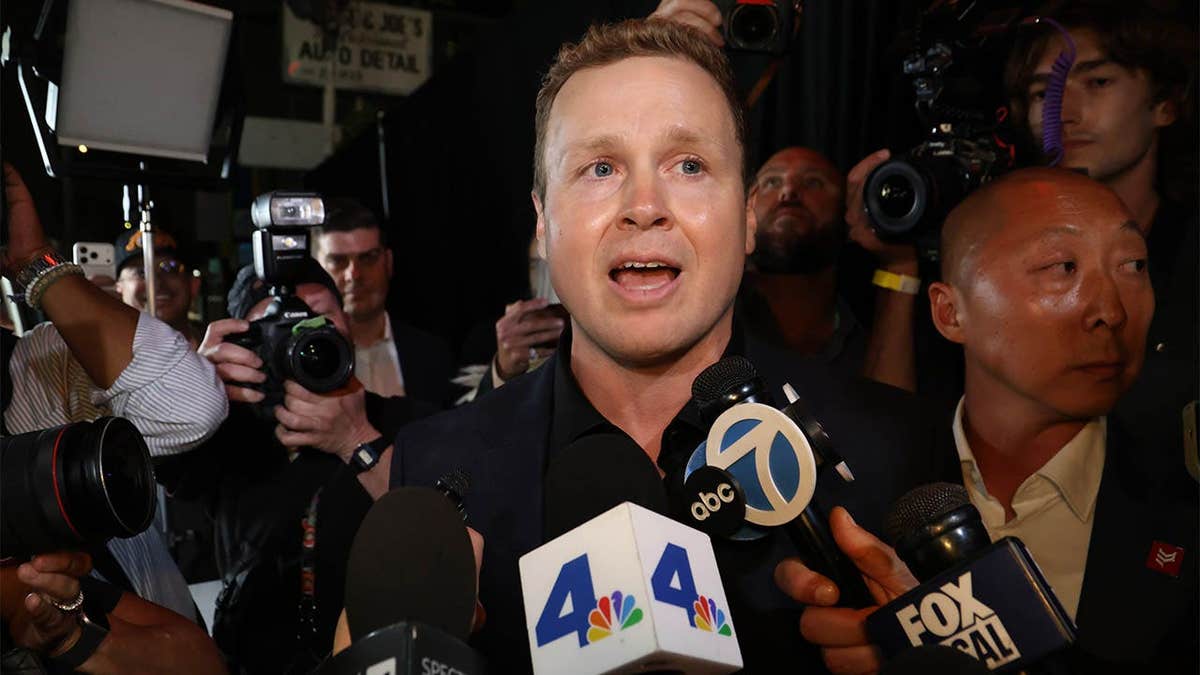
Former reality TV personality and California politician Spencer Pratt reacted sharply to Ryan Reynolds’ recent remarks criticizing 1980s nostalgia. Reynolds, known for his role in ‘Deadpool,’ stirred controversy by labeling the 1980s as ‘brutal’ and a ‘f—ing mess.’ He made these comments during the promotion of his Cold-War era film ‘Mayday.’ Critics questioned his description, noting the nostalgic elements in his new movie.
In an interview with Variety, Reynolds highlighted how time can create a sanitized view of the past. He said, ‘The 80s was a brutal, brutal time for people. It was a f—ing mess and people forget that.’ Pratt, however, disagreed and praised the decade’s ‘cultural sanity,’ noting the clear distinction of good versus evil that existed then.
When you get far enough away from a time period that’s quite distinct, there’s always a lovely feeling associated with it, almost like you pave over all the trauma with puppy dogs and ice cream.
Reynolds’ comments drew a response from Pratt, who took to social media to express his views. He remarked, ‘It makes perfect sense that Ryan Reynolds’ view of the 80s is the inverse of what normal people think. In 80s movies, bad guys were villains. Today, the bad guys are the heroes.’ Pratt criticized modern pop culture for redeeming villains and mental illness, contrasting it with the hero-centric narratives of the 1980s, epitomized by films like ‘Top Gun.’
Pratt, who once ran for Los Angeles mayor, connected his critique to broader cultural themes. He shared a video commentary discussing modern pop culture’s shift towards empathy for anti-heroes, questioning the loss of classic heroes in American culture.
Christian Toto, a film critic and founder of Hollywood in Toto, acknowledged Pratt’s critique, pointing to pop culture’s increasing focus on anti-heroes. He commented, ‘Spencer Pratt’s hot take suggests a sobering reality. Has pop culture’s infatuation with anti-heroes had real-world implications? It’s one thing to follow Tony Soprano or Walter White, but modern films and TV shows are replete with villains we’re asked to cheer on.’
Toto cited several films like ‘Bullet Train,’ ‘Hit Man,’ and ‘John Wick’ as examples where villains are portrayed with redeeming qualities. He pondered, ‘Has that had a corrosive effect on the culture? Pratt’s question is worth exploring.’
The debate over 1980s nostalgia continued with contributions from Theo Wold, a former assistant attorney general, who provided a political perspective. He rebuked Reynolds for relying on ‘celebrity cocktail hours’ talking points. Wold reminisced about the 1980s as a time of greater social cohesion and freedom in the U.S., despite economic challenges.
Wold remarked, ‘Ryan Reynolds forgot to do some thinking before he took a talking point from his celebrity cocktail hours and debuted it in public.’ He suggested that Reynolds’ experience in Canada during that era might have influenced his views, mentioning the poor performance of socialism at the time.
While both Pratt and Wold critiqued Reynolds’ view of the 1980s, they acknowledged the decade’s complexities. The discussion reflects a broader cultural discourse on the depiction of heroes and villains in media today.