
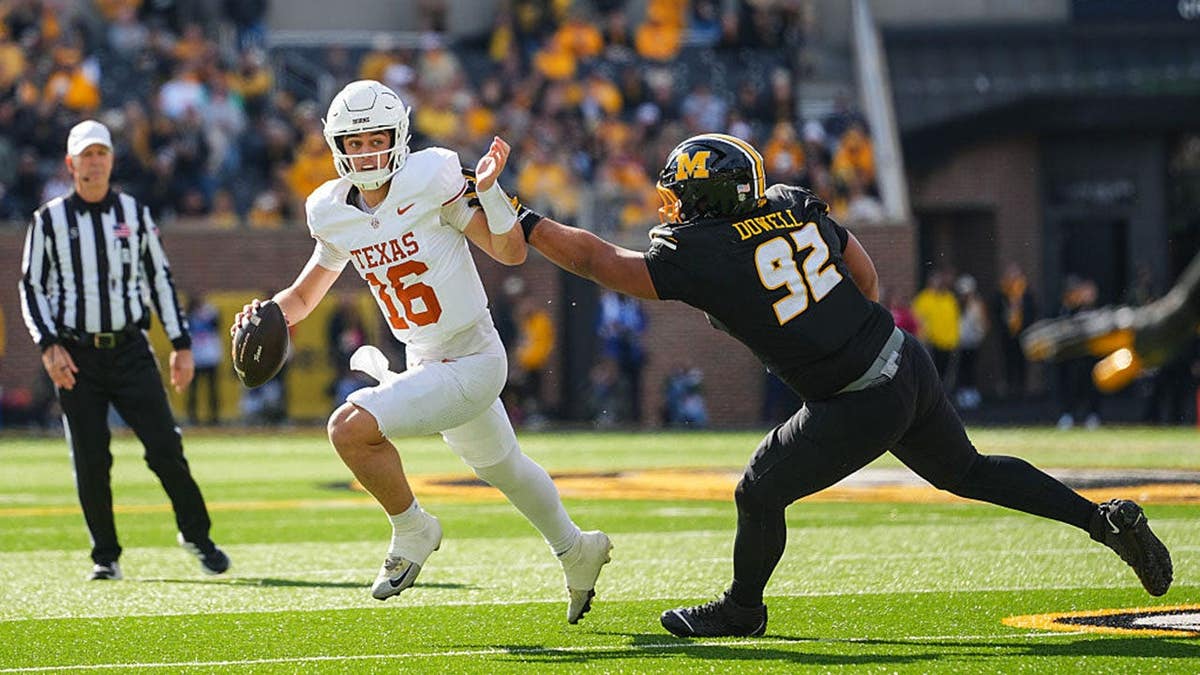
Viewers of the recent Texas Longhorns versus Missouri Tigers game noted significant issues with the officiating. Criticism centered on calls that appeared mishandled or incorrect, often favoring the Longhorns. This led to comments from the game announcers, Joe Tessitore and Jesse Palmer.
During the game, Jesse Palmer openly expressed frustration, suggesting that Missouri fans and Coach Eli Drinkwitz had valid reasons to feel upset. Palmer pointed out several incidents where calls seemed to go against Missouri’s favor, including an overlooked penalty where a Missouri receiver was knocked down away from the play.
Another pivotal call involved an alleged fumble by Texas QB Arch Manning. His arm seemed to move forward as the ball left his hand, suggesting an incomplete pass. Instead, it was ruled a fumble, benefiting Texas with a recovery and 14-yard gain, which contributed to their victory.
“Because it does feel like a lot of these calls are going against Missouri today,” Palmer remarked.
The officiating in this match sparked criticism across the college football community. Missouri Coach Drinkwitz, while upset, avoided blaming officials directly to maintain respect for Texas Coach Steve Sarkisian.
SEC Commissioner Greg Sankey reacted by criticizing the game announcers rather than addressing the official’s performance. He expressed disappointment over what he deemed unfair criticism of officiating.
“I am highly disappointed in announcers and their criticism, and they’re wrong,” Sankey stated on “The Paul Finebaum Show.”
His comments received a response from officiating expert Terry McAuley, who acknowledged that while announcers occasionally err on the rules, they often enhance viewership by clarifying complex regulations. He suggested collaboration with broadcasters to improve broadcasts.
Critics argue that Sankey’s attack on announcers ignored the key issue of officiating errors that significantly influenced the game. Some Longhorns supporters also felt wronged by certain calls against Missouri.
Despite these views, discourse continues around officiating standards and the SEC’s stance. Sankey’s portrayal of the complaint as an exaggeration does not address the concerns over transparency and fairness in sports officiating.