
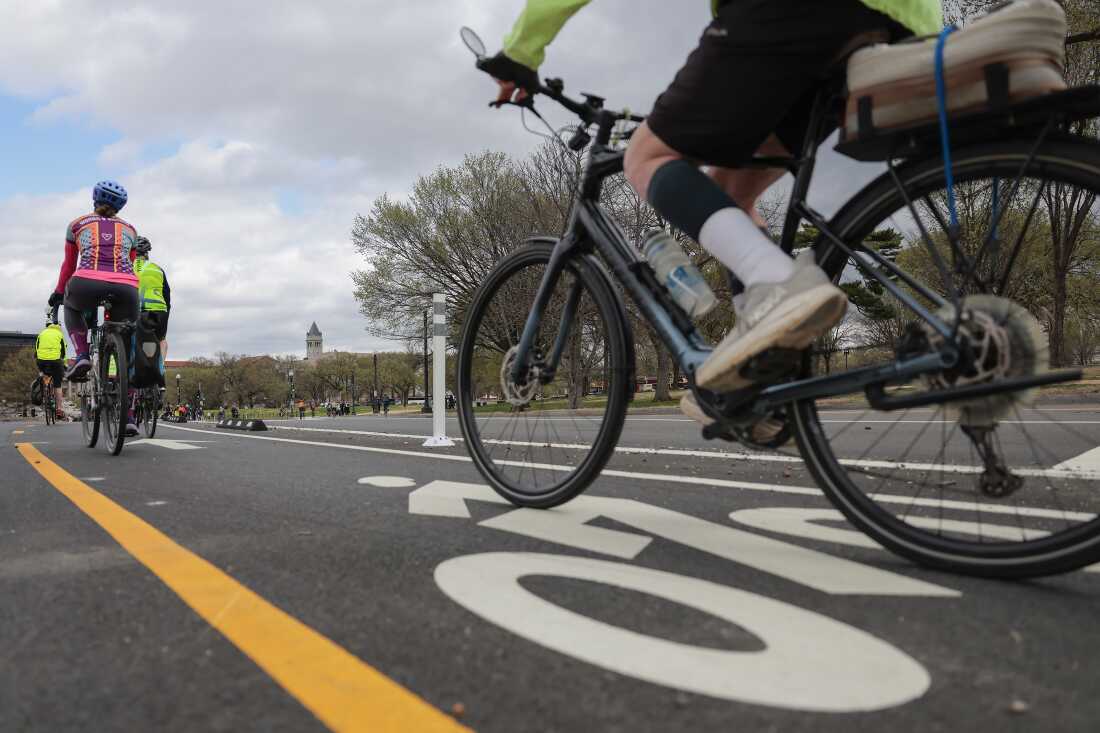
On March 23, 2026, in Washington, D.C., cyclists gathered in protest along 15th Street. They opposed decisions to remove bike lanes. This protest followed the Department of Transportation’s decision to reassess its safety measures.
Transportation Secretary Sean Duffy took to social media, criticizing ‘DEI bike lanes.’ The Federal Highway Administration (FHWA) quietly revised its list of ‘Proven Safety Countermeasures.’ They removed bike lanes, speed cameras, and several other strategies. These measures had been recognized for reducing crashes and improving road safety.
The FHWA states the adjustments align with current DOT policies. However, critics argue that the changes undermine safety strategies that are already effective. Stephanie Pollack, former acting administrator of FHWA, emphasized the importance of evidence-based decisions. She raised concerns over arbitrary removals that might compromise safety.
Under Pollack, the FHWA expanded the list of safety measures in 2021. It grew to 28 recommendations. Recently, the FHWA reduced this number to 23. The removal included bike lanes and speed safety cameras. The agency has not clarified why specific strategies were cut.
An FHWA spokesperson mentioned reversing previous policies deemed to decrease lane capacity. They stated, ‘Drivers expect their taxes to fund road improvements, not social initiatives that hinder commutes.’ Secretary Duffy emphasized a focus on road safety fundamentals.
The Trump administration previously challenged bike lanes, removing sections near the National Mall, and rescinded funding for similar projects nationally. The timeline for removing strategies from the FHWA website remains unclear. Safety advocates first noticed changes after the DOT announced $1.7 billion in discretionary grants. No funding from these grants was allocated for bike lanes or pedestrian projects.
Critics noted that the Biden administration had channeled funds into developing bike lanes and trails. Secretary Duffy, on July 7, stated, ‘Biden-era DEI pet projects used taxpayer money; we are redirecting resources to road infrastructure.’
The FHWA’s Proven Safety Countermeasures list influences state and local funding decisions. Although the list does not determine federal funding, it serves as a valuable tool for regional planning. Josh Naramore from the National Association of City Transportation Officials remarked on the impact, stating, ‘Removing these measures jeopardizes lifesaving projects.’
Naramore emphasized that the list aids dialogues between local agencies and governmental bodies. With strategies removed, tools necessary for advocating safety improvements are diminished.
For instance, opposition exists against speed cameras despite their effectiveness. The FHWA booklet from 2021 noted that these cameras could halve crashes on urban roads. Bike lanes reportedly reduced crashes by 30% on two-lane roads and 49% on four-lane roads.
Michael Griffith, former FHWA safety office member, noted the rigorous evaluation behind these measures. He described ‘Proven’ as based on robust research.
In 2025, over 36,000 roadway fatalities occurred in the U.S., though the figure has declined recently. Pedestrian deaths reached a high in 2022 but have since decreased. However, U.S. roads remain more dangerous compared to other driving-centric nations like Canada.
Pollack emphasized that the U.S. must address the high number of roadway fatalities, advocating for credible and effective safety measures to guide state and local officials.