
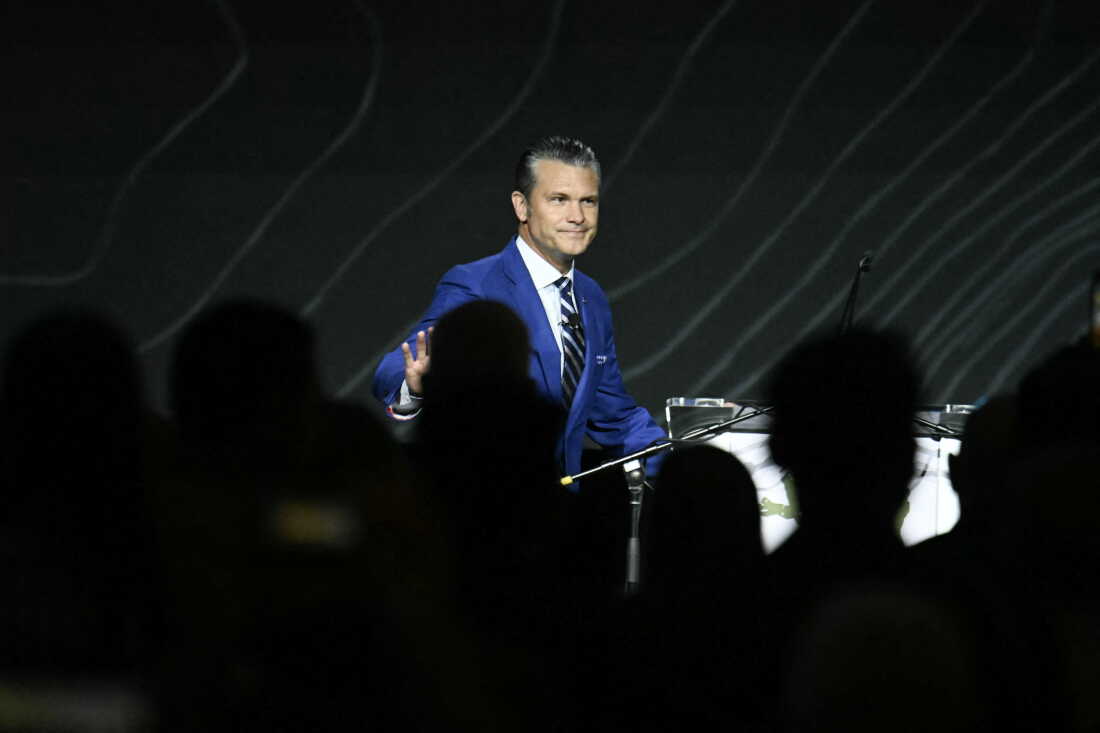
Secretary of Defense Pete Hegseth recently proposed a live broadcast of the execution of Nidal Hasan, instigating widespread controversy. During the 2026 Association of the United States Army Annual Meeting in Washington, D.C., his proposal was highlighted as potentially pushing boundaries of accepted practices.
Hegseth suggested that Hasan’s execution, scheduled for December 3, could dissuade future attacks. Hasan, responsible for the 2009 Fort Hood attack that killed 13 and injured 32, faces death by firing squad.
President Trump indicated potential approval, stating, “We’re looking at it,” while Vice President JD Vance expressed reluctance to watch, fueling uncertainty about the event’s likelihood.
“The public execution proposal raises profound ethical concerns,” said Julie Ingersoll, religion professor at the University of North Florida.
Ingersoll and other scholars, such as Matthew Taylor from Georgetown University’s Center on Faith and Justice, criticize Hegseth’s views as extreme, driven by his association with the Communion of Reformed Evangelical Churches (CREC). CREC’s endorsement of the death penalty aligns with Hegseth’s advocacy, reflecting an “outlier position” within American Christianity.
Critics also point to potential discrimination based on Hasan’s Islamic beliefs. Joshua Salaam, president of the Association of Muslim Chaplains, questions disparate treatment compared to other criminals.
Concerns extend to potential manipulation of the military to achieve sectarian goals. Taylor warns against Hegseth’s attempt to impose Christian supremacy and nationalist ideals using military influence.
Charlie Kirk, a hard-right activist, previously supported televised executions, suggesting corporate sponsorship for revenue. The notion persists in certain right-wing circles, despite its controversial nature.
As deliberations continue, experts stress the societal impact of public executions. Joshua Salaam emphasized, “Such actions affect the nation’s moral fabric, influencing citizens detrimentally.”