
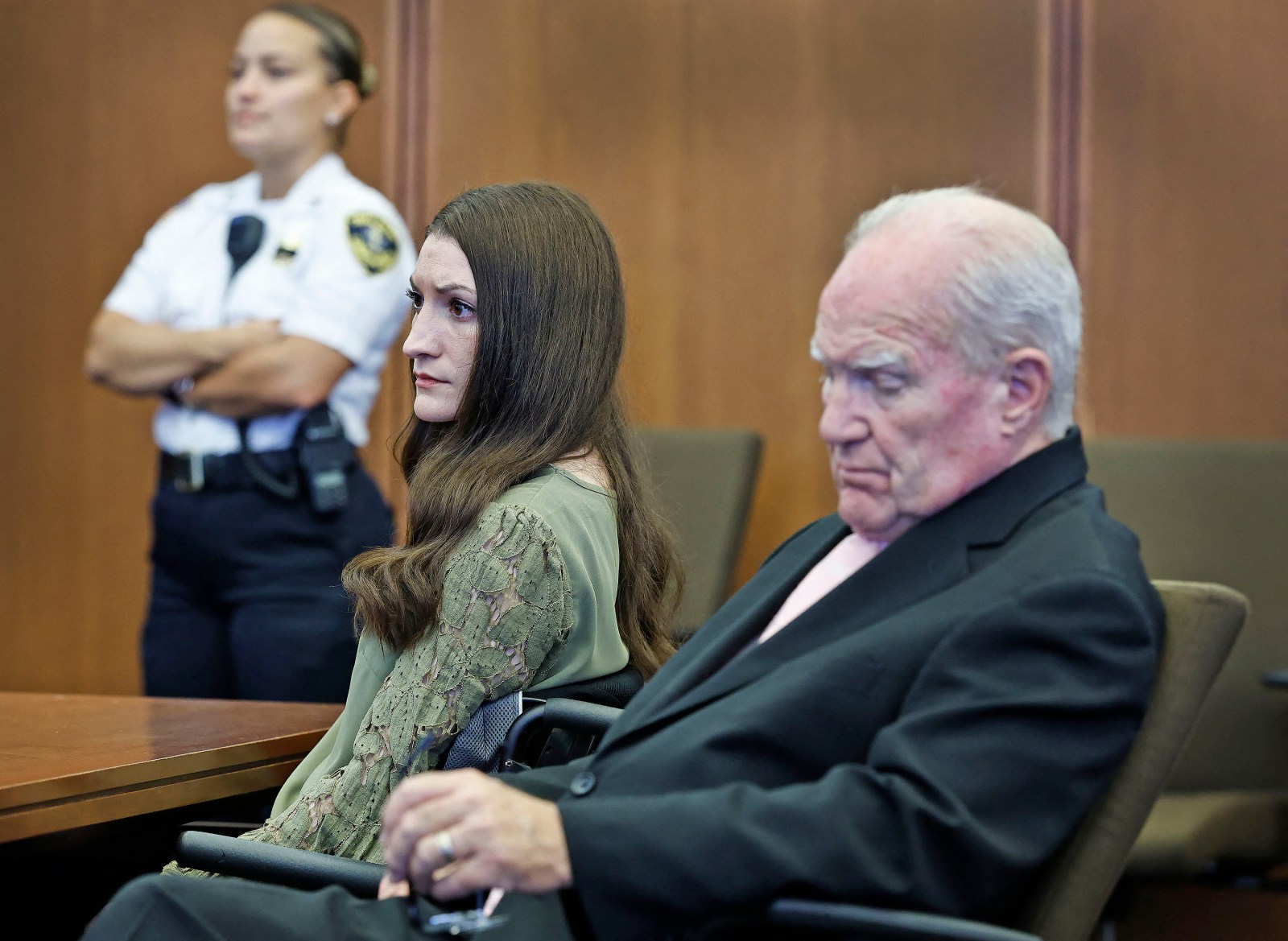
The attorney for the lone dissenting juror in the Lindsay Clancy trial has criticized calls for an investigation into the juror’s behavior. Michael Desronvil was the only juror who sought to convict the Massachusetts mother in the deaths of her three young children. Clancy’s attorney, Kevin Reddington, filed a motion on Friday, later made public on Monday, asking the court to question Desronvil about allegedly using a cell phone during deliberations and his truthfulness in court proceedings.
In the motion, Reddington requested the court to review records of any text messages or calls Desronvil made on days when the jury deliberated, from 8 a.m. to 4:30 p.m. State law prohibits phone usage during such deliberations.
Edward Andrew Paltzik, Desronvil’s attorney, responded to the backlash with a statement on X, claiming the motion was “a full-frontal attack on the U.S. Constitution.” He asserted that investigating jurors for differing with a defense attorney undermined the Sixth Amendment, calling the motion “disgusting” and worthy of universal condemnation.
A mistrial was declared on September 4 by Judge William Sullivan after the jury could not reach a unanimous decision despite extensive deliberation. Eleven of the 12 jurors were prepared to find Clancy not criminally responsible for her children’s deaths.
While Clancy admitted to the killings of her children—Cora, 5, Dawson, 3, and Callan, 8 months old—her attorneys argued she was not guilty due to insanity and was experiencing postpartum psychosis. The case has ignited a nationwide debate on postpartum psychosis and the treatment of defendants with severe mental illness within the criminal justice system. Prosecutors have contended Clancy planned the act by sending her husband, Patrick, out of the home to carry out the crime. Desronvil agreed with the prosecution, maintaining he found enough evidence of premeditation.
In a separate motion, Clancy’s defense sought to have the first-degree murder charges dismissed on grounds of double jeopardy, filed on September 21 by attorney Martin Weinberg. The motion argued against declaring a mistrial, citing viable alternatives the court failed to consider. Claims are based on the Fifth, Sixth, and Fourteenth Amendments, suggesting no necessity for the mistrial declaration due to the lack of judicial inquiry into reports that one juror disregarded court instructions on reasonable doubt.
The case remains unresolved with murder charges still pending against Clancy. A status hearing is scheduled for September 29 in the Plymouth Superior Court with Judge Sullivan presiding.