
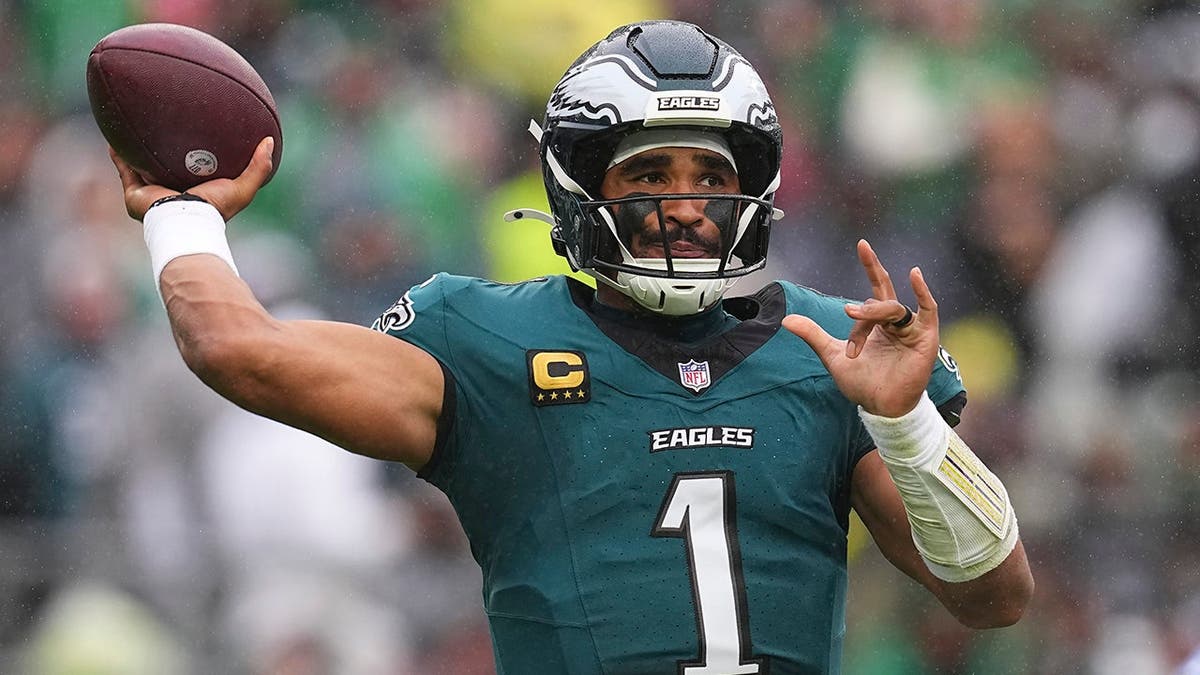
The recent OutKick meeting sparked a debate over a controversial comment made by former NFL fullback Michael Robinson. During an appearance on NFL Network, Robinson suggested that Philadelphia Eagles’ quarterback Jalen Hurts might be exaggerating an injury to avoid blame for the team’s poor performance. This statement has been scrutinized as one of the most poorly aged sports takes in recent history.
A crucial incident occurred on October 4 during a game against the Los Angeles Rams when Hurts suffered an injury after being stepped on, resulting in a superficial blood clot. Despite this, Hurts played against the Jacksonville Jaguars in London just days later. Medical professionals kept him under close observation, worried about the risks posed by the clot.
If I’m Jalen Hurts or anybody in Jalen Hurts’ camp, I’m saying if everybody is hurt, then I’m hurt, too,Robinson said. His comments came amidst a wave of injuries impacting the Eagles’ roster.
The Eagles soon announced that Hurts would not participate in an upcoming game against the Panthers. Following further medical evaluations, Hurts was found to have blood clots in his lungs, sidelining him for the remainder of the season.
Robinson’s comments received harsh responses, as they were based on inaccurate information. He later issued an apology to Jalen Hurts, the Eagles, and fans, acknowledging his lapse in judgment and expressing regret for speculating on the player’s health.
While mistaken predictions in sports commentary are not uncommon, Robinson’s remarks were perceived as an attack on Hurts’ integrity. Misjudging a player’s character is a serious error that goes beyond simple sports predictions.
Comparisons have been drawn with other infamous sports takes. For instance, Max Kellerman’s 2016 prediction about Tom Brady’s decline and Skip Bayless’s claim about Johnny Manziel’s potential in Cleveland. However, these predictions were largely harmless misjudgments rather than character attacks.
Although Robinson’s career should not be derailed by a single mistake, his credibility may be affected. Erroneous opinions might fade, but groundless accusations tend to linger. It serves as a reminder of the potential repercussions of public commentary without due diligence.
Matt Calkins, a columnist with Outkick, addresses this incident within the broader context of sports and culture. He brings a wealth of experience from his previous roles, having written for organizations such as the Seattle Times and the San Diego Union Tribune.