
Last week, U.S. President Donald Trump announced a “historic” agreement involving the Palestinian militant group Hamas relinquishing their weapons and Israel retracting its forces from Gaza. Trump emphasized this as a significant advancement towards peace.
Despite this proclamation, Israel’s response was subdued, with several senior officials expressing doubts about Hamas and other militant groups in Gaza, which, though weakened from their previous strength, might not be willing to disarm entirely.
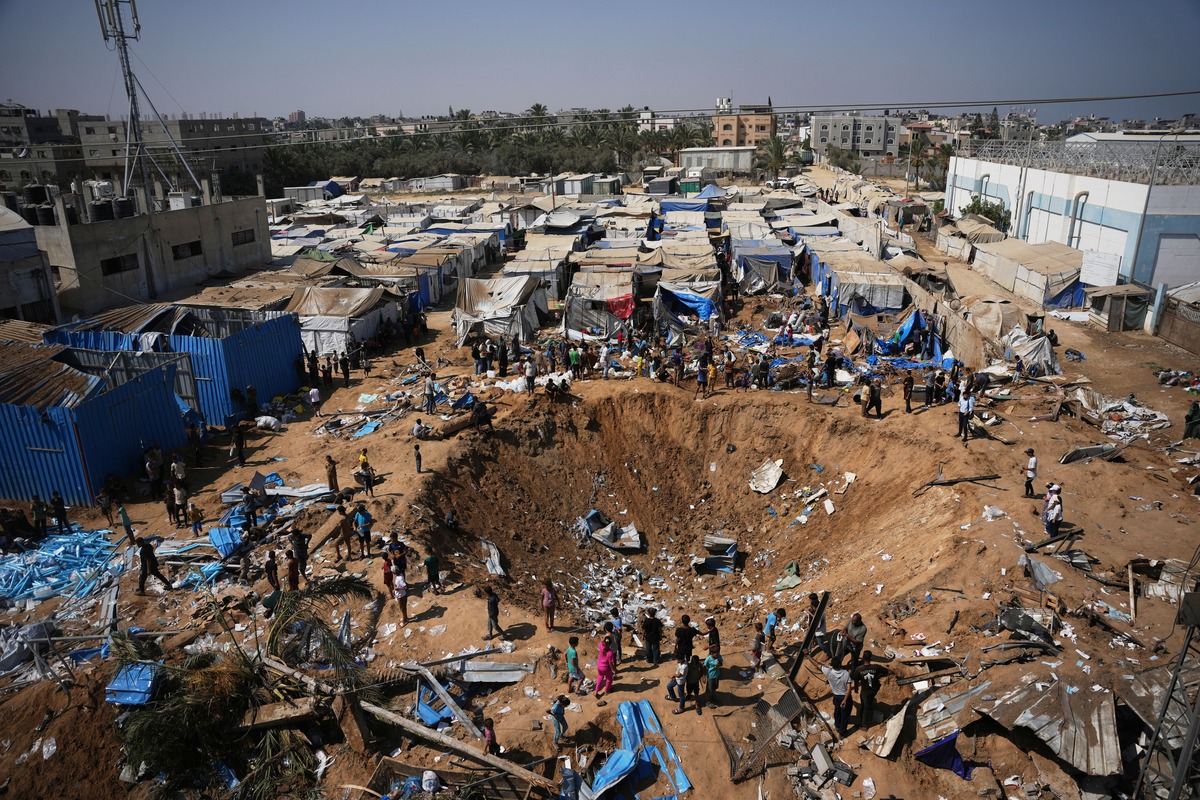
The plan released by the Board of Peace shortly after Trump’s announcement called for Israel to halt its military operations in Gaza “without delay.” Nonetheless, subsequent to the announcement, Israel initiated new attacks throughout the Gaza Strip. These attacks resulted in at least 18 fatalities on Sunday, according to Gaza’s medical professionals, casting a shadow over hopes for resolving the ongoing conflict.
Israel declared its weekend offensives targeted Hamas and other Palestinian militant factions in various segments of the Gaza Strip. Prime Minister Benjamin Netanyahu, with elections looming in October, remains cautious, yet has not fulfilled his goal to achieve “total victory” over Hamas, as observed by Shalom Lipner, a nonresident senior fellow at the Atlantic Council and former Israeli prime minister’s office employee. He stated many Israelis are anxious about the menace posed by Hamas and doubtful about the efficacy of international forces, described in the Board of Peace plan, in safeguarding Israel as compared to the Israel Defense Forces (IDF).
Lipner remarked, “For those reasons, Netanyahu is intensifying actions against Hamas in Gaza, aware that Israel’s options could become restricted once Trump’s plan starts.” A ceasefire brokered by the U.S., Egypt, Qatar, and Turkey has been technically ongoing since October 2025, yet Israeli strikes have persisted over the past nearly ten months. Health authorities in Gaza reported on Monday that since the ceasefire agreement, 1,250 individuals have perished there, and over 4,000 have been injured.
Overall casualties from the war commencing October 2023 tally up to 73,375. Israel’s response to the Hamas-led attacks on October 7, 2023, which caused around 1,200 deaths in Israel and led to approximately 251 hostages being taken into Gaza, involved continued military action. The pursuit of subsequent phases of peace agreements beyond the initial ceasefire faces delays and significant challenges, complicated by ongoing Israeli assaults on Gaza.
Mahmoud Basal, a spokesperson for Gaza’s Civil Defense authorities, highlighted Israel’s escalated attacks on the Gaza Strip on Sunday. The Israeli military noted its operations over the weekend led to the deaths of members of Palestinian groups, including Islamic Jihad (PIJ) in central Gaza’s Deir al-Balah, and a Hamas operative in the same region. Additionally, the IDF reported killing two militants in Gaza City, including a Hamas commander in southern Gaza on the previous day. Escalated assaults on Saturday targeted various Hamas arms sites, encompassing storage areas for explosives and Kalashnikov rifles. Among the identified sites, one was located near the Al-Aqsa Martyrs Hospital in Deir al-Balah.
Qatar, Egypt, and Turkey urged Israel on Monday to cease its bombing campaign, emphasizing Israel’s need to uphold its responsibilities under international law and adhere fully to ceasefire commitments. They warned these infractions risk obstructing de-escalation efforts and worsening civilian suffering in Gaza.
The United Nations accuses Israel of committing genocide against Palestinians in Gaza, while a South Africa-led case on alleged genocide awaits proceedings at the International Court of Justice (ICJ), which Israel staunchly denies. Gaza endures a severe humanitarian crisis, with over 2 million inhabitants frequently displaced, numerous unsupervised children, and limited access to essential supplies like food and water. Concerns have risen over the health impacts of a current heatwave affecting Gaza.
Nickolay Mladenov, Gaza’s high representative on the Board of Peace, requested Netanyahu halt Israeli airstrikes during a meeting on Monday, per reports from the Associated Press. The Board of Peace confirmed the discussion was productive and comprehensive.
The plan stipulates that IDF forces would only retract to the “Yellow Line” in Gaza once Hamas entirely disarms and dismantles its tunnel network. However, rather than abiding by the October 2025 ceasefire’s territorial division between Israeli and Hamas control, Israel’s presence in Gaza has expanded to cover approximately 70 percent of the region, deviating from the agreed “Yellow Line” demarcation.
Israel is currently deferring any withdrawal to the Yellow Line, as revealed by Israel Hayom on Monday. Hamas, on its part, remains adamant about retaining its arms until Israel reverts its forces back.
According to Mladenov, weekend violence impeded civilian safety and obliterated medical resources, threatening “vigorous efforts” aimed at facilitating Hamas’s disarmament. Both entities must honor the agreements established last year, he emphasized.
Yossi Mekelberg, a senior consulting fellow at London-based think tank Chatham House, pondered the path forward should disarmament discussions falter, pointing out that progress relies on mutual trust. Failure to establish trust between parties significantly diminishes prospects for advancement in peace efforts.