
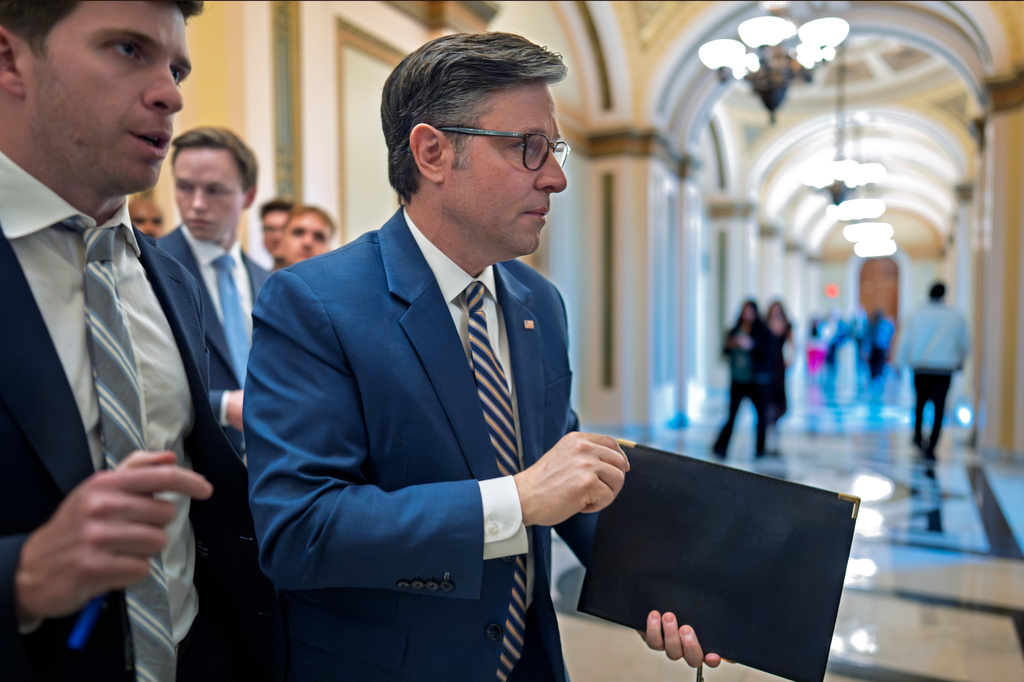
Speaker of the House Mike Johnson, R-La., was observed leaving the chamber during discussions on measures including a continuing resolution for government funding and a spending package related to the Iran conflict at the Capitol in Washington, on Tuesday, July 21, 2026. The sweltering days of summer seem befitting for Congress as it navigates its month-long recess, appearing to be in a repetitive cycle without significant progress.
Although both congressional houses have engaged in various activities leading up to the summer hiatus, there is minimal collective advancement. Recurring topics, such as the Iran war, border enforcement, election law reforms, and natural disaster management, leave many Americans feeling trapped in a cycle reminiscent of summer reruns. Despite potential frustration, the congressional system is intentionally structured to repeatedly address similar issues during the authorization and appropriations processes.
This frenzy is especially evident during the race towards the new fiscal year alongside biennial elections. Every House member and a third of the senators are motivated to maintain their positions, bringing significant focus to budgeting disputes. These fiscal debates embody money and power. While authorizing processes define policy priorities and spending frameworks, appropriations determine the actual spending amounts.
Annually, a budget resolution establishes allocations for the 12 appropriations bills, ideally enacted by the start of the new fiscal year on October 1. The House Appropriations Committee has reported all 12 regular money bills, yet only three have cleared the House. The Senate has not advanced any legislation, underscoring a pressing need for stopgap continuing appropriations resolutions (CRs) to prevent government shutdowns.
Following last year’s unprecedented shutdown, congressional members aim to avoid repeating that humiliating ordeal amidst ongoing campaigns. Consequently, the House and Senate passed CRs on July 21 and August 8, respectively, maintaining current year spending levels, while allocating increased funds for disaster relief, hunger assistance, and veterans’ programs. The House CR is effective until December 4, and the Senate bill until December 11. Addressing the necessity of an extended CR, House Speaker Mike Johnson mentioned it was a deliberate move to prevent Democrats from blaming Republicans for a potential government shutdown before November’s elections.
Given differences between the CRs, they require reconciliation upon Congress’s return in September, before the campaigning recess in October. Another vital element of the budget act is reconciliation, aimed at synchronizing budget targets with fiscal realities. Despite two adopted budget resolutions and reconciliation bills, a third resolution with new instructions passed the House before its July 23 recess, allocating $95 billion for the Pentagon, agricultural aid, and grants for states adopting voting restrictions.
Senate Majority Leader John Thune, R-S.D., indicated he would postpone reconciliation until the CR work finishes in September. Time constraints are evident as both houses have only four weeks before the new fiscal year starts on October 1, with no further sessions scheduled before midterm elections during October’s recess.
As members prepare for crucial elections determining Congress party control, neither house nor party presents voters with substantial achievements. Running campaigns with slogans like “At least we didn’t shut down the government again” proves challenging. Nonetheless, most members anticipate showcasing district-specific benefits from finalized appropriations.
Conventional wisdom suggests the party not holding the White House gains congressional seats in off-year elections, but this principle remains uncertain as both parties grapple for coherent messaging and a definitive majority control pathway. President Trump complicated prospects by asserting GOP voters’ dissatisfaction with congressional Republicans, hinting at potential voter disengagement.
Conversely, Democrats muddled public perception with candidates winning primaries under the “Democratic Socialists of America” banner, not universally appealing across the nation. As Yogi Berra famously remarked, “It ain’t over till it’s over.”
Don Wolfensberger, a 28-year congressional staff veteran, concluded as House Rules Committee chief of staff in 1995. He authored “Congress and the People: Deliberative Democracy on Trial” (2000) and “Changing Cultures in Congress: From Fair Play to Power Plays” (2018).
Copyright 2026 Nexstar Media Inc. All rights reserved. This material cannot be published, broadcast, rewritten, or redistributed.