
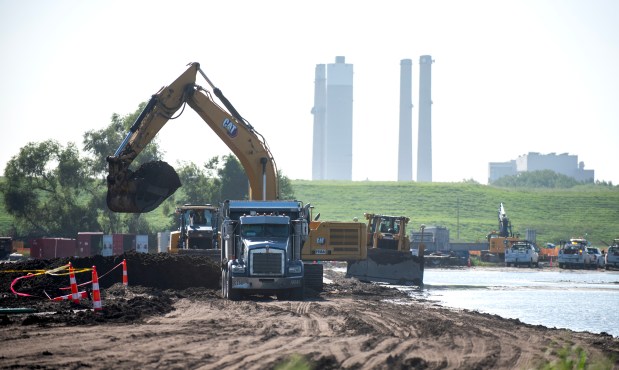
During the Biden administration, Janet McCabe, former deputy administrator of the U.S. Environmental Protection Agency (EPA), contributed to creating rules for greenhouse gas emissions from power plants. Recently, she has observed Trump’s EPA moving to dismantle these efforts. In Wheatfield, Indiana, construction for a data center proceeds, with NIPSCO’s R.M. Schahfer Generating Station visible in the background. McCabe expressed concern, saying, “It’s concerning to see efforts to not only weaken rules but also to undermine federal ability to address public health threats.”
The EPA’s regulatory changes have alarmed environmental and utility experts due to potential impacts on health and the economy. On September 14, EPA Administrator Lee Zeldin announced the repeal of most greenhouse gas requirements from Biden’s era for power plants. McCabe noted the consistency of such actions since Trump’s first year in office.
Hana Vizcarra from Earthjustice mentioned that the Trump administration has favored coal despite its higher costs. Vizcarra warned that power sector deregulation could significantly increase climate impacts nationwide.
The EPA claims the recent action will save $310 billion, with proposals to rescind remaining greenhouse gas standards saving $370 million in compliance costs. Zeldin stated in a news release that this will reduce electricity prices and unleash American energy, promoting jobs and prosperity.
Environmental experts argue that prioritizing coal results in more expenses for ratepayers. Kerwin Olson of the Citizens Action Coalition criticized this approach, explaining that wind and solar are currently cheaper energy sources. Olson highlighted that to make coal competitive, regulations are being rolled back, which dismisses public health and sustainability concerns.
Keeping coal plants operational leads to higher bills and pollution, impacting vulnerable communities. Olson expressed worry about Northwest Indiana, where utility bills are already high.
The repeal comes at a crucial time, warned Ashley Williams of Just Transition Northwest Indiana, aligning with an increase in gas-fired power plants driven by artificial intelligence data centers. Williams emphasized Indiana’s inability to respond effectively due to state policies limiting environmental rule adoption beyond federal standards.
State Rep. Earl Harris objected to decisions potentially harming public health and disproportionately affecting marginalized communities.
In December, the U.S. Department of Energy ordered NIPSCO’s R.M. Schahfer Generating Station to remain open. The cost exceeded $400,000 per day, totaling over half a billion dollars combined with other Midwest plants.
In September, a federal court deemed the DOE’s orders keeping Michigan’s J.H. Campbell Coal Plant open unlawful. Legal challenges continue, and costs remain uncertain.
Indiana Attorney General Todd Rokita was urged to contest the federal order requiring ratepayer expense compliance.
A DOE spokesperson defended emergency actions taken during winter storms to prevent blackouts, indicating 25% increased coal generation in affected regions. The ruling’s impact on Schahfer’s renewal remains unclear.