
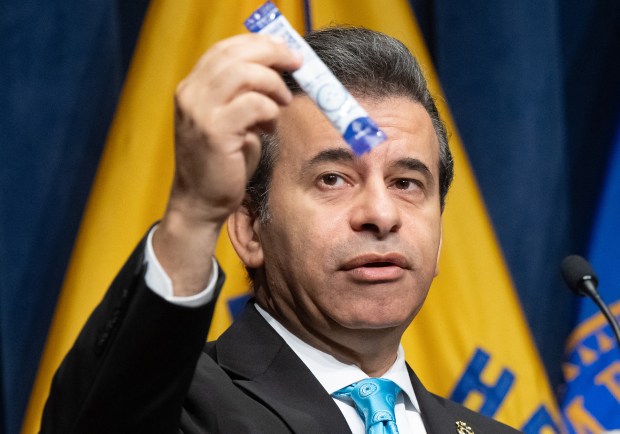
Many residents in Illinois may be unfamiliar with 7-OH, a substance that a federal official warns could play a significant role in the next wave of the opioid epidemic. This substance is often found in tablet, liquid, and gummy forms in convenience stores and vape shops.
A proposed federal ban on 7-OH has prompted business owners in Illinois to clear it from their shelves. Addiction recovery providers are preparing for more patients as these products become scarce. Dr. David Kushner, medical director at Brightside Recovery, noted a threefold increase in new patients linked to 7-OH recently. “It’s been dramatic,” he said.
The substance 7-OH, short for 7-hydroxymitragynine, is a compound found in small amounts in the kratom plant. Over the years, companies have produced tablets, gummies, and liquids with higher concentrations of 7-OH, acting like an opioid on the body. This summer, the U.S. Drug Enforcement Administration proposed temporarily classifying 7-OH products as Schedule I substances, a classification for drugs with no accepted medical use and high abuse potential, such as LSD and heroin. This would make their sale illegal.
The public comment period on this proposed change closed on September 10, but the timing of a final decision remains unclear. A DEA spokesperson recently stated that the process is ongoing without a clear timeline. If enacted, the mandate could designate 7-OH as a Schedule I substance for up to two years, according to the U.S. Food and Drug Administration.
In anticipation of the ban, Illinois businesses have preemptively removed the product from their shelves. Dr. Marty Makary, former FDA commissioner, highlighted its dangers during a news conference in Washington last July. A Chicago-area vape shop owner, opting for anonymity, reported clearing their inventory quickly after learning of the impending ban.
Phil Atteberry, co-founder of Brightside, proactively visited 50 Chicago-area vape shops earlier this year to inform them of the potential regulation. He discovered most had ceased purchasing and stocked minimal 7-OH. Shop owners were also open to distributing Brightside’s information to customers requiring help.
Brightside and other organizations worry that the ban might lead to withdrawal for some users, many unaware of the addictive nature of 7-OH. They hope these individuals will seek treatment rather than turn to other opioids like fentanyl. Dr. Kushner explained withdrawal symptoms might include nausea, pain, and depression, often resembling the worst flu one has experienced.
Withdrawal can extend for days or weeks. Laura Fry, CEO of Live4Lali, an Arlington Heights group, mentioned a hotline they co-manage seeing increased calls from individuals facing 7-OH addiction. She emphasized that “when people start getting sick, they will do anything not to get sick.” Dr. Puneet Lakhmani from Rosecrance Therapies noted the broadened opioid availability due to 7-OH, attracting users unaware of its nature.
Jim Scarpace from Alpharus Health suggested that some users turned to 7-OH as an alternative but might revert to previous opioid use if 7-OH vanishes. He highlighted that patients have reported seizures and memory loss from excessive 7-OH use. Scarpace noted that people with opioid use disorder often shift to 7-OH, expecting similar effects, only to realize the significant damage.
The story of a Chicago suburban resident named Ryan exemplifies the personal toll of 7-OH. He started using kratom as an alternative after overcoming a Vicodin addiction. But when introduced to 7-OH as a more affordable kratom substitute, dependency ensued. Ryan eventually drained his savings for 7-OH. After detoxing with Brightside’s help, he’s been sober for three months.
Ryan believes products like 7-OH shouldn’t be sold alongside energy drinks and gum, emphasizing the danger they present. Reaching potential users across the state is challenging, said Maryann Mason, a professor at Northwestern Medicine Feinberg School of Medicine. Without records of consumer use, outreach to those dependent on such products is difficult.
The state recorded 380 unintentional overdose deaths involving kratom’s active ingredient from 2019-2024, which includes 7-OH related cases. Some oppose the federal proposal, preferring regulation over prohibition, citing cases where 7-OH aids chronic pain relief. Advocates argue for consistency in the classification between 7-OH and kratom.
Previous legislative efforts to ban or regulate high-concentration 7-OH in Illinois gained little momentum. Some municipalities like Rockford and Naperville have enacted bans. States such as Kentucky and Kansas have restricted 7-OH products before.
Mason considers the Schedule I designation reasonable but warns a worse substitute may arise. The government helpline at 1-800-662-HELP (4357) offers assistance for individuals dealing with mental health and substance use issues. Texting a 5-digit ZIP code to 435748 connects people to local resources.