
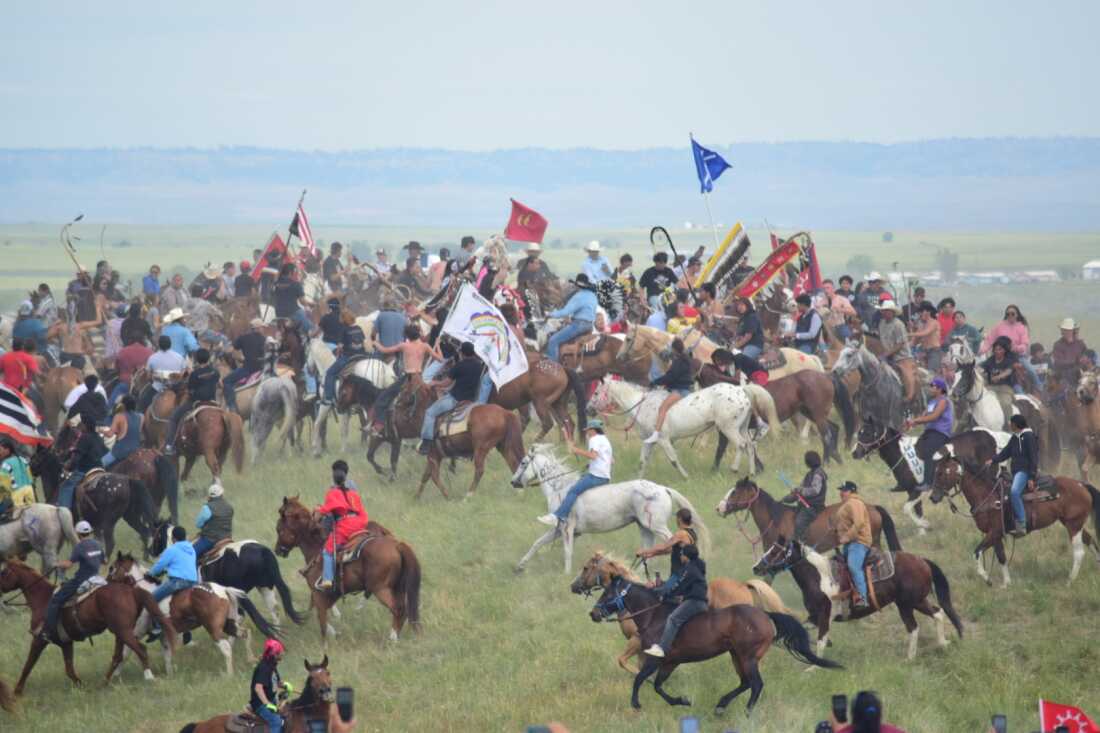
Under the vast expanse of the Montana sky, hundreds of people from 19 tribal nations gathered at the Battle of Little Bighorn National Monument. They came together to watch Native American riders on horseback reenact the charge their ancestors made 150 years ago, defeating the U.S. Army’s 7th Cavalry led by Lt. Col. George Armstrong Custer. The riders ascended a hill, stirring clouds of dust at the historic site, Little Bighorn Battlefield National Monument.
The participants, some adorned in headdresses and regalia, others in casual wear, carried tribal flags symbolizing unity. This unity was crucial in their victory on June 25, 1876. “It was important then, and it remains important today,” said Gaby Strong of the Sisseton-Wahpeton and Mdewakanton tribes. “Our victories are still possible.”
The Historical Context
Custer aimed to force Native Americans onto reservations, particularly after the 1874 gold discovery in the Black Hills. Native people off reservations were told to report to U.S. field offices, known as Indian Agencies, or be considered hostile. Leaders like Crazy Horse and Sitting Bull organized resistance efforts.
Several battles erupted in what are now Montana and South Dakota, as military forces tried to drive the remaining groups to reservations. “Crazy Horse moved from leader to leader, advocating for unity,” said Christopher Eagle Bear of the Sicunga Lakota and Rosebud Sioux Tribe.
The Battle
In 1876, Custer tracked a diverse village of tribes, including the Sioux, Cheyenne, and Arapaho, using scouts from Arikara and Crow tribes. Custer split his 700 men into three columns, hoping to encircle the village. On June 25, he decided to attack early, fearing the tribes would disperse.
The village numbered around 8,000 by that time. “It was early morning when they spotted Custer’s platoon,” Eagle Bear recounted. The encounter, known as the Battle of Greasy Grass to the Lakota, ended swiftly. Custer’s forces suffered 268 casualties, Custer among them. Fewer than 100 Native Americans, including women and children, were lost. The defeat led to changes in U.S. policy, including forced assimilation tactics like the Indian Boarding School system.
Continuing the Legacy
Eagle Bear camped where the historic village once stood, among tipis set up by various tribes. He coordinated the Rosebud Sioux Tribe’s camp, hoping to inspire the next generation. “These kids will remember this when they come together for the 200th anniversary,” he said.
Nearby, children played lacrosse with traditional sticks to the sound of drums, while members of the Sicunga Youth Council cooked and managed logistics for the camp. “We’ve been planning for roughly eight months,” said Ashlen Bonshirt. The camp included activities like yoga and lacrosse, catering to youth interests.
The camp attracted many young people, like 13-year-old Gianna Larocque-Mahto, who wanted to learn history from diverse perspectives. “We didn’t get to learn about the Native side” in school, she said.
Eighteen-year-old Champion Marquez, a Cheyenne volunteer, reflects on the event. “Seeing all these kids having fun gives hope that future generations will learn about Little Bighorn.” His presence symbolized continuity and resilience among tribal communities.