
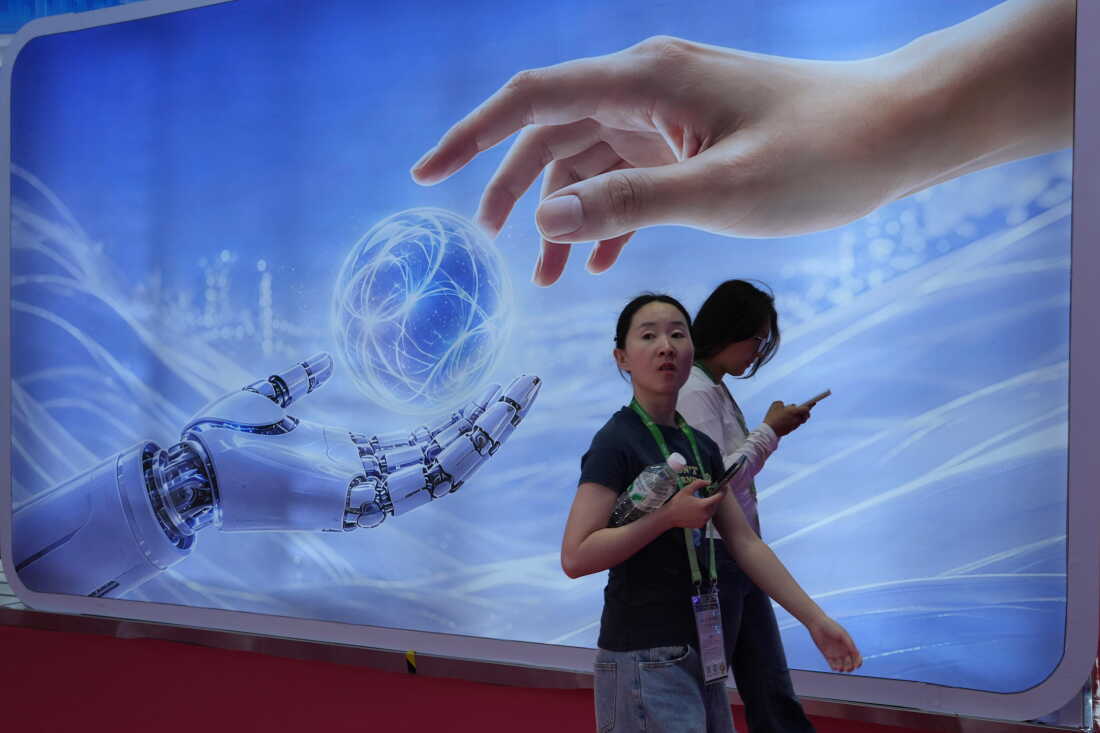
Visitors at the China International Supply Chain Expo in Beijing are engaging with displays showcasing interactions between artificial intelligence and humans. This takes place as discussions arise about the global future of AI development.
China’s Ministry of Foreign Affairs has criticized calls to restrict China’s AI capabilities. The calls come from Dario Amodei, CEO of Anthropic, who has advocated for a global slowdown in AI progress. His essay highlights concerns that China leading in AI may pose global risks. He suggests maintaining restrictions on the sale of advanced AI technology to China.
“Fearmongering, confrontation, and vicious competition will only disrupt the process of global AI governance which serves no one’s interest,” stated Guo Jiakun, spokesperson for China’s Ministry of Foreign Affairs.
U.S. President Donald Trump suggests that the U.S. continues to lead AI advancements. Dario Amodei predicts that, without international cooperation, AI might overwhelm the internet within a year. He emphasizes the necessity of collaboration between the U.S. and China, citing China’s advanced capabilities.
Both leaders, Trump and Xi Jinping, are set to address AI governance during a September meeting. Xi Jinping is promoting global AI frameworks and open-source communities. China also aims to manage AI security risks more effectively.
The Global Times, a Chinese state outlet, dismisses Amodei’s essay as a strategy to contain China, comparing it to tactics from the Cold War era. The essay follows accusations by U.S. agencies regarding alleged Chinese efforts to extract capabilities from advanced U.S. AI models.
China’s Commerce Ministry refutes these accusations, labeling the U.S. strategies as monopolistic attempts within the AI industry. Both nations aim to prevent technological dominance by the other, creating a complex landscape for future cooperation.