
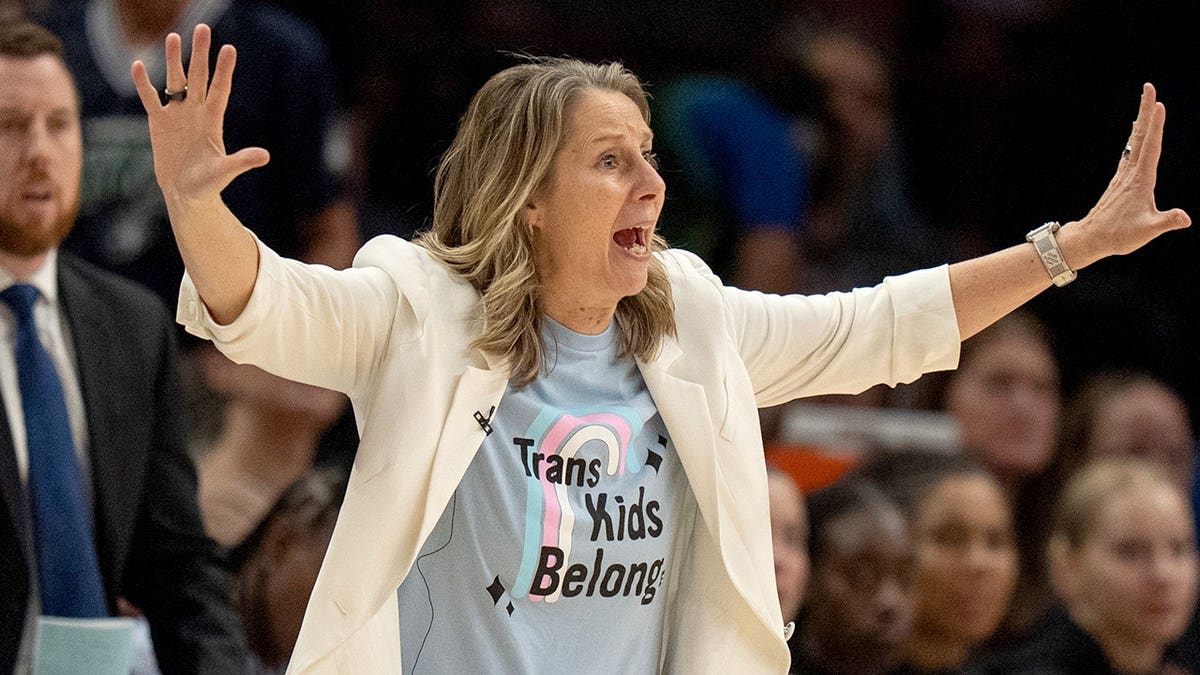
Cheryl Reeve added another WNBA Coach of the Year award to her collection on Monday, marking the fifth time she’s received this honor. As the coach of the Minnesota Lynx, Reeve gained recognition from a national panel of sportswriters and broadcasters, earning 40 of 74 votes. Her team’s outstanding performance, finishing with the WNBA’s best record of 33-11, warranted the selection from a basketball standpoint.
Despite this achievement, Reeve’s outspoken views on inclusion in women’s sports have sparked significant debate. She advocates for the inclusion of males in women’s sports, a position that aligns with her progressive ideology. Critics have accused her of equating disagreement with her political stance as evidence of hatred. Her perspectives have not isolated her from the largely left-leaning women’s basketball media, which often celebrates activism that challenges societal norms.
Winning doesn’t always equate to Coach of the Year honors.
The Lynx’s record-breaking season raised questions about what truly influences Coach of the Year selections. Although the team finished with the best record, historical trends reveal disparities. In 2025, despite Minnesota having a superior record over second-seeded Las Vegas, Reeve received only two votes for Coach of the Year. Such inconsistencies in voting metrics suggest factors beyond team performance may play a role.
Reeve’s previous award in 2024 came when Minnesota didn’t finish at the top, indicating that team records are not always the decisive factor. Public scrutiny extends to considerations about activism and the broader cultural environment in women’s basketball. Both Reeve and Natalie Nakase, Golden State’s coach and a previous winner, share advocacy for inclusivity, receiving votes that reflect this alignment with progressive values.
Nakase’s views align with Reeve’s vision of inclusivity.
Nakase, who finished second in voting this year, maintains her support for transgender inclusivity in sports, emphasizing the deserving nature of trans individuals to participate. This echoes the broader debate over how sporting categories should be defined, challenging traditional norms of gender-based competition. Critics argue for maintaining distinct categories, advocating for privacy and fairness in female sports. The tension lies in balancing inclusive policies with protecting the female category.
Accusations of hate fuel the controversy.
Reeve’s advocacy has sparked intense debate over what constitutes inclusivity versus fairness. During discussions about the controversy surrounding her “Trans Kids Belong” shirt, Reeve portrayed opponents as denying transgender individuals’ existence, accusing them of broader societal intolerance. Her framing of the issue extends the debate beyond sports, questioning opponents’ intentions and moral positions. Critics argue that her rhetoric oversimplifies complex issues, reducing them to mere accusations of hate.
While Reeve’s advocacy aligns with her values, she faces criticism for dismissing opposing views as inherently hostile. Her framing risks alienating those advocating for preserving female-only spaces as a means to ensure safety and privacy, rather than expressing disdain for transgender individuals.
Scientific evidence challenges emotional arguments.
Reeve often cites emotional narratives to support her advocacy for transgender inclusivity, yet empirical evidence raises doubts about these claims. Studies have shown mixed results regarding mental health outcomes following gender-affirming interventions. Research from Finland and systematic reviews in 2025 highlighted the ongoing psychiatric needs among transgender individuals even after medical transition, challenging the purported benefits and urgency of such interventions.
Claims about mental health outcomes are crucial for those advocating policy changes. Emotional arguments can sway public opinion, yet they require robust scientific backing to justify their implementation. Critics call for greater scrutiny and reliance on scientific evidence rather than emotional appeals.
Reeve’s advocacy represents one viewpoint within a complex debate about gender, identity, and sports. Her position as a celebrated coach within women’s basketball signals shifting cultural norms, yet it also highlights sustained controversy over competing definitions of inclusivity and fairness. Congratulations to Cheryl Reeve for her award, showcasing both her coaching prowess and her commitment to advocating her beliefs.