
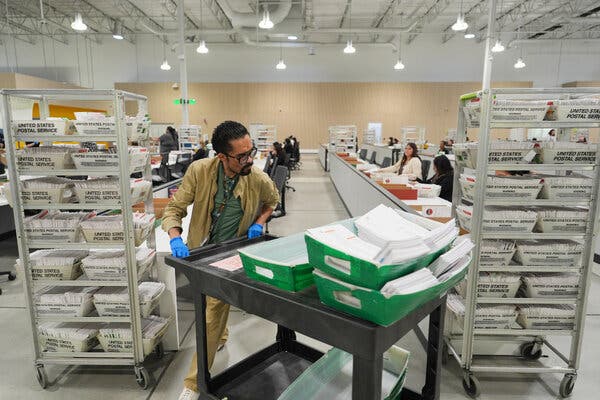
Following California’s primary election, only two-thirds of ballots had been counted four days post-election. The delay left key races, such as those for California governor and Los Angeles mayor, unresolved. This slow process is confusing for people in other regions and subject to unsubstantiated claims of fraud by some Republican groups.
The reasons behind California’s protracted vote counting are recurrently explained. The state predominantly uses mail-in ballots, which slow down the process due to necessary procedures like signature verification, envelope opening, and ballot inspection. California prioritizes accurate and secure voting, and ensures accessibility for voters.
This year’s delay was exacerbated by many voters submitting ballots close to or on the day of the election. The overwhelming volume of ballots needs meticulous handling. Kim Alexander, president of the California Voter Foundation, describes this challenge as the ‘pig-in-the-python’ effect, where a large influx of ballots arrives simultaneously.
Other states like Colorado, Arizona, and Washington, which also rely on mail voting, manage to process ballots swiftly and securely. This raises questions about why California cannot expedite its counting process.