
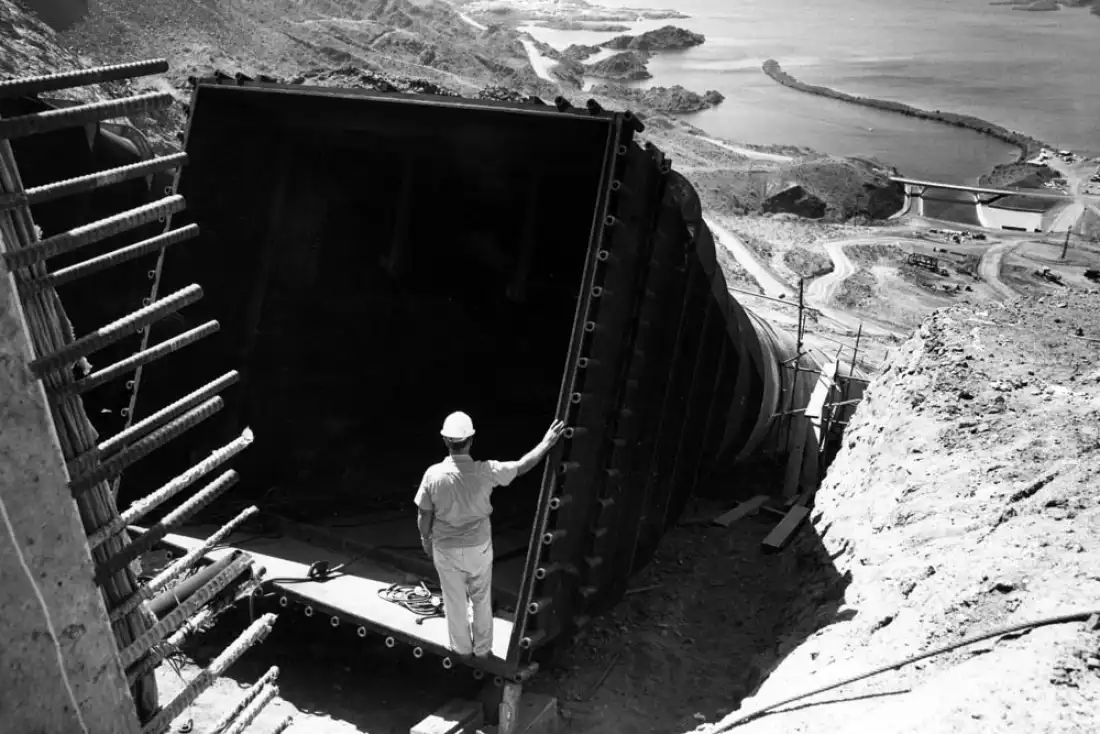
A worker examines the construction of the Mark Wilmer pumping plant near Parker, Arizona, in June 1982. This pump station extracts water from the Colorado River near Lake Havasu, transporting it to the Phoenix area via the Central Arizona Project (CAP). In the 1960s, system planners warned that the river would dry up in the 21st century, but their recommended solutions were overlooked for many years.
The Colorado River now faces a critical juncture. Demand outstrips supply, and policymakers disagree on how to reduce usage. This situation affects nearly 40 million people relying on the river. In seven Western states, cities, tribes, and economies grapple with low reservoirs and uncertain futures. A recent federal plan to cut water use has triggered lawsuits from Nevada, Arizona, and the CAP, highlighting longstanding warnings ignored since the 1960s.
The Origins and Challenges of the Central Arizona Project
Phoenix and Tucson owe their existence to a complex, 336-mile network of canals, pipelines, and pumping plants known as the CAP. Today, water shortages threaten this costly system, and past warnings about its future appear prophetic. “It’s an engineering marvel,” said Rich Weissinger, a former CAP official. Inside the pumping plant, motors and turbines ensure water flows through massive metal casings.
Extreme drought conditions, intensified by climate change, now challenge the system’s reliability. The consistent withdrawal from the seven states using the Colorado River exacerbates this issue.
Exceeding the River’s Capacity
As policymakers failed to agree on a regional compromise, reservoirs hit record lows. A federal proposal would cut Arizona’s annual water from the river substantially, causing significant reductions for the CAP. Historical warnings predicted declining flows, but the suggestions for addressing this were ignored.
We have lots of people, lots of industry, lots of municipalities that depend on a stable water source.—Rich Weissinger
The 1960s plan called for augmenting the Colorado River with water from other sources, such as connecting to the Columbia River and implementing desalination plants. However, these plans never materialized, leaving the CAP vulnerable to today’s cutbacks.
A Future of Warnings Ignored
At the CAP’s inception, President Lyndon B. Johnson praised its potential benefits. Yet, key figures recognized its limits. Floyd Dominy, then commissioner of the Bureau of Reclamation, predicted water supply declines due to upstream state demands, a forecast proving accurate due to climate change-driven drought.
Prominent supporters, such as Congressman Mo Udall, advocated for future water augmentation. However, their plans for augmenting water supply were never enacted.
Lessons from the CAP’s History
Brad Udall, a water and climate research scientist, criticized past proposals for costly, unlikely augmentation fixes. Despite suggesting these fixes, past leaders deserve some leniency given their era’s optimism and priorities.
The political climate of the 1960s, coupled with pressures to finalize the canal, influenced decisions. Demands for water persist, and today’s water experts suggest alternative methods to meet needs, like wastewater recycling and strategic water transfer deals.
Possibilities for Addressing Future Needs
Today’s policymakers face similar challenges. While expensive desalination is debated, solutions closer to home, like advanced water purification, may offer cost-effective alternatives.
Max Wilson, a Phoenix water advisor, emphasized utilizing advanced water purification akin to desalination techniques. With limited resources, pragmatic solutions offer valuable lessons for addressing future shortages.
Environmental advocates stress the need for reduced demand and responsible river management. Fundamental changes in water management may hold the key to sustaining the Colorado River amid ongoing challenges.