
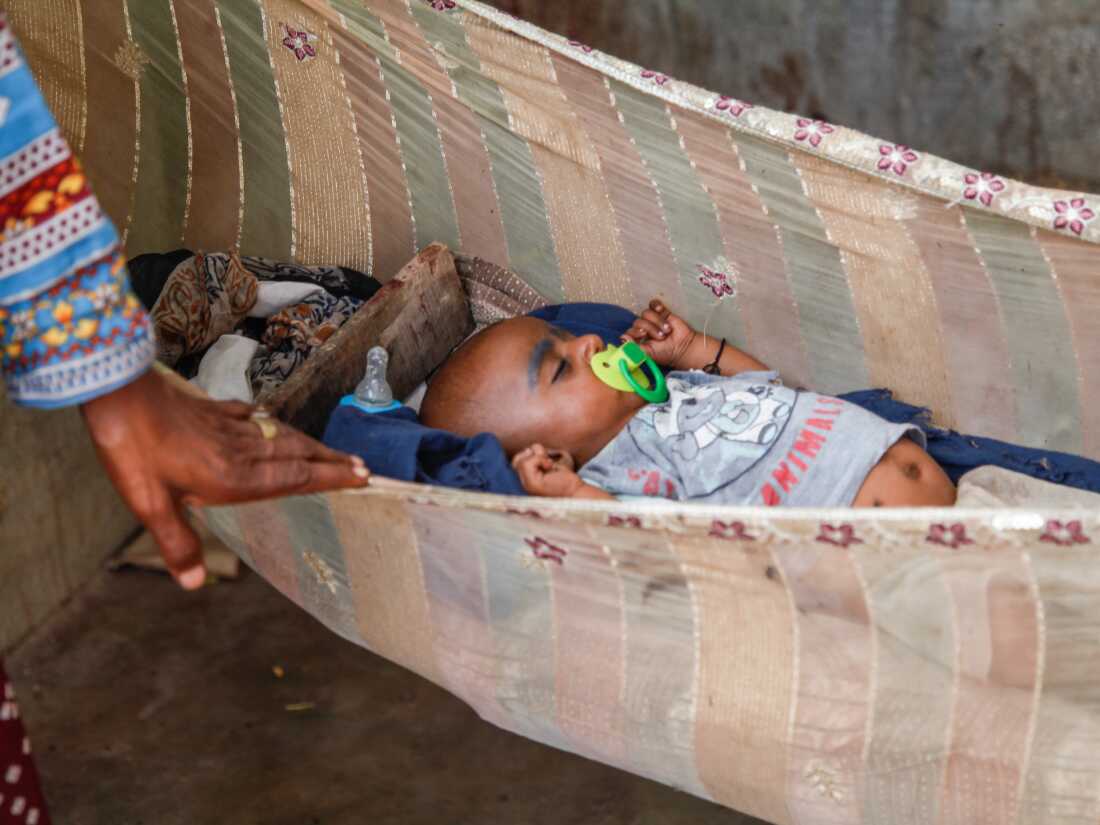
In the fishing settlement of Rehri Goth near Karachi, Pakistan, five-month-old Ladoo rests in a hammock. His mother, Mariam, aged 17, explains she gave birth prematurely around seven months. She couldn’t afford medical follow-ups and hoped for the best after bringing him home. In Rehri Goth, about 25% of babies are born prematurely, significantly higher than the national average of 14%, one of the highest globally.
A nearby university’s scientists are exploring bacteria as possible indicators of premature births. Diaa Hadid reports from NPR on environmental and social conditions in Rehri Goth.
Suffering of Families
The area faces environmental challenges, such as arid riverbeds filled with dried sewage. Residents live in harsh conditions. Sughran, living in a dusty compound with her extended family, shares her story. Seven days before our encounter, she buried her baby, Gulshan, who was born at seven months.
Sughran’s experience highlights the difficulties families face in accessing healthcare. When Gulshan was born, they traveled to a hospital in Karachi that refused her admission. The local hospital was closed, forcing her to deliver at home with tragic results. Her previous preterm baby, Roshan, passed away similarly.
Premature Births and Health Risks
Premature babies in wealthy countries have higher survival rates, especially beyond 32 weeks of gestation. However, in low-income nations, 50% of those born around 32 weeks may not survive, according to the World Health Organization. Survivors risk lifelong issues with vision, hearing, and learning.
Environmental and health factors contribute to high premature birth rates in Rehri Goth. Malnutrition, extreme temperatures, and inadequate sanitation are primary contributors. Dr. Fyezah Jehan, a maternal health expert at Agha Khan University, emphasizes these challenges and the unique factors contributing to Pakistan’s high rates.
Microbiome Research
Jehan’s team investigated the microbiome of Pakistani women, focusing on new mothers. They analyzed fecal samples over two decades from Rehri Goth. Their study revealed that the bacterium, Prevotella copri, was less present in women who had premature births compared to those who delivered full term. This discovery brought insights into prematurity but is not near impacting policy yet.
Current research aims to replicate findings with different samples and periods to understand the role of Prevotella copri further. Though promising, translating studies into interventions is cautious work, as Dr. Vincent B. Young from the University of Michigan noted the complexity of causal relationships. Even as an association, this bacterium might identify at-risk women.
Challenges in Preventing Premature Births
Jehan acknowledges the multifaceted nature of preventing prematurity, involving improvements in education and basic sanitation. Unfortunately, persistent perceptions of corrupted local governance deter long-term investments from donors. Instead, funding tends to support scientific studies.
Struggle for Survival
In Rehri Goth, Mariam fights to keep her premature baby, Ladoo, alive amidst adversity. She refrained from hospital visits due to financial limitations. Ladoo’s health struggles continue, with visible signs of distress on his swollen stomach and scarred skin from heat blisters.
Questionable Advice and Practices
Public health advice misled Mariam to avoid breastfeeding Ladoo during his illness, despite the known dangers of formula preparation with unsafe water. Unable to afford formula, Ladoo received unsanitary and nutritionally inadequate imitation formula.
The World Health Organization criticizes such replacement feeding and underscores breastfeeding’s importance for immunity and health. Meanwhile, Nestlé declined to comment on its product’s unsuitable use amid local socioeconomic challenges.
In the challenging environment of Rehri Goth, families like Ladoo’s persist in keeping hopes alive. The situation mirrors broader struggles in addressing premature birth rates across similar conditions worldwide.