
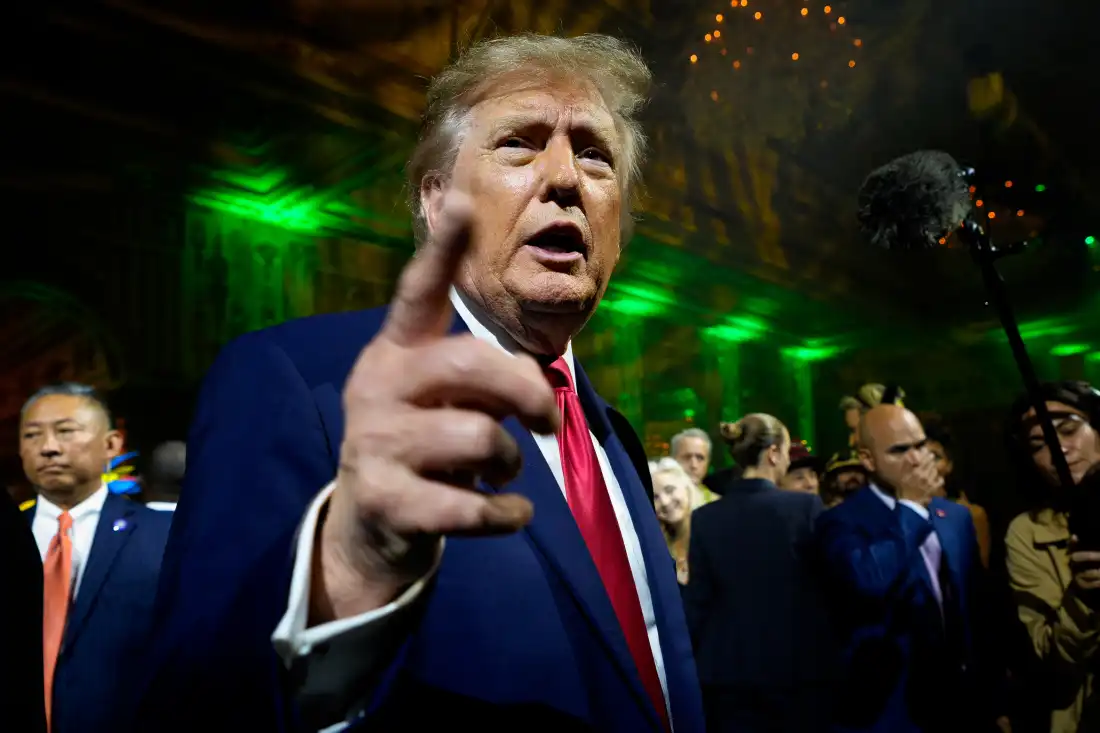
President Donald Trump addressed the media during a Halloween gathering at his Mar-a-Lago club on October 31, 2026, in Palm Beach, Florida. President Trump’s 2024 election campaign focused on reducing prices, yet prices have continued to rise. Subsequently, Trump’s approval ratings have plummeted, and voters are holding him responsible for ongoing economic woes.
The economic situation appears bifurcated. The wealthy benefit from rising stock portfolios, notably those related to AI companies. Conversely, many Americans grapple with inflation, a sluggish labor market, and rising interest rates. These rates complicate purchasing homes and cars, contributing to financial stagnation. According to an NPR/PBS News/Marist poll, 44% of respondents reported unchanged finances, while 38% noted a decline. Only 15% of those polled indicated financial improvement.
Compounding these issues are criticisms of the administration’s immigration policies, cuts to programs like Medicaid, regulation reductions, and workforce downsizing, which have alienated swing voters. Historically, the president’s party faces midterm challenges; only twice since WWII has a president’s party gained House seats during midterms, with an average loss of 26 seats.
Currently, Trump’s approval rating remains below 50%, suggesting potential losses of about 35 seats. Yet, Democrats have capitalized politically under Trump’s administration, performing strongly in special elections and achieving success in the 2025 off-year elections. The unpopular Iran conflict and resultant high gas prices exacerbate Republican challenges, indicating potential Democratic gains.
Despite a challenging landscape, Democrats face structural obstacles. The reduction in competitive districts, largely due to redistricting, and GOP efforts to secure more seats present hurdles. NPR analysis estimates Republicans gaining an eight-seat advantage through redistricting. Additionally, fluctuating Latino votes in South Texas could affect outcomes.
The Democratic Party also grapples with internal dissatisfaction and struggles with voter engagement. Nonetheless, “democratic socialists” express heightened engagement, primarily opposing Trump. An NPR poll reveals 44% view their vote as anti-Trump, with only 21% voting in his favor.
Looking ahead to the 2028 election, which commences post-midterms, candidates eager for national attention may announce candidacy early. Party control hinges critically on Republican turnout. Without substantial GOP participation, Democrats could achieve significant Senate gains.
As election night unfolds, patience may be necessary. While many results finalize promptly, unresolved races could delay Senate control determination. Trump’s history of alleging election fraud persists, despite the majority of people trusting electoral integrity.
Republicans face the challenge of Trump’s mixed impact. During primaries, his presence in ads was prominent, yet now it dwindles, indicating his divisiveness. While essential to the base, Trump proves detrimental among swing voters. Over the past ten years, this dynamic characterizes his influence.
Ultimately, the economic pressures and ongoing conflict undercut Trump’s 2024 crossover support. This scenario complicates success prospects for Trump and his party, reinforcing the need for future compromise and collaboration, despite anticipated claims of election irregularities.