
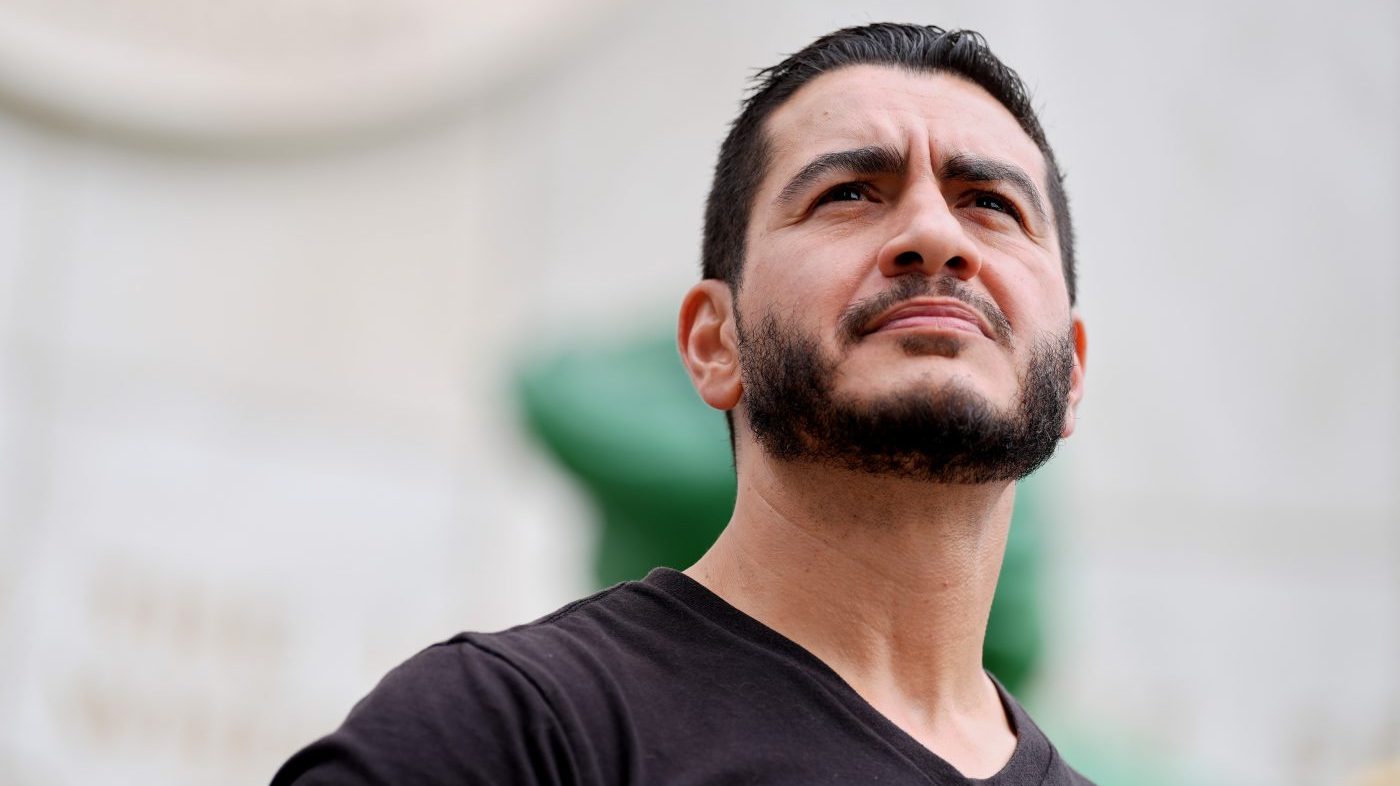
Abdul El-Sayed, a prominent progressive candidate, recently addressed reporters at the Spirit of Detroit following the March of the Many in 2026. His candidacy comes at a challenging time for the Democratic Party, which faces declining public favorability. Polls indicate that 53% of Americans view the party unfavorably, while only 38% hold favorable opinions.
The current leadership in Congress is perceived as uninspiring by many, contributing to a mere 24% approval rating for congressional Democrats. Looking ahead to the 2028 presidential primaries, the party faces an age divide among likely voters. Those under 30 favor Rep. Alexandria Ocasio-Cortez, while Gov. Gavin Newsom leads among Democrats over 65.
Even President Trump’s waning popularity hasn’t significantly bolstered Democratic support. A glimmer of hope comes from the enthusiasm of democratic socialists, representing a third of Democrats. Yet, challenges linger as less than half of Americans are willing to support a democratic socialist for president, according to a Washington Post survey. Notably, 54% of independents oppose such candidates.
Michael Greenberg noted the fear among moderate Democrats that a socialist influence could alienate voters and diminish the party’s appeal. This is not without historical precedent. Political divisions have shaped American politics, from the dissolution of the Whig Party to conflicts within both major parties over issues like the gold standard and Goldwater conservatism.
In more recent times, the Tea Party movement reshaped the Republican Party, followed by the MAGA movement that continues to influence its direction. History suggests insurgent movements can either lead to success or chaos for political parties.
The Washington Post poll warns that democratic socialists must clarify their ideology and reassure voters about its implications for America’s economic system. Opinions vary widely on democratic socialism, ranging from economic equality to associations with communism. Only 13% of the public agreed on a singular definition.
As President Trump and his allies frame democratic socialists as communists, the Democratic Party faces the challenge of managing a movement with strong populist appeal and generational momentum, while navigating differing principles within the party.
The outcome of these efforts will have profound implications for the party and American democracy. Scholars like Benjamin Wallace-Wells emphasize the necessity of addressing these internal dynamics to ensure the party’s future success.
The insights of experts such as Austin Sarat underscore the significance of resolving these ideological conflicts strategically.