
Problem-Solving Courts Achievements
Will County has celebrated a significant achievement: 1,000 graduates from its problem-solving courts. This milestone reflects the program’s success in reducing recidivism, fostering sobriety, and granting participants a renewed outlook on life.
Scott DuBois, the coordinator of the problem-solving courts, stated that the transformation experienced by the participants is profound. He emphasizes that graduates gain hope, self-belief, and the ability to form stable relationships within the community.
The ripple effect of individuals reclaiming and redefining their lives is constant and significant.— Scott DuBois
Origins and Funding
Will County State’s Attorney Jim Glasgow initiated efforts to launch a local drug court in 1998, securing $30,000 in federal funds to study the link between drug use and crime. Additional grants, including $50,000 from the state and $500,000 from the U.S. Department of Justice, enabled the establishment of the program in 2000.
The program has since expanded to include mental health and veterans courts, along with the Redeploy Illinois program. Collectively, these initiatives form the problem-solving courts aimed at minimizing incarceration, treating addiction, and aiding residents in community reintegration.
Personal Success Stories
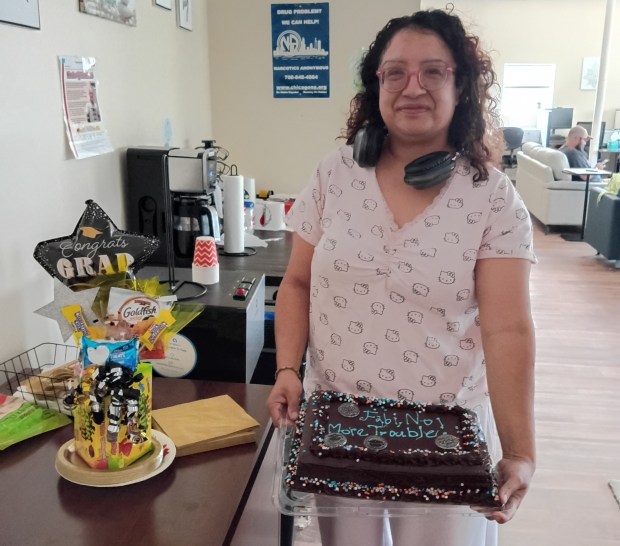
Participants like Fabiola Findlay have found immense personal growth through the program. Findlay, part of the 2026 mental health court class, highlighted the personalized therapy approach, which has helped her overcome the need to self-medicate.
Findlay now hosts a recovery group offering peer support, essential for lasting recovery due to shared experiences. Her goal is to become a certified recovery coach, motivated by newfound self-acceptance and accountability.
I feel proud of myself. I value my life.— Fabiola Findlay
Structure and Support
Program participants must apply upon entering the judicial system, with eligibility based on nonviolent offenses. The program is structured and intense, involving regular meetings with case managers and judges. Advancement involves five phases starting with sobriety, connecting with community services, and attending self-help meetings.
Individuals receive support in areas like employment, education, and building healthy relationships, facilitated by partnership with the Workforce Center of Will County for vocational skills. The treatment plan typically spans 18 months but adjusts to individual pace.
Alumni Perspective
Magdalena Campos, a 2024 graduate, exemplifies successful participation, celebrating four years of sobriety. She leads an alumni support group and emphasizes the importance of connection in recovery.
Connection is the opposite of addiction.— Magdalena Campos
The alumni group fosters continued support through events, reinforcing the significance of staying connected for long-term recovery.
Impact on Recidivism
About 80% of program participants graduate, significantly reducing repeat offenses. Graduates have a 14% recidivism rate within the first year and 24% within five years, contrasting sharply with the 75% rate among those not in the program.
Cost-effectiveness is notable, with a yearly cost of $3,000 per participant compared to $52,000 for incarceration. The program not only reforms individuals but enhances community safety.
Community Contributions
Glasgow highlighted a remarkable story of a graduate saving two lives during a rescue mission. Such deeds underscore the potential and contributions of those transitioning through the courts.
The program, through the dedication of judges and counselors, continues to offer second chances, fostering productive citizens over inmates.