
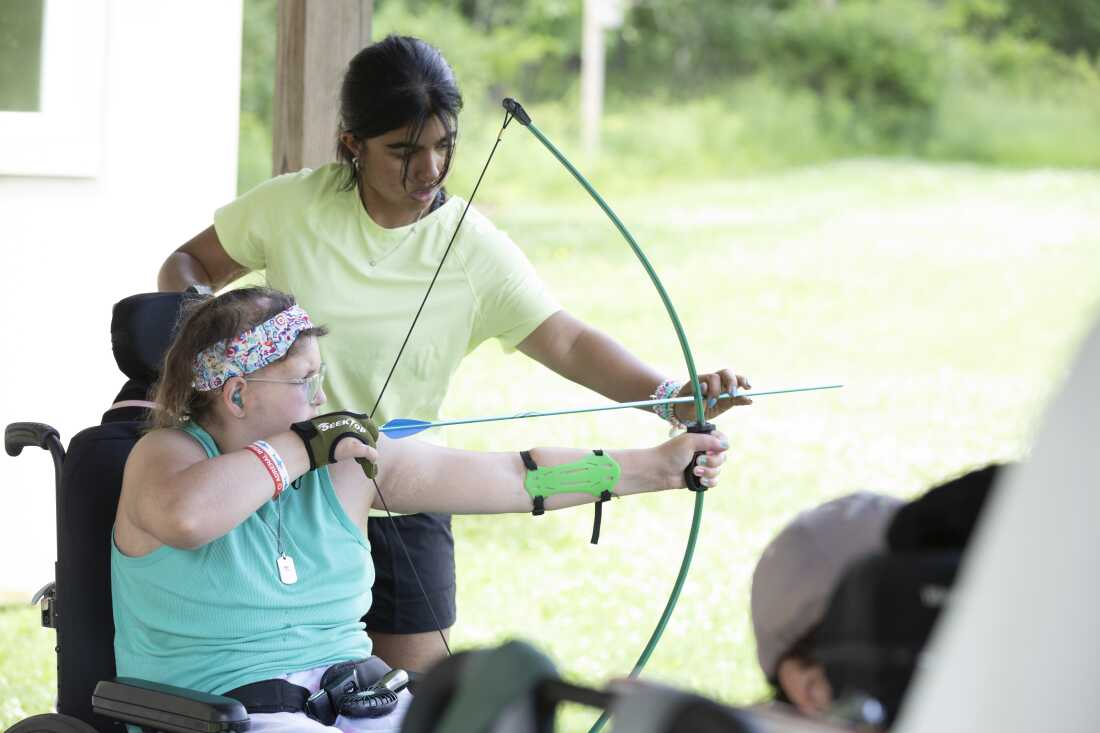
In Pennsylvania’s Columbia County, Camp Cranium provides a unique and supportive environment for children with brain injuries. Anvitha Tharra, a camp counselor, assists Angelica Zander as she learns archery, symbolizing the nurturing spirit of the camp.
The event offers an opportunity for children aged 10 to 21 who have survived severe brain injuries to engage in activities like rock climbing, swimming, and zip lining. Many campers face challenges like relearning basic skills or using wheelchairs, but at Camp Cranium, they find a place of empowerment and encouragement.
Since its inception in 2008, the camp has adapted to an increasing number of survivors of traumatic brain injuries, a phenomenon linked to advancements like seat belt laws and enhanced trauma care. However, the national effort to track and prevent these injuries faces hurdles as legislative support wanes.
Operations Director Drew Meyer is moved by the campers’ determination. “They surprise you,” he comments, expressing pride in their progress during the camp’s archery sessions.
The broader context includes federal initiatives previously aimed at research and prevention of traumatic brain injuries (TBIs). Recently, these efforts have been in turmoil following a failure to renew supportive legislation and staffing cuts at the Centers for Disease Control and Prevention (CDC), which impacted TBI surveillance projects.
Lucas Hardy, a participant, exemplifies the resilience fostered by Camp Cranium. At age 3, a severe brain injury altered his life. Yet, with assistance like a hoist to climb the rock wall, he actively engages with his peers, embodying the camp’s spirit of inclusion.
The Brain Injury Association of America highlighted discrepancies in recorded TBI incidences, noting underreported statistics. Recent CDC data underscores the need for comprehensive injury surveys, which have identified higher numbers than previously thought.
Despite these challenges, Emily Hilliard from the Department of Health and Human Services maintains that TBI work continues via other CDC departments. However, the reduction in resources concerns advocates like Rebeccah Wolfkiel, Executive Director of the National Association of State Head Injury Administrators, who stresses the importance of better resources and information.
Camp Cranium Executive Director Tony Sadowski recalls his personal journey with his son Bryan, a long-term camper who experienced a hemorrhagic stroke. “We’re thankful for this place,” he reflects. Bryan, now preparing to attend Elizabethtown College, embodies the camp’s restorative impact.
The Traumatic Brain Injury Act once bolstered TBI-focused initiatives through federal funding, but has been stalled since 2024. Although temporary funding solutions exist, they fall short of previous allocations. The Brain Injury Association’s President, Rick Willis, emphasizes the act’s critical role in supporting TBI-focused projects.
Nonprofits like Camp Cranium and Bright Ideas TBI Camp in Alabama remain operational, relying on private donations. At Camp Cranium, the atmosphere buzzes with joy as campers revel in the sense of community. Brianna Engleman, a former camper and soon-to-be counselor, gathers song requests for a dance, a testament to the camp’s lasting impact on its participants.