
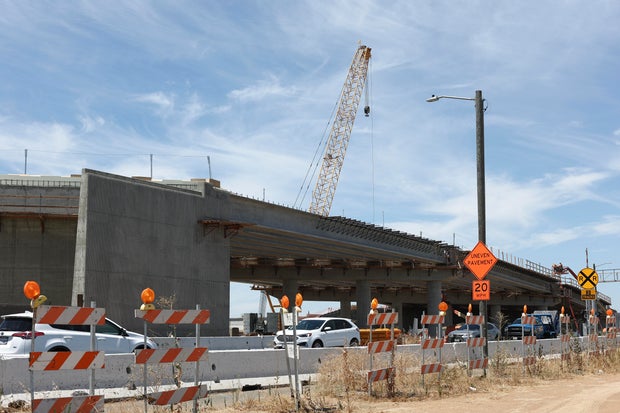
California’s High-Speed Rail Authority has repeatedly missed deadlines to purchase trains, leading federal officials to withdraw $4 billion in funding more than a year ago. Despite over eighteen months passing since the original deadline, the authority has yet to establish a timeline for awarding the train contract, leaving the date as ‘TBD’. Approved in 2008, the rail project aimed to connect San Francisco and Los Angeles within three hours using electric trains capable of speeds up to 220 mph. Currently, there is no direct rail line between these cities, making the journey last 10.5 to 12 hours. The revised plan focuses on a 171-mile section between Merced and Bakersfield in the Central Valley, selected for its flat terrain, which requires no tunnels. It’s projected that the high-speed trains will reduce travel time in this section by half, with service expected to start by 2033.
July 2025: Federal Funding Withdrawn
In July 2025, the Trump administration canceled $4 billion in funding for the project, citing a lack of progress on track laying despite $15 billion spent over 16 years. Transportation Secretary Sean Duffy emphasized that federal funds require tangible results. Federal officials noted the missing train procurement as a significant missed milestone, suggesting the state lacked a feasible plan to complete the project. Governor Gavin Newsom characterized the funding withdrawal as politically motivated, leading to a lawsuit by state Attorney General Rob Bonta, which was later quietly dropped by California.
December 2025: Ongoing Delays
The rail authority missed another self-imposed deadline in December 2025, further undermining its argument about meeting future timelines. The authority had assured a federal judge that signing a train contract would keep the project on schedule, yet it failed to achieve this, causing the eventual dismissal of the lawsuit without fanfare or explanation to taxpayers.
January 2026: False Progress Reports
Despite claims by Governor Newsom during a State of the State address, California had not laid any high-speed rail tracks by January 2026. The state built a logistics facility to receive and store rail materials instead. The announcement misleadingly positioned the project as progressing while substantial infrastructure was yet to be constructed.
June 2026: Persistent Accountability Issues
By June 2026, construction on the high-speed tracks had yet to commence. The authority aimed to lay tracks by the year’s end and approved a team to build them. The 2026 business plan projected passenger services by 2033 without indicating the status of trainset procurement, which remained uncertain.
August 2023: Procurement Details
Records from August 2023 showed the necessity of contracting a manufacturer by 2024 to align with federal timelines for testing. There’s a four-year lead time stipulated for train set preparation, which included delivery of prototypes for testing by 2028. However, the authority has not met these deadlines.
November 2024: Changes and Delays
Internal sources attributed delays to changes in trainset specifications by the High-Speed Rail CEO Ian Choudri in 2024. Concerns were raised over potential procurement disruptions, yet the procurement deadline arrived with no contract. Public acknowledgment of these issues has been minimal, and procurement progress remained stagnant.
Current Status and Concerns
The lack of a finalized train contract compresses the timeline for testing and preparations for a 2032-2033 opening. Federal assessments have highlighted unrealistic assumptions within project plans, leading to concern about completing on schedule. The authority’s feedback to inquiries from CBS California Investigates emphasized project compliance without addressing the missed deadlines.
Political Reactions
Reactions have been mixed among political figures. While some criticized past administrations for cutting funds, others stressed responsible and transparent allocation of taxpayer money. The project’s funding remains a point of contention, with ongoing debates on meeting transportation objectives without political interference.