
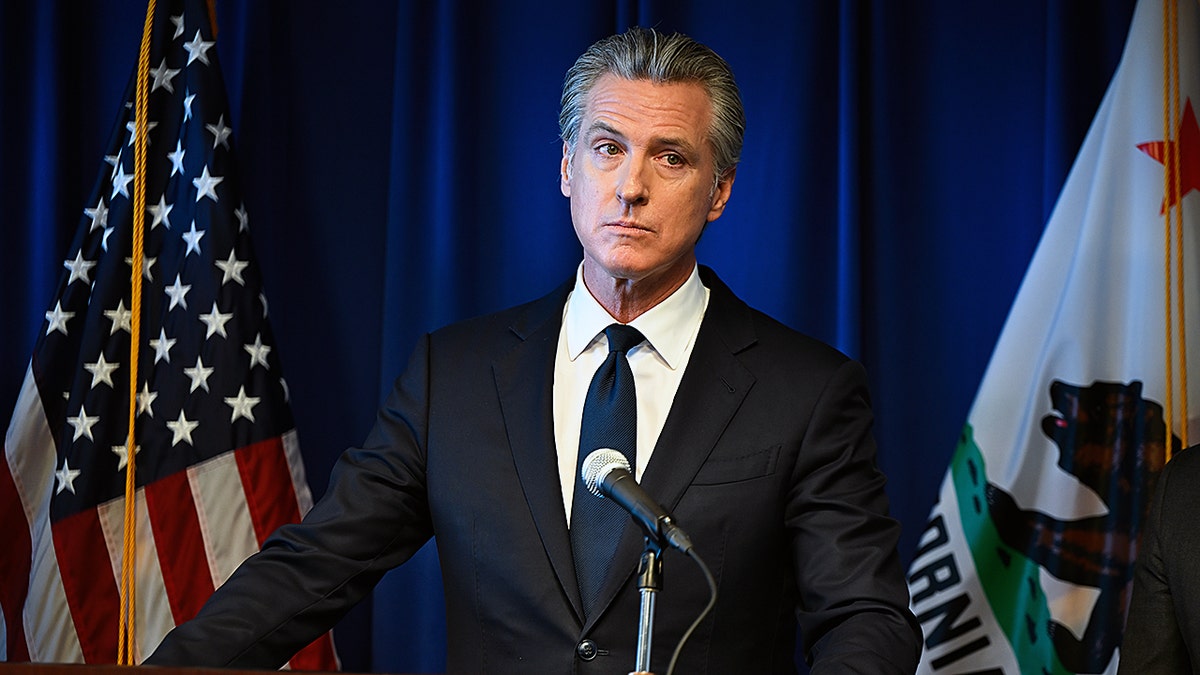
California Governor Gavin Newsom plans to sue the Trump administration over its effort to limit mail-in voting. This follows a Supreme Court decision allowing the administration to enforce parts of President Donald Trump’s ‘election integrity’ executive order while legal battles continue. The decision, made with a 6-3 vote, lifted a previous block on the order in 23 states before the upcoming November midterm elections. The court clarified that their ruling was about the injunction, not the final legality of the order, leaving open the possibility of further challenges.
In a statement, Newsom criticized the Supreme Court’s decision. He said, “The Supreme Court just let the Trump administration move ahead (for now) with its plan to disenfranchise voters across the country. California will be suing AGAIN to block these Orwellian rules from being implemented.” Newsom’s office also highlighted two election-related bills advancing in the California Legislature. AB 282 and SB 259 aim to protect the state’s elections from interference. AB 282 introduces new felonies for seizing ballots, election records, or certified voting technology before results are certified. SB 259 establishes criminal penalties for tampering with mail-in ballots, including felonies carrying up to four years in prison.
The governor’s office referred to these measures as an ‘Election Protection’ package, building on prior legislation Newsom signed earlier this year. Following the Supreme Court’s ruling, the U.S. Postal Service (USPS) and Department of Justice announced plans to implement revised mail-ballot restrictions. Trump’s executive order directs federal agencies to compile citizenship-based lists of eligible voters and instructs the USPS to deliver mail-in ballots only to those on approved lists.
The Supreme Court ruled that the directive for the Department of Homeland Security to create and distribute state citizenship lists was an internal directive, placing obligations on federal agencies, not the states. The court stated, “It directs the Secretary of Homeland Security to take appropriate action to create and distribute State Citizenship Lists. This provision is an internal directive from the President to a subordinate. It imposes no obligations on the States, so they ‘suffer no concrete harm from’ it, and without concrete harm, there is no standing.” Justices Sonia Sotomayor, Elena Kagan, and Ketanji Brown Jackson dissented from the ruling.
A representative for Newsom did not immediately respond to requests for comment.