
BETHLEHEM, Pa.— On Monday, Bob Brooks delivered a concise but impactful speech to union leaders and supporters. Brooks, the head of the state firefighters union and a Democratic candidate for the battleground House seat in the Lehigh Valley, emphasized his credentials as a ‘working-class candidate’ and individual. His work history dates back to running a paper route at age ten. Brooks highlighted the systemic imbalance of power, urging voters to send representatives to Washington, D.C., from their own ranks.
Across the city, Brooks’ Democratic rival, Ryan Crosswell, a Marine veteran and former prosecutor, conveyed a different narrative. In an NBC News interview, Crosswell explained his resignation from the Justice Department’s Public Integrity Section. He left due to an order to drop a corruption case against former New York City Mayor Eric Adams. Crosswell linked this to the anti-Trump protest movement, calling it a ‘real No Kings moment’ as he opposed what he described as a lawless administration.
Within the Democratic primary for Pennsylvania’s 7th Congressional District, Brooks and Crosswell’s differing messages reflect broader party tensions. Brooks has garnered support from leaders like Sen. Bernie Sanders and Pennsylvania Gov. Josh Shapiro, aligning with his economic focus and working-class approach. Democratic operatives see Brooks as resonating with voters on economic hardships, viewing him as a representative of ordinary citizens. His background as a retired firefighter without a college degree contrasts with the typical political elite.
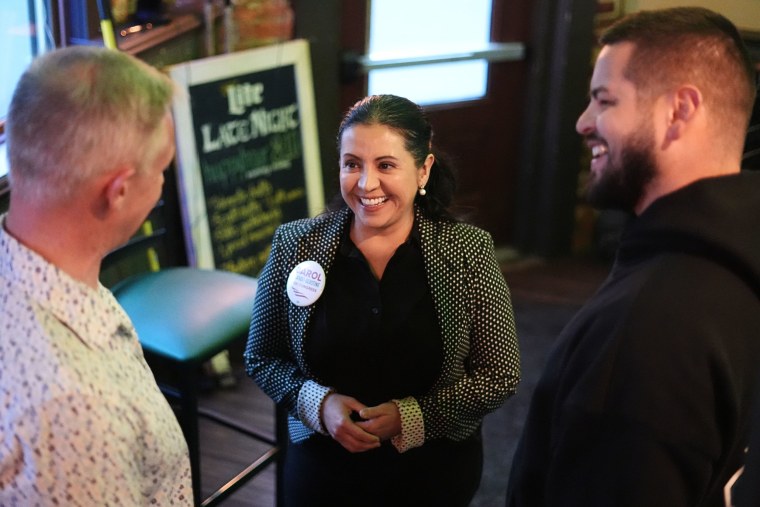
Crosswell represents another Democratic archetype suitable for swing races, armed with military and legal experience and a firm stance against Trump. Despite differing approaches, both candidates have significant donor support boosting their campaigns. Tuesday’s primary is among the first of 2026, with Brooks, Crosswell, Lamont McClure, and Carol Obando-Derstine vying to challenge first-term Republican Rep. Ryan Mackenzie.
Candidates face a district that President Trump won by three points in 2024, while President Biden captured it by just one point in 2020.
In an interview, Brooks expressed his connection to those who have felt sidelined by the Democratic Party. His endorsements, notably from Sanders and Shapiro, signify a broader appeal within the party. Although he enjoys high-profile backing, Brooks hasn’t secured the primary win yet.
Financial dynamics contribute to the race’s uncertainty, with Crosswell leading in fundraising by approximately $600,000, while Stronger Together PA, a super PAC, has spent over $1 million supporting Brooks.
Challenges persist for Brooks due to past social media controversies and financial disclosures revealing assets between $148,000 and $3.89 million. In addition, Brooks acknowledged a misunderstanding of Shapiro’s request for union support, which has been clarified.
Brooks’ support from a broad coalition suggests expanding the Democratic tent, according to spokesperson Andrew Mamo. Rivals argue the party’s endorsement isn’t unanimous; figures like former Rep. Susan Wild and Matt Cartwright support other candidates.
Each candidate in the primary represents different facets of Democratic interests. Obando-Derstine, focusing on Latino outreach, emphasizes voter independence and warns against outside influence. Local Democratic officials endorse McClure, while others express concerns over Crosswell’s residency.
Brooks’ candidacy and the support he receives mirror larger trends of working-class Democratic candidates in the 2026 elections. Comparisons to figures like John Fetterman have been drawn, but Brooks asserts a genuine working-class identity.
The primary poses a test for theories about Democratic representation: a working-class populist versus an ex-Republican. As Nick Gavio of the Working Families Party suggests, Crosswell’s appeal fits a past political era, while today’s voters yearn for authentic representation.