
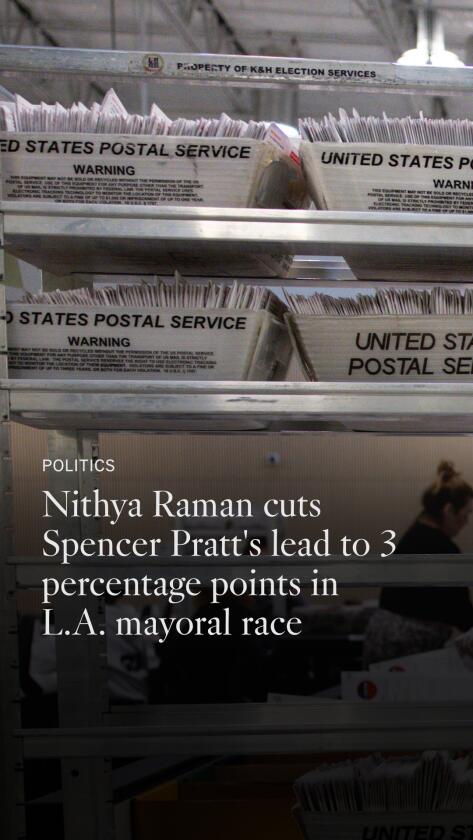
In California’s primary elections, confusion and misinformation have sparked persistent claims of election fraud. Nithya Raman, a Los Angeles City Councilmember, is closing in on reality TV personality Spencer Pratt in the mayoral race, narrowing his lead to 3 percentage points. Both candidates aim for a spot in the Nov. 3 runoff against incumbent Mayor Karen Bass.
Republican Steve Hilton, critical of California’s slow voting process, blames Democrats for delays in ballot counting. By Thursday evening, 5.6 million ballots were processed, with 3.6 million still pending. This prolonged process, allowing mail-in ballots and signature verification, often leads to delays but ensures accuracy. Governor Gavin Newsom’s office stated that local officials, not the governor, manage vote counts.
Amid allegations of cheating, federal investigations are underway, coordinated by the FBI in Los Angeles. President Trump voiced unsubstantiated claims of fraud on social media, further intensifying the situation.
In the race for state Superintendent, Sonja Shaw leads with 24.5%, outpacing Democrat Richard Barrera at 19.3%. For state Treasurer, Lt. Gov. Eleni Kounalakis and Republican Jennifer Hawks advance to the general election.
The vote count lag frustrates California voters, eager to know election outcomes. Many races remain undecided, including the gubernatorial race with Steve Hilton and Democrat Xavier Becerra leading. California’s ballot system allows for extending vote counts to accommodate various voting methods.
Arguments over election integrity arise as Shasta County considers a measure requiring voter ID and limiting mail voting. Meanwhile, Monterey Park bans data centers through a decisive vote.
The gubernatorial race sees no clear winner yet, with Hilton and Becerra in front. As California faces potential shifts in political power, the slow counting process remains a contentious issue.
California’s prolonged vote count, essential for accuracy, fuels debates and misunderstandings during this pivotal primary election.