
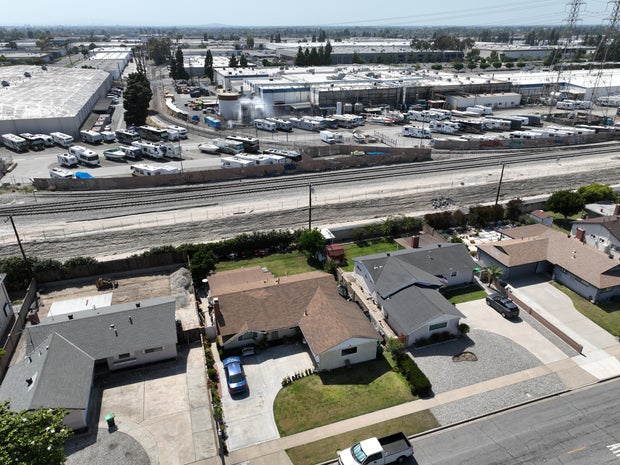
California firefighters initiated an all-night operation to assess pressure within a cracked tank central to a toxic chemical leak in Orange County. This situation has led to the evacuation of over 50,000 people. Orange County Fire Authority Interim Chief TJ McGovern informed the public that the overnight mission aims to confirm the elimination of a Boiling Liquid Expanding Vapor Explosion (BLEVE) threat. Such an event represents a worst-case scenario, and the current operation aims to prevent it from materializing.
To clarify earlier reports, McGovern emphasized that only one known crack is present in the tank, with any erroneous information likely due to the peeling of weather stripping caused by constant water streams directed at the tank. The crisis involves a 7,000-gallon tank of methyl methacrylate at GKN Aerospace in Garden Grove. The tank’s internal temperature has risen to over 100 degrees, which has alarmed emergency responders.
On a state level, Governor Gavin Newsom has requested an Emergency Declaration from the federal government to enable federal assistance. Such declarations are preventive, aimed at mitigating disaster rather than responding to it. However, approval from President Trump is pending. Meanwhile, Orange County representatives have also petitioned for federal support.
The response has been significant, with over 785 state and first responders deployed to aid local authorities and specialists. This follows Newsom’s state of emergency proclamation to manage the crisis effectively.
State of Emergency and Evacuations
A rising temperature inside the tank suggested a potential for emergency scenarios. OCFA Division Chief Craig Covey reported temperature increases inside the tank, indicating possible pressure dangers or vapor buildup, which could lead to rupture or explosion. To avoid catastrophic events, first responders are diligently evaluating various approaches.
Accountability investigations are unfolding, led by the Orange County District Attorney Todd Spitzer, focusing on the cause of the tank’s failure. Spitzer has encouraged potential whistleblowers within GKN Aerospace to provide information.
Law suits have emerged against GKN Aerospace relating to the incident, with claims focusing on health risks and disruptions to residents.
As part of its response, GKN Aerospace stated that it is working continuously to control the risk of further leaks, pledging to prioritize the community’s safety and return residents to their homes soon.
Potential Threats and Evacuation Zones
A map displaying the potential blast radius indicates severe structural damage in immediate proximity, with further zones possibly experiencing moderate effects or dangerous vapors. The evacuation zone encompasses multiple city areas, advising residents to follow orders accordingly.
Healthcare experts emphasize the respiratory risks associated with methyl methacrylate, categorizing it as a respiratory irritant. Thus, continued air monitoring is underway to ensure safety, utilizing drones and stationary monitors.
Response and Support Services
Multiple evacuation centers have been erected, offering temporary refuge to evacuees. Uber has stepped in to provide free transportation to these centers. Additionally, local hotels are providing discounted rates, and local businesses like Del Taco are offering complimentary meals to first responders.
Preparations and monitoring extend beyond Orange County. Los Angeles County and other neighboring counties have been coordinating with Orange County to oversee potential regional impacts, ensuring readiness for any required interventions.
Although essential services in nearby regions remain unaffected, officials maintain emergency readiness due to the chemical leak situation.