
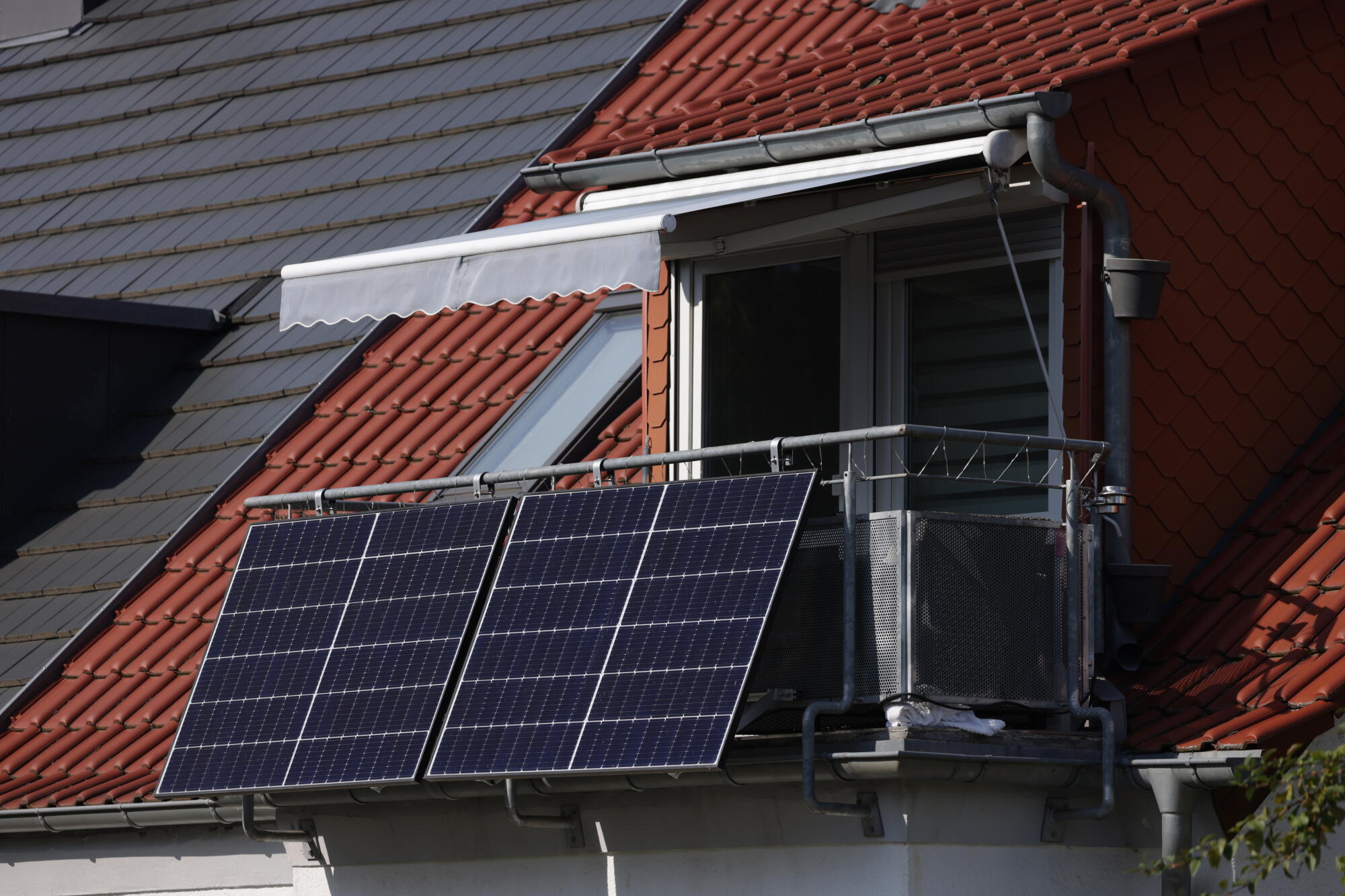
California renters and apartment residents are finding new ways to reduce their electric bills. Gov. Gavin Newsom recently signed the Plug and Play Solar Act, allowing both renters and homeowners to install small solar panels on patios or fences and connect them directly to wall outlets. This new law eliminates the need for utility permissions, empowering individuals to manage their energy use more independently, according to bill author Sen. Scott Wiener.
The concept, known as ‘balcony solar,’ is already widespread in Germany. At least nine U.S. states have legalized these systems. The law permits panels capable of powering basic household appliances, with a limit of 1,200 watts. Some Californians were already using these panels despite legal uncertainties, but the law now provides clarity for future installations. Compliance requires that panels are certified safe by groups like UL Solutions.
Bernadette del Chiaro from the Environmental Working Group shared that at least two companies are working toward certification by year-end, aiming to have products available in 2027. Although Pacific Gas & Electric opposed the bill due to safety and cost distribution concerns, they did not comment further.
Newsom also signed additional bills supporting small-scale solar solutions. Sen. John Becker’s SB 905 mandates California to evaluate existing power lines for increased electric capacity and to assess smarter solutions like home batteries and smart thermostats over infrastructure expansions. Another bill, SB 913, facilitates these devices—collectively known as virtual power plants—to sell power directly in California’s energy market.
These legislative moves followed Newsom’s decision not to allocate funds in this year’s budget for the state’s major virtual power plant and his veto of AB 1813, which sought a more robust community solar program.