
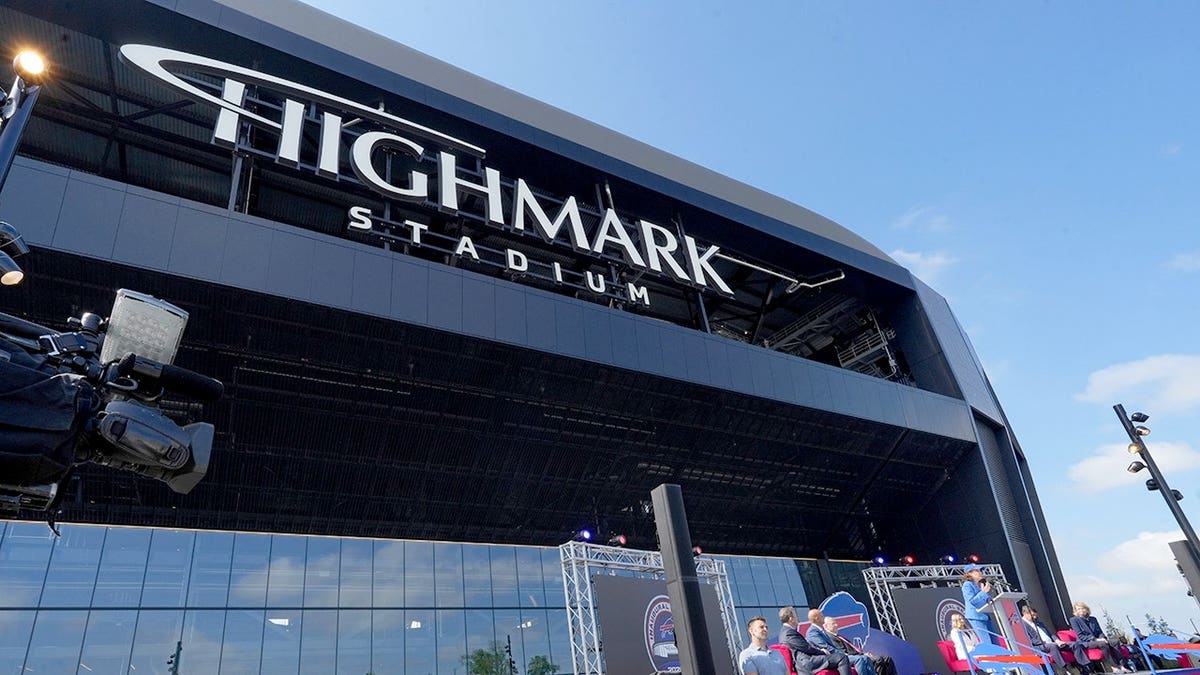
The Buffalo Bills recently issued a statement defending their new $2.2 billion stadium following criticism on social media for poorly designed sightlines. To address these concerns, the team’s chief operating officer and vice president of stadium development held a conference call with reporters. They explained that some fans, including those contributing $850 million in taxpayer funds, might not have all the facts when they shared photos and videos of obstructed views and poor rain coverage during a recent practice session.
The Bills are currently in damage control mode, but the issue does not stem from player injuries or coaching decisions. Instead, it involves a significant project that isn’t meeting fan expectations, including those who hold personal seat licenses (PSLs). “So far, we’ve heard from less than one percent of our PSL holders about anything sightline related,” stated COO Pete Guelli during the call. He maintained confidence that the virtual venue’s representation matched what attendees found when they visited the stadium. Any discrepancies would be resolved on a case-by-case basis.
“Relative to that specific issue, we feel very confident what was represented via the virtual venue is accurate to what people saw when they sat in their seats,” Guelli expressed.
Despite the reassurances, issues quickly spread on social media, affecting the team’s anticipated celebrations. For a $2.2 billion facility completed in 2026, clear sightlines are exceptionally important. Guelli acknowledged that any large building would have some obstructed views, but noted that areas were designed for other events like concerts, rather than strictly for football. These partial-view seats were reportedly clearly marked in the virtual venue.
Although sightlines were a major concern, additional complaints surfaced regarding views obstructed by vendors or other fans during practices. The club clarified that during real games, movements would be regulated, requiring fans and vendors to wait for a whistle before walking around. This might change the traditional dynamic where Bills fans stood for entire games at the old stadium.
Complaints also targeted the size and design of the stadium’s video boards. According to the Rochester Democrat & Chronicle, the choice for smaller scoreboards was deliberate; owner Terry Pegula wanted more focus on the field than on scoreboards. Instead, the speaker system received priority funding. This decision seemed to overlook the longstanding emphasis on visual entertainment.
John Polka, vice president of stadium development, told reporters, “We’re learning a lot about the building, and that includes game presentation. We’ll look at how much of the scoreboard we’re using for video versus using for content.” He mentioned the presence of a nine-foot ribbon board below the scoreboard, which might see different uses. However, the current setup meets the design intentions.