
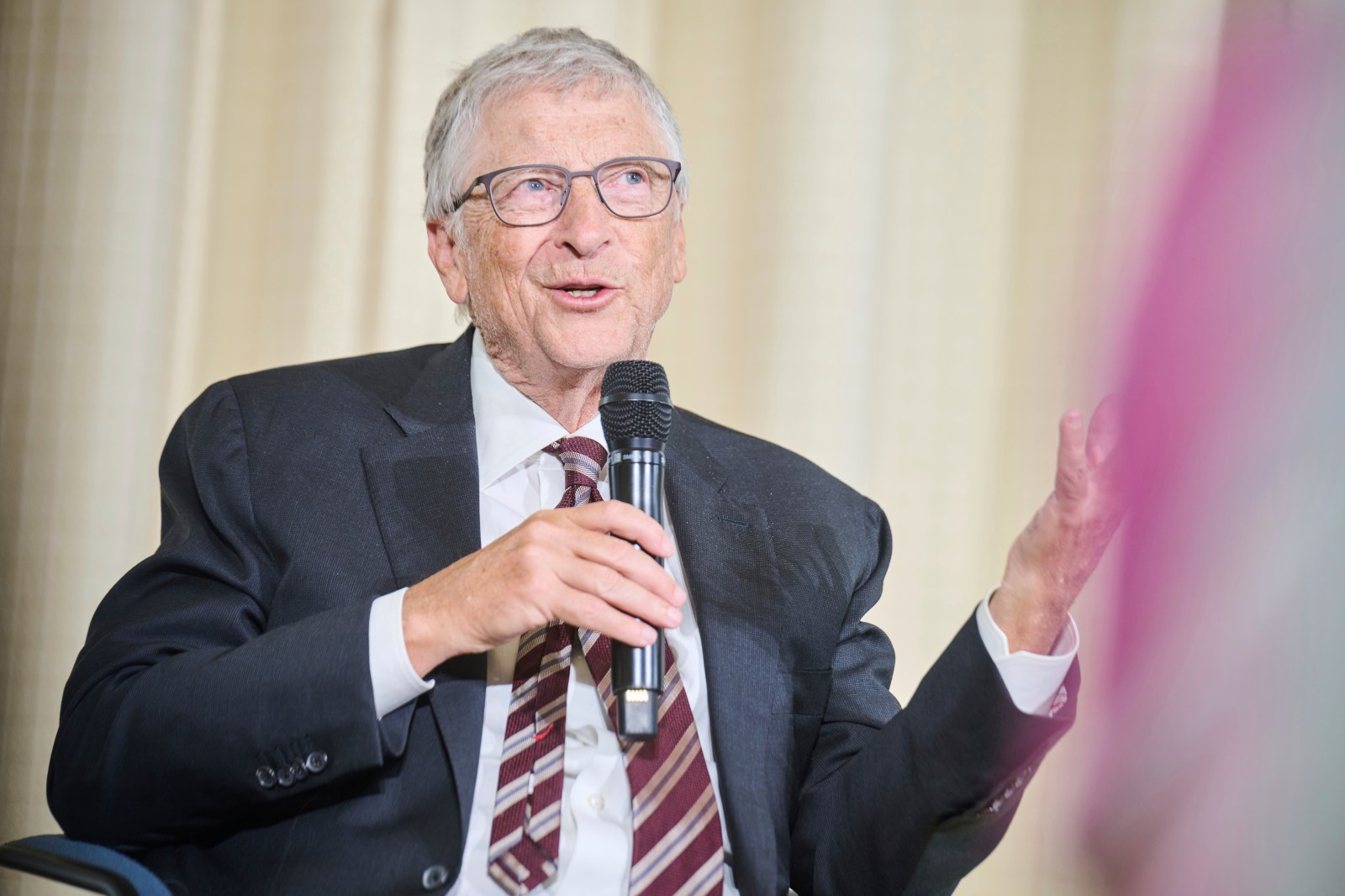
Bill Gates Warns About AI’s Rapid Advancement
Microsoft co-founder Bill Gates has voiced concerns about the rapid advancement of artificial intelligence. He pointed out a lack of significant protections around this technology, driving him to speak out. In a conversation with CNN’s Anderson Cooper, Gates stressed the need for public involvement in shaping AI’s future. He highlighted that while AI offers substantial benefits, it also poses risks that require open discussion.
Gates mentions potential threats such as cyberattacks, bioterrorism, and broader psychological and social impacts. He expressed surprise at the absence of stronger safeguards. Gates believes limiting data centers won’t effectively slow AI’s progress, as companies might build them in different locations. He emphasized the need for a collective voice in addressing AI’s potential harms and benefits.
“We have to get everybody’s voice in this,” Gates told Cooper. “People think blocking a data center will slow things down, but those centers will appear somewhere else. We must tackle AI’s issues explicitly.”
Following Gates’ comments, Newsweek sought insights from the White House regarding his concerns about AI.
Gates’ Recent Essay and Concerns About AI Disruption
Gates’ remarks to Cooper were preceded by a detailed essay warning of a turbulent period due to AI. He argues leaders are inadequately prepared for the forthcoming disruption, especially as AI starts handling tasks in various sectors like law, medicine, and manufacturing. Although Gates hasn’t called for an outright halt to AI development, he supports a global agreement to slow its progress. However, he acknowledges that factors such as economic and geopolitical competition make such an agreement improbable.
Gates has proposed measures like taxing AI or robots in a manner similar to payroll taxes, and assigning certain types of work to humans.
His statements mark a shift in focus, as he previously highlighted AI’s potential to enhance healthcare, research, and productivity. Nonetheless, Gates warns of serious costs associated with AI’s development if governments fail to set up protective measures.
“My message to leaders,” Gates wrote, “is that they have an opportunity to act before consequences become harder to address.”
Three Major Risks of AI According to Gates
Gates outlined three major risks related to AI:
- Job Displacement: AI could eliminate jobs across various industries, affecting entry- and mid-level workers and young workforce entrants. Gates noted fewer good jobs might be available as AI and robotics advance.
- Potential Harm: AI could exacerbate cyberattacks, fraud, disinformation, deepfakes, and bioterrorism.
- Social Impact: AI could hinder children’s development and substitute human relationships, especially through AI companions.
Congressman Greg Casar of Texas responded to Gates’ remarks, stating the need for an AI token tax to prevent mass unemployment. Casar introduced a Congressional bill to address this issue.
Steps Gates Suggests for Managing AI Development
Gates encourages governments to manage AI’s swift development by establishing new institutions to address its risks. He advocates for higher scrutiny of powerful AI systems, particularly where they threaten national security, cybersecurity, or public safety.
To counter AI-driven job losses, Gates suggests taxing AI tokens and robots, directing revenue to worker retraining and enhancing social safety nets. He recommends reserving specific roles for humans, particularly those requiring judgment, care, or interaction.
Oren Etzioni, a computer science professor, agrees with Gates’ assessment of AI risks but disputes some of his solutions. He supports taxing robots that replace workers but questions Gates’ idea of taxing AI tokens, viewing it as a measure of usage rather than job displacement.
Etzioni warns that taxing AI development could disadvantage the U.S. relative to competitors. Instead of new agencies, he believes existing ones can establish suitable policies with urgency.
Gates Compares AI to Nuclear Technology
Gates described AI’s potential impact as “a thousand times bigger” than nuclear technology, encompassing both negative and positive aspects. He emphasized the importance of shaping AI in a beneficial way.
“It’s like when nuclear came along. Is it nuclear weapons or nuclear energy? This is much larger,” Gates told Cooper.
For further information, contact Newsweek editors on this story: Edward T. Cummins.