
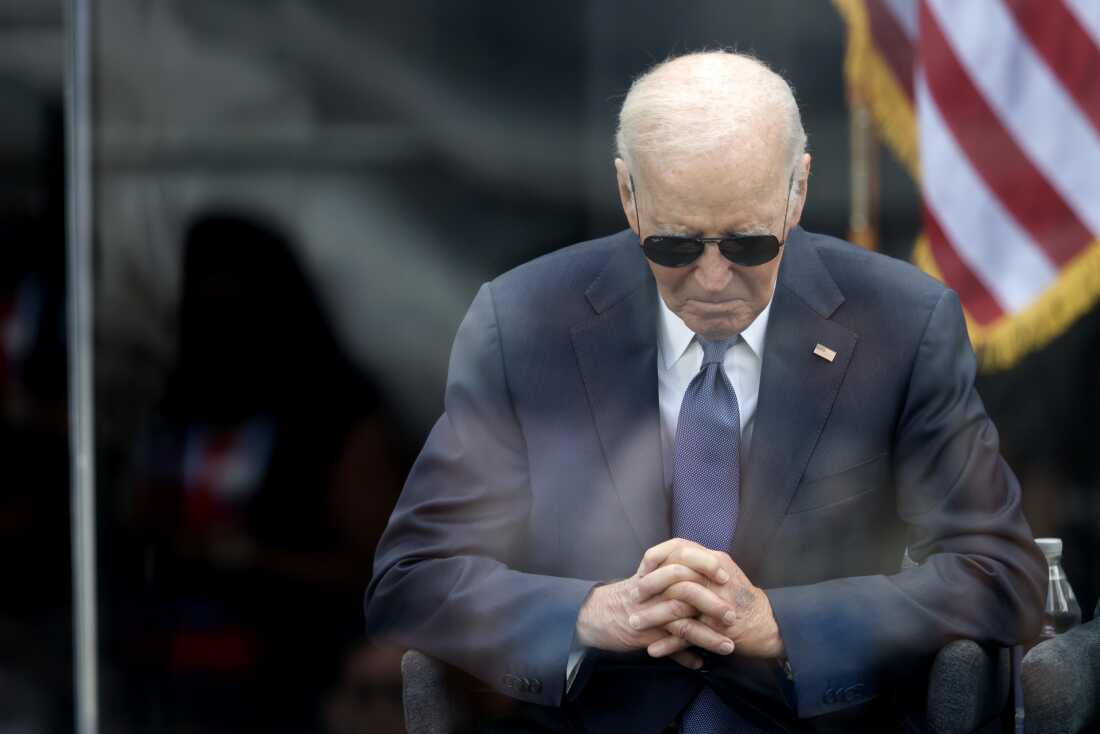
Former President Joe Biden participated in the dedication ceremony for the Barack Obama Presidential Center in Chicago on June 18. Meanwhile, he has decided not to appeal a court ruling that allows the Trump-era Justice Department to release transcripts and recordings of his conversations with a ghostwriter.
On Friday, Biden’s legal team filed a notice of voluntary dismissal in a related case, effectively ending the legal proceedings. This outcome favors the Heritage Foundation, a conservative think tank that sought to make the records public.
The recordings date back to 2017, shortly after Biden’s tenure as Vice President. During this time, he provided several hours of interviews for his memoir, Promise Me, Dad. The Justice Department became involved in 2022 when Biden, then President, found classified documents at his Wilmington, Delaware home. The Department began investigating the handling of these documents and collected the tapes as part of their inquiry.
In 2024, special prosecutor Robert Hur, appointed by the Justice Department, concluded that Biden did handle some classified materials at home. However, criminal charges were not appropriate. The report suggested that Biden’s discovery of classified documents could be seen as unremarkable, given his daily exposure to such materials for eight years as Vice President. Nevertheless, the report was contentious due to its description of Biden as an “elderly man with a poor memory.” It also noted the difficulty Biden experienced, including struggling to recall events and read from his own notes, during his conversations with the ghostwriter.
Conservative activists are eager to access these recordings, believing they may highlight concerns about Biden’s mental condition before he took office. Jeffrey Clark, a Trump ally and vice president for litigation at the Oversight Project, stated that the tapes might shed light on Biden’s memory issues years before his presidential run. He mentioned plans to release the tapes and transcripts publicly.
When the special prosecutor’s report was released, Biden had not yet withdrawn from the 2024 election. He criticized the report as misleading and incorrect. A source familiar with the 2017 recordings described them as dull, emphasizing that Biden methodically went through and discussed documents.
Biden eventually stepped down from the 2024 presidential race following a poor debate performance. Conservative groups initiated their lawsuit in April 2024. The Department of Justice opposed releasing the tapes for almost two years, including during the first year of Trump’s second administration. The Department argued that the material was akin to personal diary entries. However, the Justice Department shifted its stance in May, announcing plans to disclose the written and audio recordings, prompting Biden to intervene in the lawsuit.
Biden’s attorneys argued that his privacy interests outweighed public interest and that legal protections should prevent the release. Nevertheless, two lower courts, including the U.S. Court of Appeals for the District of Columbia, disagreed. Judges Sri Srinivasan and Gregory Katsas ruled against Biden, with Judge Florence Pan dissenting.
Facing the likelihood of losing the court battle, Biden’s team opted to relinquish the tapes and documents to the Heritage Foundation. A Biden team insider, speaking anonymously, criticized the DOJ’s deviation from its traditional stance, worrying it sets a dangerous precedent for government action against individuals.
The Justice Department has not provided a comment. Biden’s approach contrasts with former President Trump’s persistent litigation tactics. Noteworthy is Trump’s request to the Supreme Court, a second attempt to challenge a $5 million jury verdict related to his 1996 actions against E. Jean Carroll. The Supreme Court rarely revisits cases it has previously declined, the last instance being in 2018.