
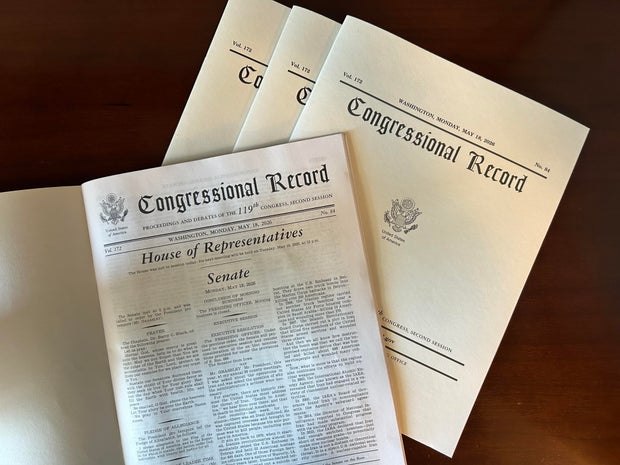
The Government Publishing Office (GPO) plays a crucial role in chronicling Congressional proceedings, producing the Congressional Record since 1873. Situated near the Capitol, their expansive building witnesses the meticulous documentation of each legislative session. The production process is a well-oiled machine, running backstage as Washington sleeps.
The Need for the Congressional Record
Before the Congressional Record’s inception, details of Congressional activities were sparse and relied heavily on newspaper coverage. The demand for accurate, non-partisan accounts led to the Record’s first publication. Speaking to its importance, former Senate Majority Leader Lyndon B. Johnson affirmed it as a fundamental document.
“The Congressional Record affects our laws and judicial decisions,” Johnson remarked in 1956.
Each Record consistently provides a verbatim account of proceedings across its four sections: Senate, House, Daily Digest, and Extensions of Remarks. Yet, it’s not without controversy. Historical amendments included unspoken speeches, prompting ongoing reforms for accuracy.
The Compilation Process
Creating the Congressional Record begins on the Senate and House floors. Skilled stenographers record every spoken word. Each team works in short shifts, capturing high-speed proceedings through stenotype machines. These records then undergo detailed editing to create polished transcripts.
Material, once ready, travels to the GPO for final assembly and printing. A dedicated team oversees this at the GPO headquarters, a historic site tracing back to Abraham Lincoln’s era. Both digital and paper copies flow into the GPO, with paper copies being authoritative.
The Printing Process
After proofreading, the GPO’s large-scale operations print the Record. Machines handle the assembly with precision, processing thousands of pages per minute. The shift to digital inkjet technology streamlined operations, reducing manpower and waste significantly.
While printing demands have evolved, with digital copies gaining prevalence, the GPO maintains its commitment to providing comprehensive documentation. Libraries and institutions still receive physical copies, although most requests come from Congress itself.
Modern Challenges and Future Evolution
The GPO’s modernization initiatives aim to adapt its processes for the future. They are actively upgrading their publishing systems to improve efficiency. Digital presence enhances access via platforms like govinfo.gov, supporting both traditional and electronic formats.
Director Hugh Halpern underlined the agency’s readiness to innovate further while acknowledging the evolution of the Congressional Record. The human element in proofreading remains irreplaceable, despite advancements in AI technologies.
Standing amidst the humming machinery, Halpern reflected on the GPO’s progress: “Our operation has journeyed far, yet continues tirelessly in the right direction.”