
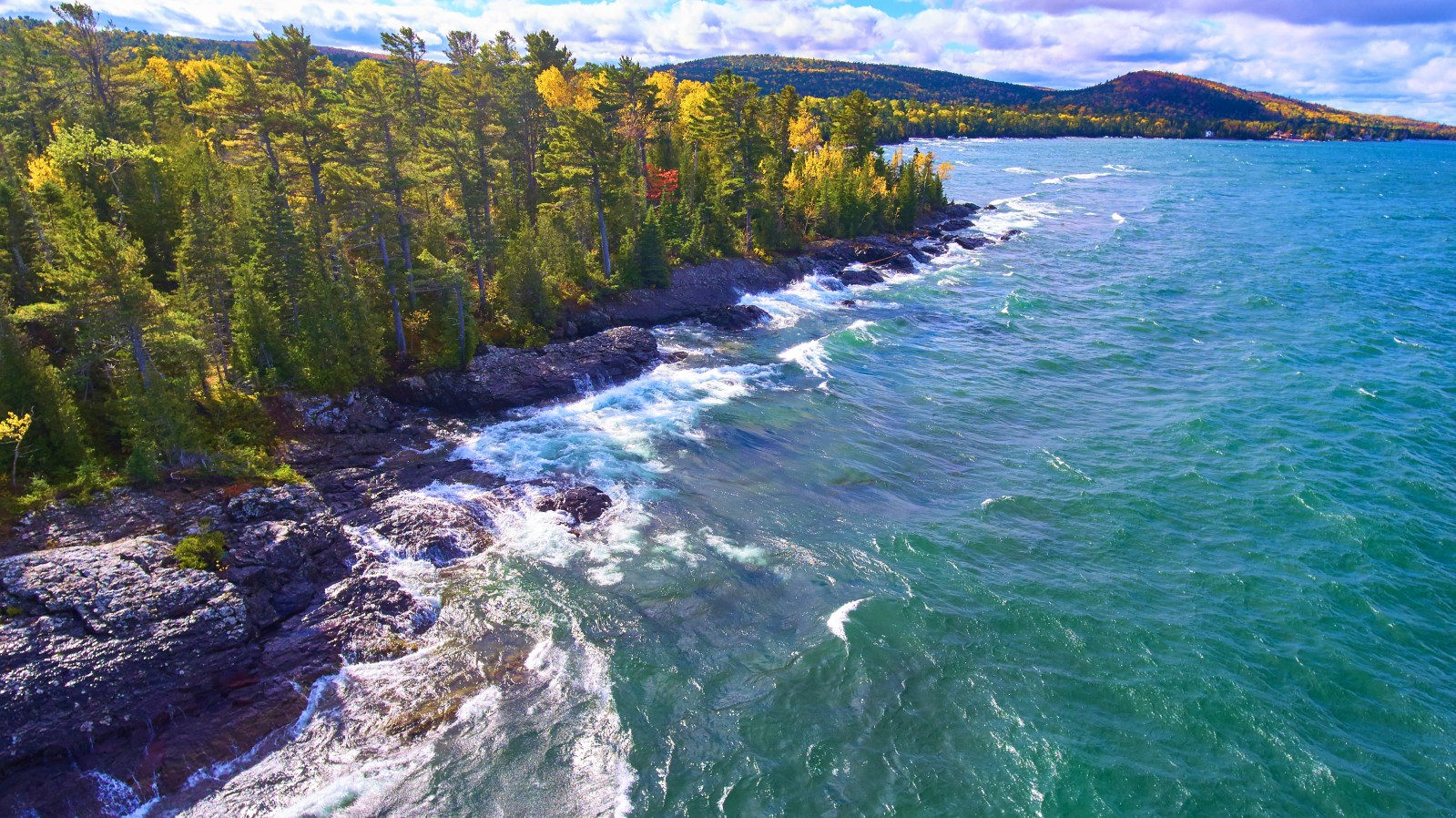
The National Weather Service (NWS) has issued beach hazards statements for each of the Great Lakes as people continue to enjoy beaches during the shoulder season before the arrival of fall. These warnings follow a recent period of similar alerts covering around 1 million residents near Lakes Michigan, Superior, Huron, Erie, and Ontario, now named Lake America by executive order from President Donald Trump.
Earlier warnings advised against swimming due to dangerous currents and large waves. On Monday, the warnings were expanded, affecting over 8 million people. As of 10:30 a.m. Eastern time, NWS offices issued these statements for regions in Wisconsin, Minnesota, Michigan, Illinois, Indiana, Ohio, Pennsylvania, and New York, highlighting dangerous waves and currents. People were urged to avoid entering the water in areas such as Duluth, Minnesota, northwestern Wisconsin, Michigan’s Upper Peninsula, significant parts of Wisconsin’s Lake Michigan shoreline, northeastern Illinois, northwestern Indiana, northeastern Michigan, northern Ohio, northwestern Pennsylvania, and almost the entire Lake Ontario shoreline in New York.
Many alerts are expected to remain in effect until Wednesday afternoon or evening, though some will expire earlier. While these statements are active, NWS meteorologists strongly advise against entering the water. According to a statement from NWS in Duluth, “Life-threatening waves and rip currents are expected. Stay out of the water and stay away from dangerous areas like piers and breakwalls.” NWS in Cleveland warned that wind and wave action create powerful currents on the lakeshore, emphasizing that swimmers should not enter the water as currents can pull them away from shore, even through sandbars and structures extending into the lake.
Simultaneous beach hazards statements are not common during summer months. Bryan Jackson, a meteorologist at NWS Weather Prediction Center, explained that such widespread alerts are more prevalent during the shoulder season as cooler air fronts become more noticeable. “This is the time of year that you get more notable cold fronts,” Jackson noted, mentioning that a Canadian high-pressure system north of the Great Lakes is causing the hazardous waves and currents. The strong pressure gradient, coupled with unseasonably warm temperatures, has drawn more people to the beaches.
During winter, cold fronts can lead to lake effect snow, strong winds, and ice buildup on the lakes. The current statements have been triggered by prolonged winds linked to the high-pressure system to the north. Jackson remarked, “Generally speaking, you wouldn’t get this strong of wind during the summer, so now that we’re heading into fall, this is part of that transition into the cooler season.”
Drownings in the Great Lakes have been a concern, with rip currents and dangerous waves more commonly associated with the ocean. However, they also affect the Great Lakes, resulting in 73 drownings reported this year, according to the Great Lakes Surf Rescue Project (GLSRP). Lake Michigan has seen 41 of these incidents. After Labor Day, Great Lakes beaches are usually not staffed by lifeguards, as noted by GLSRP executive director Dave Benjamin.
A rip current is a fast-moving channel of water running perpendicular to the shoreline. Swimmers caught in a rip current should remain calm as the current will not pull them under. It can, however, carry them away from shore. To escape, swimmers should swim parallel to the shoreline and then angle back once out of the current. If fatigued, they should float and signal for help.
Beach hazard statements will vary in duration from Monday afternoon to several days. Residents and visitors near the affected areas should heed local weather office guidance and exercise caution. Looking forward, Jackson indicated that the Mid-Atlantic region should also be monitored for beach safety due to a strengthening low-pressure system off the coast, which may lead to high tides and beach erosion in the following days.