
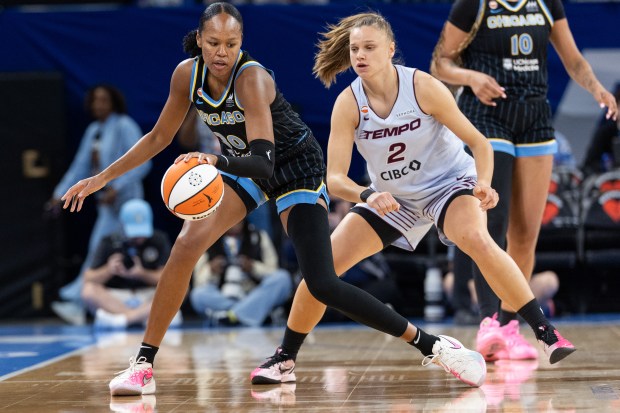
In the early weeks of the Chicago Sky’s season, Azurá Stevens felt frustrated. The veteran forward, after suffering a bone bruise, found herself off the court for months. She navigated a challenging free-agency period while dealing with a stubborn injury. The real test came when she saw her teammates play, increasing her eagerness to return.
The Struggle and Advice
Stevens shared her frustrations with Courtney Vandersloot, her long-time teammate since 2020. Vandersloot, recovering from her own torn ACL, offered advice: keep going. Stevens found it difficult to find solace in those words. The bench felt lonelier during the Sky’s season opener, unable to ease the boredom of rehab routines. But stepping onto the court last Saturday at Wintrust Arena, Stevens understood the truth in Vandersloot’s words. The return felt like coming home.
“Even though there’s a day-to-day grind, if you keep walking in and stacking days, you’ll reach your goals,” Stevens said to the Tribune. “It’s a blessing.”
Throughout her WNBA career, Stevens faced numerous injuries. In 2019, she played nine games before needing foot surgery. The following season saw another knee injury end her year early. Injuries disrupted subsequent seasons, limiting her availability. Last season, she played every regular-season game with the Los Angeles Sparks, marking a personal achievement despite subsequent setbacks during the Unrivaled season.
The Nature of the Injury
A bone bruise differs from other injuries. It indicates impact severity rather than fragility. Healing requires time more than supplements or exercises. Stevens followed that guidance, resting and vacationing in Jamaica, yet the inability to play grew frustrating. Stevens expressed her impatience:
“It’s really frustrating,” she admitted. “This one has tested my patience the most.”
Stevens believes every setback serves a purpose, offering learning opportunities. With her experience, she understands recovery processes. In Chicago, changes in the team’s recovery approach were evident since her last stint with the Sky.
Improved Support System
The Sky introduced Jess Cohen as director of health and human performance and expanded their player performance staff. This approach provided more comprehensive care, alleviating Stevens’s need to seek outside help. This enhanced support system made a significant impact on her decision to return.
“They’re not just winging it,” she said. “It’s comforting having the new and improved staff.”
Despite her recent return, Stevens operates under strict minute restrictions. She plays limited minutes to ensure a careful recovery, focusing on precision and reducing errors. This focus on detail helps maintain positivity during the frustrating phase of limited playing time.
For Stevens and coach Tyler Marsh, the limitations present challenges. She can play only 16 minutes per game, about four minutes per quarter. Marsh emphasized balancing Stevens’s opportunity for successful play within these constraints.
“You just try to put her in a position where she can be successful,” Marsh said. “Don’t overdo it. It gets tough when momentum builds, and it’s time for her to come out.”
The Road Ahead
Both Marsh and Stevens know these constraints are temporary. The Sky plans to gradually increase her playing time to 25-28 minutes per game, though no specific timeline exists. The ultimate goal is to have Stevens play through her full potential as the team’s star player. For now, the focus remains on patience and continued effort in her recovery journey.