
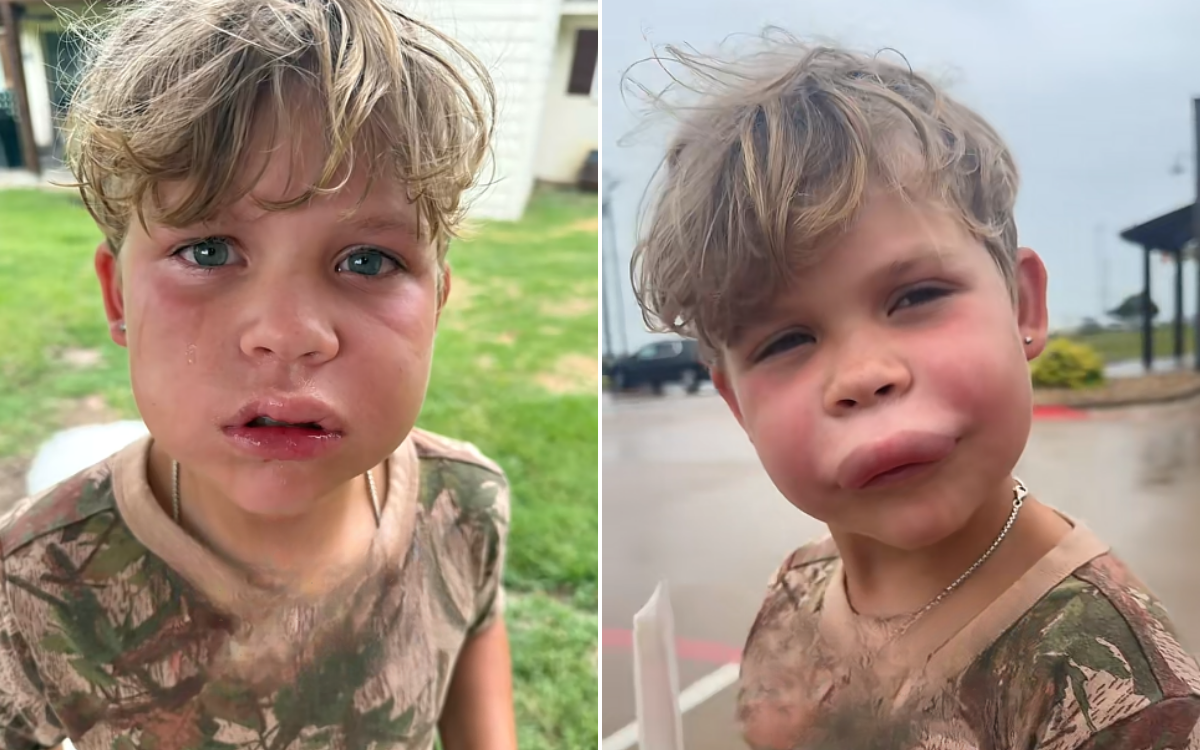
When Bailey Cary’s son Oliver experienced his first wasp sting, his mother was initially unconcerned. ‘Oliver was returning from fishing at a local dock. He believes he might have disturbed a nest on the dock or brushed against a tree during his walk,’ she explained to Newsweek. ‘I was about to leave for an appointment when he rushed in saying a wasp had stung him. I provided him with Benadryl and an ice pack.’
Many Americans encounter stings from bees, wasps, or hornets in their lifetime. While painful, they are generally uneventful. However, Oliver’s situation was different. Cary quickly noticed that the swelling on her son’s face was escalating rapidly, indicating an issue. Oliver mentioned feeling uneasy, prompting immediate concern.
According to the CDC, about 0.5 percent to 3 percent of U.S. adults are susceptible to systemic allergic reactions from stinging insects like wasps, bees, and hornets. Approximately 10 percent of people might experience a large local reaction, with significant swelling near the sting site. Severe reactions such as hives, breathing problems, low blood pressure, and anaphylaxis occur in around 0.3 percent to 3 percent of adults and are less frequent in children.
Upon realizing Oliver’s significant reaction, Cary stayed calm despite her concern. ‘His lip was very swollen by this point, but I didn’t want to alarm him. I tried to downplay the situation on our way to the local urgent care,’ she shared.
At the urgent care, Oliver received a steroid injection and recovered. His doctor recommended a specialist for allergy testing. ‘He’s never had an allergic reaction before. It caught us by surprise,’ Cary said.
Cary’s swift response prevented any serious complications, serving as a reminder of the stings’ potential risks to those with allergies. The CDC notes that between 2011 and 2021, there were 788 deaths from insect stings in the U.S., averaging roughly 72 annually. These deaths are mainly attributed to severe allergic reactions, not the venom’s direct effects.
Cary emphasizes the need for parental vigilance. ‘I hope I’m helping other parents become aware of potential unknown allergies,’ she stated. ‘I assumed being allergic to wasps and bees was genetic.’ Oliver’s experience transformed her understanding of the issue.