
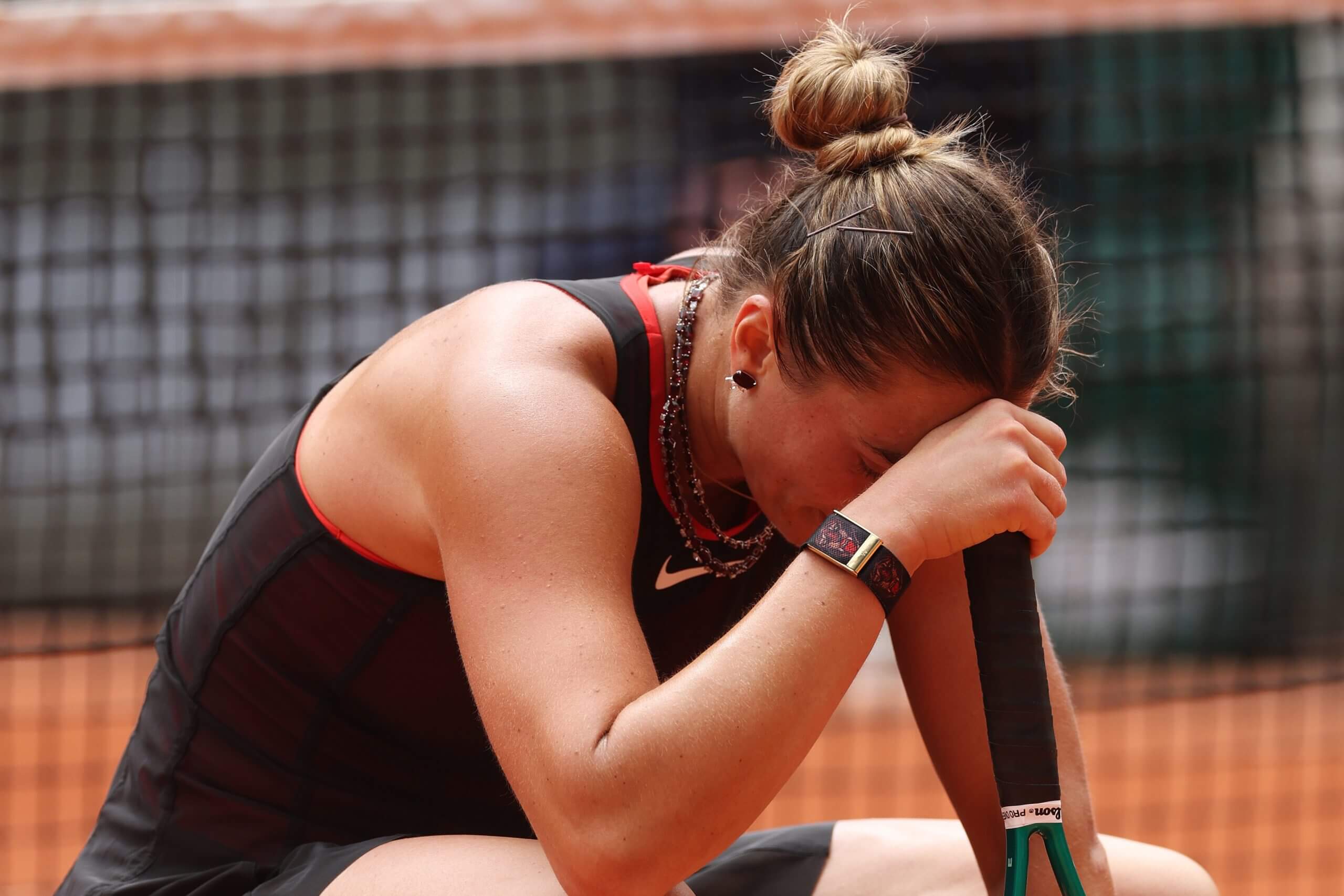
Aryna Sabalenka and her team have become familiar with managing profound disappointments in Grand Slam tournaments. After her intense loss to Diana Shnaider at the French Open, the world No. 1 followed a now well-known routine. Sabalenka cleared her mind, fulfilled her media duties, and then carried out a psychological analysis with her closest advisors.
After almost securing a straight-sets, quarterfinal win, Sabalenka lost control and fell apart, losing the last ten games. In a news conference following the heartbreaking 3-6, 7-5, 6-0 defeat, she candidly expressed her frustration, stating, “Right now I just want to quit tennis.” Despite this urge, Sabalenka and her team knew there was no time for indulgence in such thoughts, as Wimbledon was just over three weeks away.
Jason Stacy, Sabalenka’s mental and physical performance coach, often reminds the team that such breakdowns were once more frequent in her career. “Now it very rarely happens. But we know the cycle and what happened wasn’t any different,” he noted in an interview.
This is how it often goes with Sabalenka, whose greatest strengths can also be her most significant weaknesses.
For this catastrophe routine, the group was small, featuring Stacy, Anton Dubrov, her main coach, physiotherapist Helen Murawska, and her fiancé Georgios Frangulis. Together, they examined her recent defeat, asking their usual series of questions: What were her feelings before the match? Did they miss any warning signs? What contributed to the turning point? These discussions aim to provide insights about tennis and herself, even if they yield no definitive answers.
After their assessment, the group dispersed, each seeking rejuvenation. Sabalenka and Frangulis traveled to Vienna, Dubrov visited friends in Germany, and Stacy returned to his family in the Pacific Northwest. The team took a break from constant communication and reflected on potential improvements, like breathing techniques and meditation, recognizing that there are no magical solutions, only possibilities.
Stacy emphasized that effective tools must resonate with Sabalenka: “It’s not mine, it’s not Anton’s; it’s hers. She has to be responsible.” These principles align with values from Stacy’s martial arts background, which include loyalty and trust.
In preparation for Wimbledon, Sabalenka’s first Grand Slam after her Paris defeat, she kept the pressure at bay. She comfortably defeated Teodora Kostović on Centre Court, showcasing progress with a 6-2, 6-3 victory. Next, she would face McCartney Kessler in the second round.
Stacy’s focus on loyalty doesn’t equate to blind obedience. Instead, it reflects staying committed to values and discipline. Sabalenka spoke in Stacy’s forthcoming book, stating they avoid dramatics and overthinking. Troubling situations are tackled, and emotions expressed openly without hindrance.
After her recent loss, Sabalenka compensated by reaching out to a psychologist she had stopped working with three years prior. She found support in discussing her challenges before significant tournaments, underscoring the significance of a safe space for open conversation.
Sabalenka experienced an unpleasant time at the French Open a year ago under similar conditions. Following a loss and blaming external factors like weather, she apologized on social media and later engaged in friendly activities with fellow player Coco Gauff. These actions demonstrated growth in managing frustrations and moving beyond emotional setbacks.
The quest for Grand Slam consistency continues for Sabalenka, who, despite significant achievements, struggles with critical finals performances. Her career finals record showcases dominant performances on hard courts, while clay remains a challenge. Physical limitations, especially relating to her hip and lower back, also remain factors to manage.
With consistent support from her longstanding team, Sabalenka approaches each challenge with resilience. As time progresses, adaptations will be necessary, yet there’s a belief in maintaining current strategies without panic. This consistency in approach reinforces her prospects for overcoming both internal and external barriers in her ongoing professional journey.