
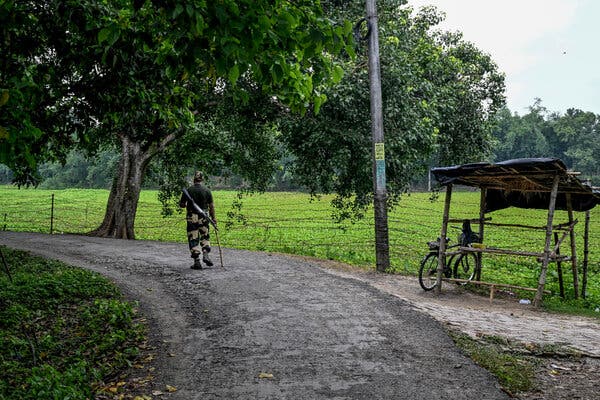
India is actively expelling Bangladeshi immigrants deemed to be illegally present in the country, leading to increasing tensions along their shared border. Meanwhile, Bangladesh is responding by strengthening its patrols and resisting these movements, leaving many stranded in no-man’s land between the countries.
As one of the world’s longest borders, stretching approximately 2,500 miles, the boundary between India and Bangladesh is often used by impoverished Bangladeshis seeking work and by smugglers transporting goods like cattle, gold, and raisins. This porous border is becoming a contentious issue between the neighboring nations.
India has intensified efforts to deport individuals with Bangladeshi documentation or those suspected of being undocumented migrants from Bangladesh. These deportations are sometimes conducted covertly at night.
Bangladesh claims that India is not using appropriate repatriation methods and is instead forcefully sending people back across the border. The increased patrols aim to intercept these movements and prevent further crossings.
One incident highlights these tensions: early one morning on the Bangladeshi side of the border, armed guards detained a group comprising a man, three women, and a child in Durgapur, a farming village. These individuals had apparently traveled on foot from West Bengal, India, under the cover of darkness. Fishermen in the area noticed them around 4 a.m., according to local villagers.
The apprehended group was held in the so-called buffer zone between the two countries for about 24 hours. During this time, Indian and Bangladeshi border guards negotiated their fate. Hundreds of onlookers, including Motiar Rahman, a local resident, described seeing the group detained by the river on the Bangladeshi side of the border.
Rahman reported that Bangladeshi guards accused their Indian counterparts of pushing the group into Bangladesh, as none of the detainees carried identification documents.